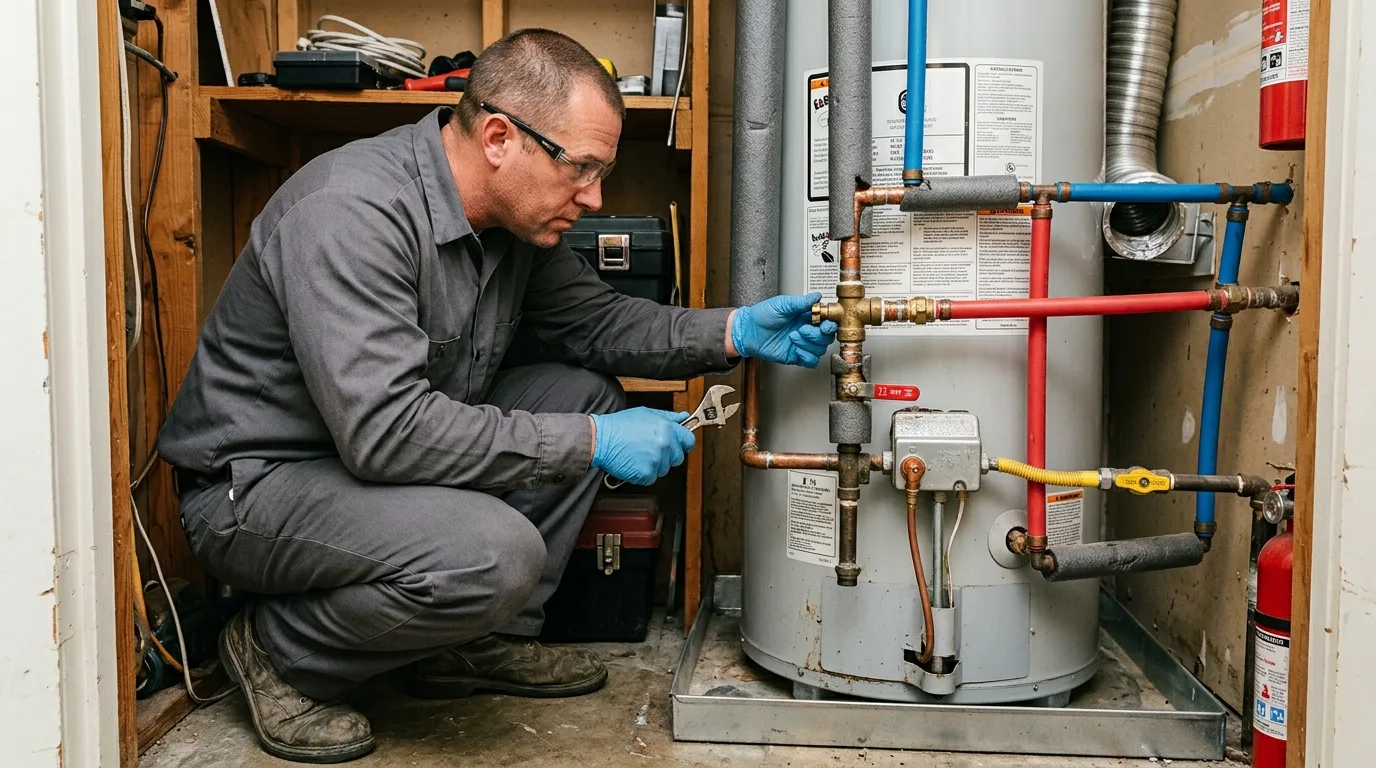
Water Heater Installation
Tank and tankless replacement to California strapping and venting rules.
Plenty of heaters die of a twenty-dollar part. Plenty of others get repaired twice in a year when they should have been replaced the first time. The useful conversation is about which one you have.
Line answered 24/7 · same-day appointments usually available
A thermocouple, a gas control valve, a heating element, a thermostat, an anode rod, a relief valve, all repairable, all sensible on a heater with years left in it.
A tank that is leaking from the shell is finished, whatever its age. And a heater past ten with sediment noise and slow recovery will keep asking for money; repairing it is usually just paying twice for the replacement you will make anyway.
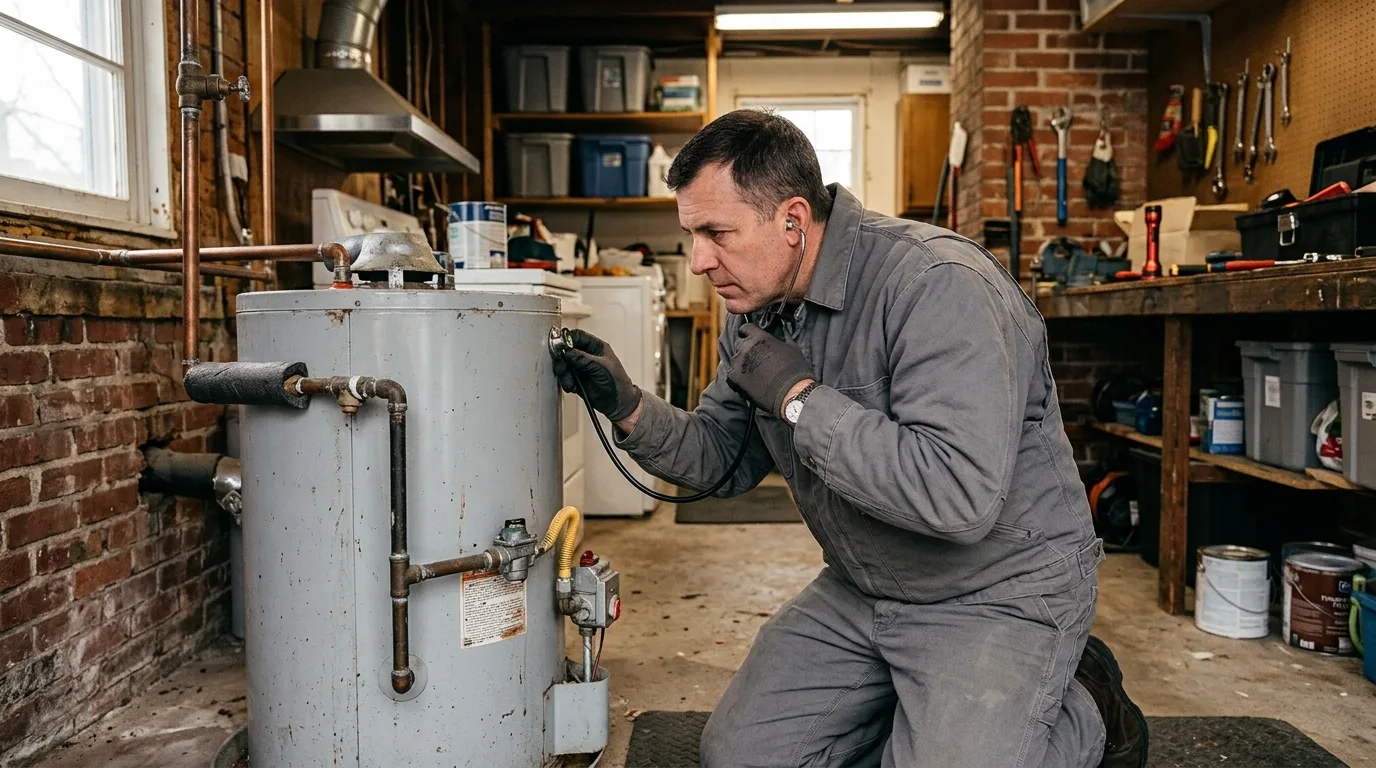
Most of these are diagnosable on the phone well enough to bring the right part.
Sediment is the main culprit. Minerals settle on the tank floor, insulate the burner from the water above it, and force longer burn cycles, which is what the rumbling is, and what eventually cracks the glass lining.
The second is the anode rod. It is a sacrificial component designed to corrode instead of the tank, and almost nobody replaces it. Once it is consumed, the tank itself starts corroding, and the clock runs much faster.
An annual flush and an anode rod check are cheap, and they are the difference between a heater that lasts eight years and one that lasts fifteen. Almost every prematurely dead tank we pull has had neither.
Model, capacity, fuel and age, so the truck arrives with likely parts rather than a diagnosis and a return trip.
Gas leaks, venting, draft and scald risk get checked before anything is dismantled. A heater that is unsafe does not get a patch.
Thermocouple, gas valve, element, thermostat, dip tube, relief valve or tank, tested rather than guessed at.
If the repair is sensible you get it done and priced. If it is not, you get told why, with the replacement cost, before spending anything.
Part replaced, unit fired, temperature verified at a safe 120°F, and any leak or draft issue rechecked.
Where it helps, the tank gets flushed, and you get the maintenance interval that will keep it alive.
Tell us what the unit is doing and you will know whether it is a part or a replacement, before anyone is dispatched.
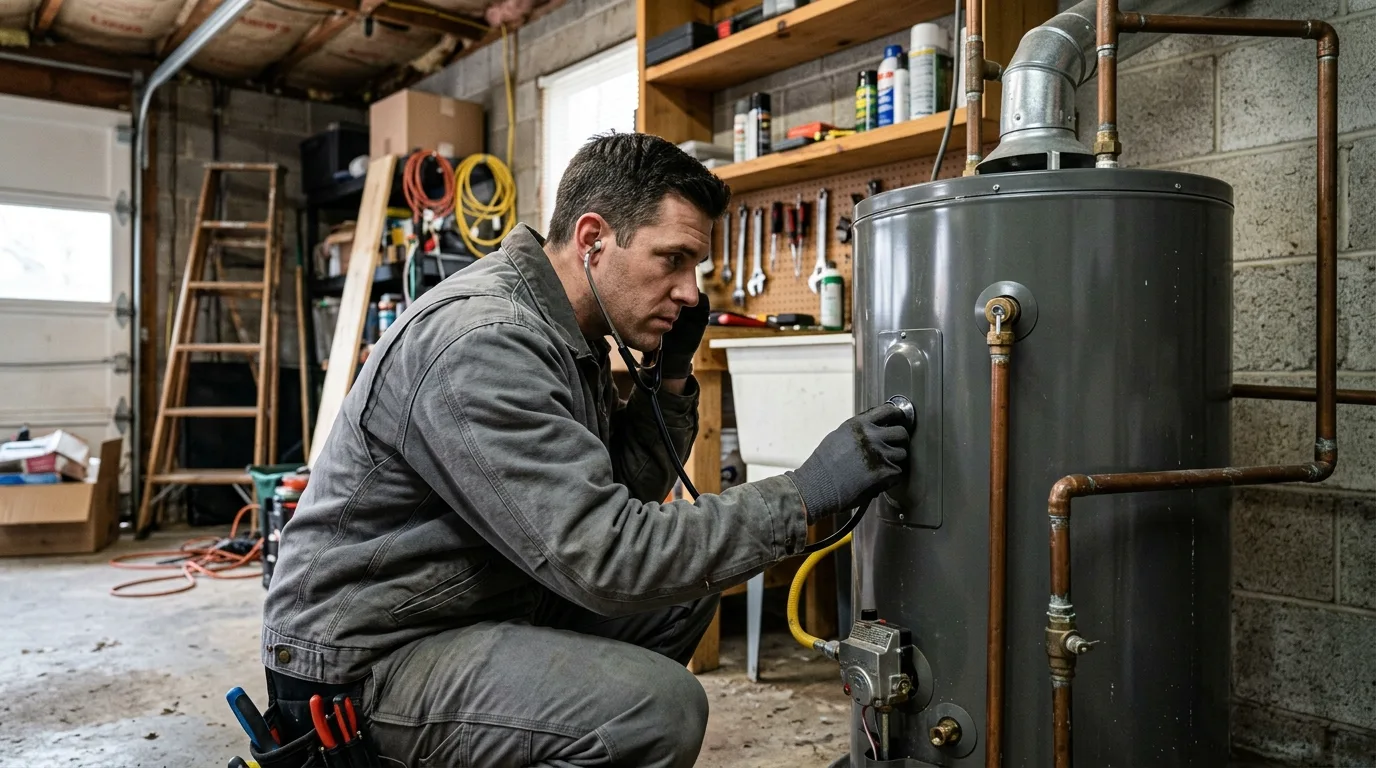
Worth fixing: thermocouples and igniters, gas control valves, electric elements and thermostats, dip tubes, relief valves, and anode rods on a tank under about eight years old. All are hours of labour and a modest part.
Not worth fixing: a tank leaking from the shell, a badly corroded flue, or a unit past ten with sediment damage and repeat faults. At that point repair money is deposit money on a new heater.
The middle case is a heater around eight to ten years old with one clear, repairable fault. That is a genuine judgement call, and it should be made with your plans for the house in the conversation, not decided for you.
A few checks that are safe to do yourself, and one thing not to do.
Symptoms plus age gets you a real answer, including when the honest answer is that repair is throwing money away.
Where repair is not the answer, these are the next pages.
Tank and tankless replacement to California strapping and venting rules.
Any hour, any day, burst pipes, sewer backups, no water, failed heaters.
Acoustic listening and pressure testing before anyone cuts drywall or floor.
Usually a failing thermocouple, the safety sensor that proves flame to the gas valve. It is an inexpensive, routine repair. Less commonly it is a draft problem or a failing gas control valve, both of which need looking at rather than relighting repeatedly.
Sediment on the tank floor. Water trapped under the layer boils and forces its way out, which is the popping you hear. A flush helps if it is caught early; heavy long-standing sediment has usually already damaged the tank lining.
Treat it as urgent. It may be a failed valve, but it can also be genuine over-pressure or over-temperature, a real safety issue. Do not cap it or plug it under any circumstances; get it diagnosed.
Eight to twelve years for a standard tank in this area, longer with annual flushing and anode replacement. Past ten, weigh any significant repair against replacement rather than automatically fixing it.
Yes. If the install itself is unsafe (no strapping, bad venting, no T&P discharge) you will be told, because a repair on an unsafe install is not a repair.
For a gas heater, yes, at least for access and to run the hot water tests. You will also want to hear the diagnosis and the pricing directly rather than by phone afterwards.
One number covers all of it. If you are not sure which of these your problem is, describe it and we will tell you.
Diagnosed properly, priced before the work, and never repaired twice when once was already too many.