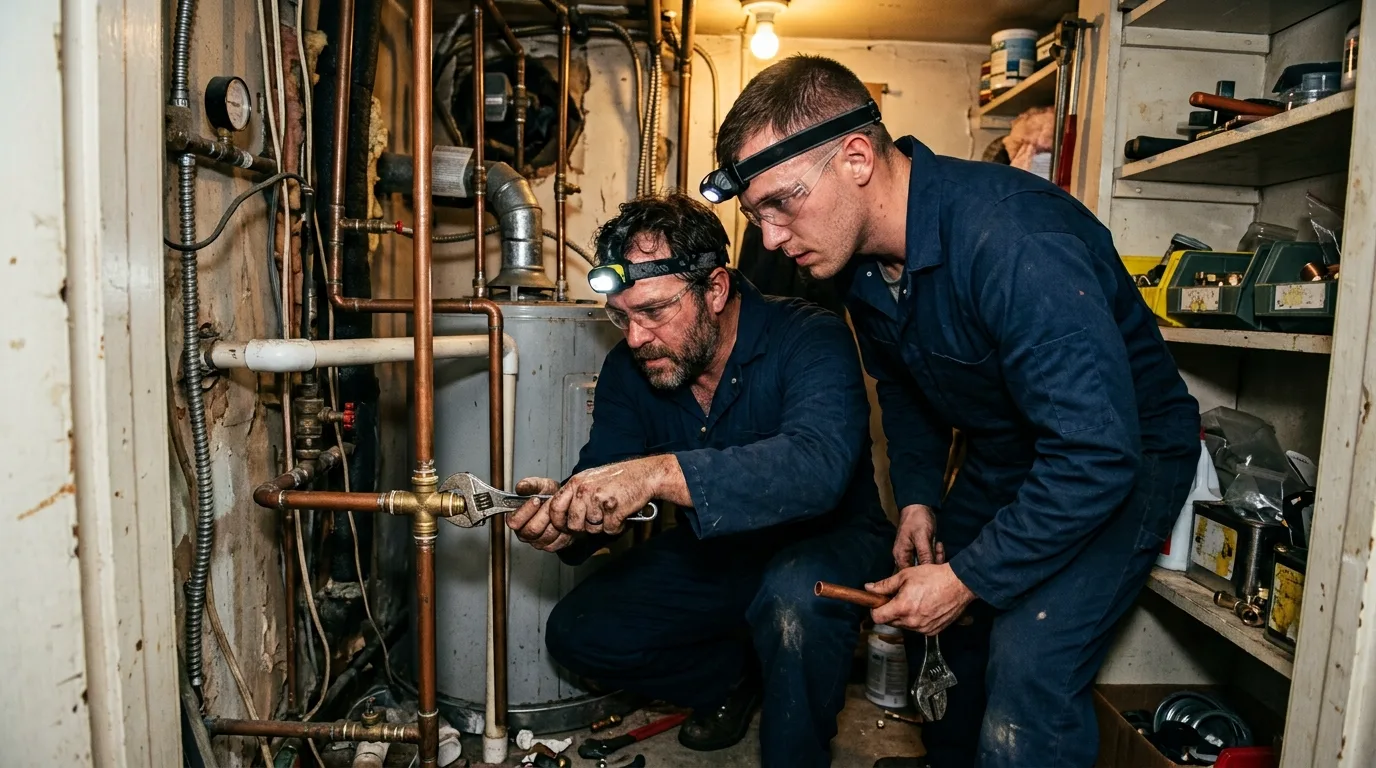
Tankless Water Heater Installation
Gas sizing, venting and descaling reality for hard-water houses.
Treatment equipment gets sold on assumptions far more often than on measurements. A hardness test and a look at what you actually want to fix takes ten minutes and decides whether you need a softener, a filter, or nothing at all.
Line answered 24/7 · hardness tested before anything is recommended
Hardness is dissolved calcium and magnesium. It causes scale in heaters and tankless exchangers, spotting on glass, and the sense that soap never quite rinses. A softener is the tool for it, and it is sized by hardness multiplied by household water use.
Taste, chlorine smell and sediment are separate issues, and a softener does not address them, carbon filtration and sediment filtration do. Bundling all three into one product recommendation without testing is the most common way people overspend here.
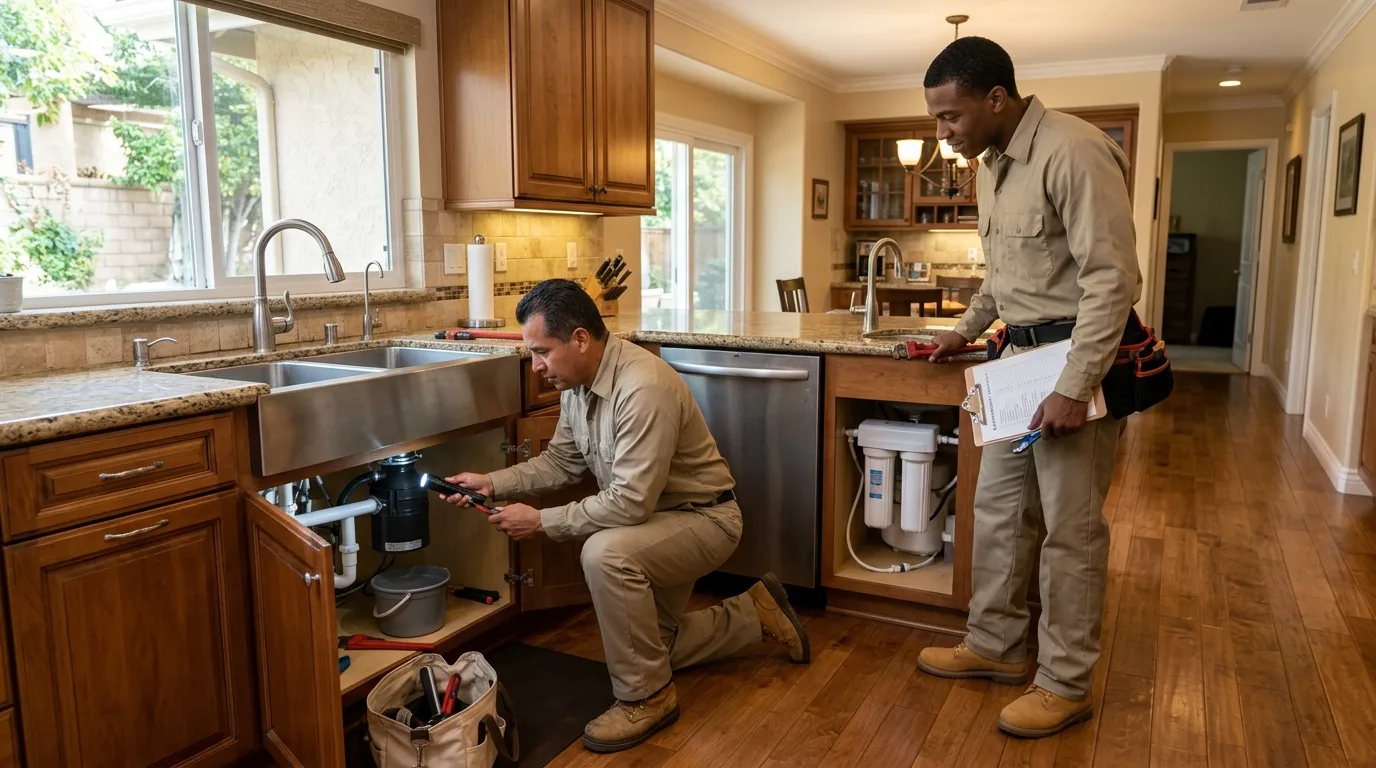
Worth being specific about the symptom, because each one points at different equipment.
Supply here is a blend of imported and local groundwater, and hardness varies meaningfully by area and by season. That variation is exactly why a measurement beats a general claim about the region, your street may be moderately hard while a neighbouring city is considerably harder.
The clearest practical consequence shows up in appliances. Scale is what kills tankless heat exchangers early, shortens tank heater life, and clogs the small orifices in modern fixtures and appliance valves.
Salt-based softener discharge is restricted in parts of Southern California because of its effect on reclaimed water. Local rules matter, which is another reason the equipment choice should be made by someone who works here.
Hardness measured on site, plus a look at what else you are noticing (taste, smell, sediment) so the recommendation matches the problem.
Sometimes the answer is a point-of-use filter and an annual heater flush rather than whole-house equipment. You will be told when that is the case.
Softener capacity from hardness and daily use; filter type and micron rating from what needs removing. Sizing wrong means constant regeneration or constant cartridge changes.
Whole-house treatment goes in after the main shutoff, usually in the garage, with a drain for regeneration discharge and a bypass so the house is never stuck without water.
Equipment plumbed in with isolation and bypass valves as standard, so service never means shutting the house down.
Settings programmed, first regeneration run, salt or media explained, and the maintenance interval written down.
Treatment upstream of the heater is usually cheaper than the exchanger you are protecting.
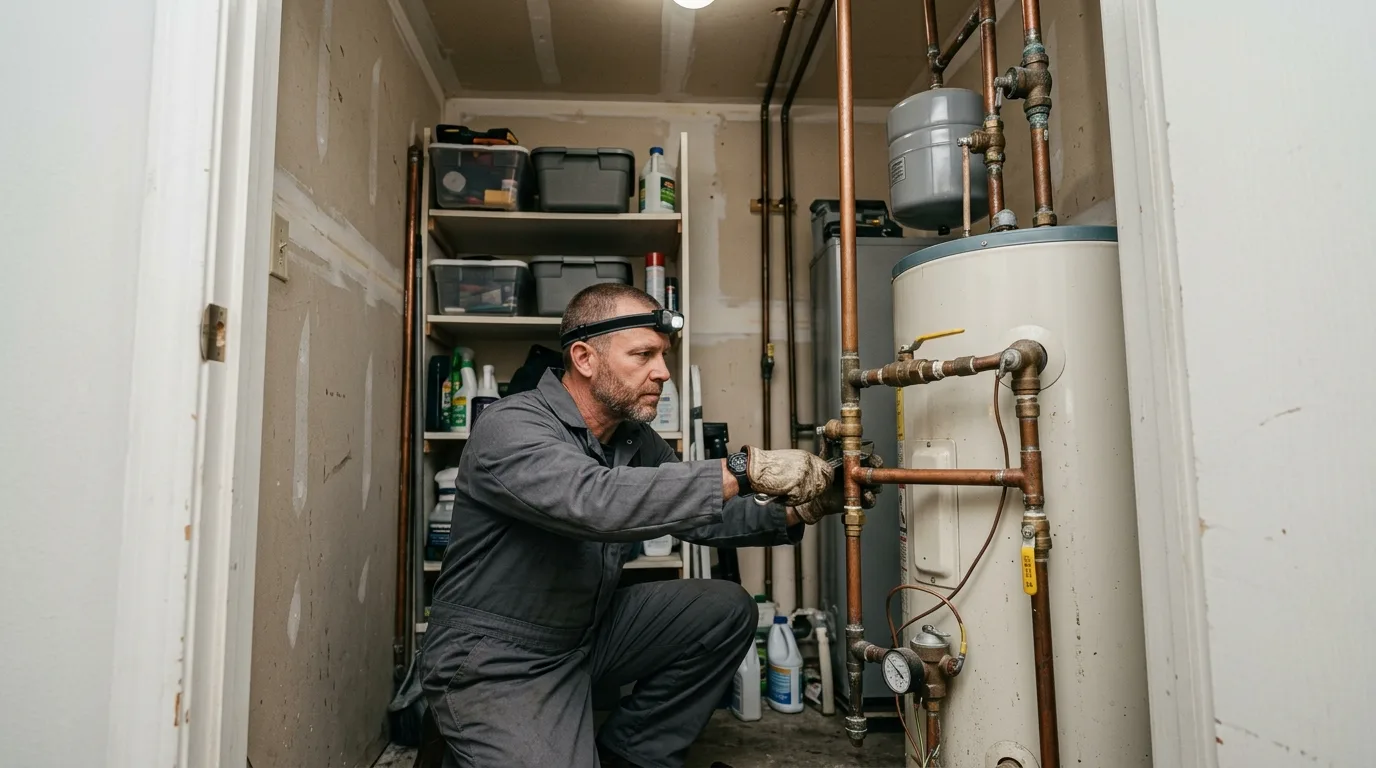
Ion-exchange softeners genuinely remove hardness minerals and are the only option that stops scale outright. They need salt, a drain for regeneration, and attention to local discharge rules.
Salt-free conditioners do not remove minerals; they alter how they crystallise so they are less likely to adhere. They cost less to run, need no drain, and give a partial result, honest expectations matter here, because they are frequently oversold.
Carbon and sediment filtration handle taste, chlorine and grit, and they can be whole-house or point-of-use. For many households, a good under-sink filter for drinking water plus an annual heater flush solves the real complaints at a fraction of the cost of whole-house treatment.
Two checks that stop most expensive mistakes.
You will get a straight answer on whether whole-house treatment is warranted, including when it is not.
Water quality decisions usually sit alongside these.
Gas sizing, venting and descaling reality for hard-water houses.
Tank and tankless replacement to California strapping and venting rules.
Copper or PEX through a single-story ranch, sequenced to keep water on.
It varies by street and season, which is why the answer starts with a test at your address. Moderate hardness is often better handled by an annual heater flush and a point-of-use filter than by whole-house equipment.
Partially, and honestly that is the fair answer. They can reduce scale adhesion without removing minerals. If your goal is protecting a tankless exchanger, a true softener is the reliable choice; if it is mildly better fixtures with no salt and no drain, a conditioner may satisfy you.
No, when sized and programmed correctly. It exchanges hardness minerals for a small amount of sodium, far less than most people expect, and not a taste most notice. If salinity matters to you medically, potassium chloride is an alternative.
No. Carbon filtration addresses taste, odour and chlorine; sediment filtration removes grit. Neither reduces hardness. Conflating the two is the most common reason people buy the wrong system.
After the main shutoff, before the water heater, so everything downstream is treated, usually in the garage here, where there is drain access and power. A bypass is fitted so servicing never means going without water.
Salt for a softener every month or two depending on use, filter cartridges on a schedule set by your water, and a periodic check of the control settings. Those running costs get stated up front, because they are part of the real price.
One number covers all of it. If you are not sure which of these your problem is, describe it and we will tell you.
Tested first, sized properly, running costs stated. Call and get the measurement before the equipment.