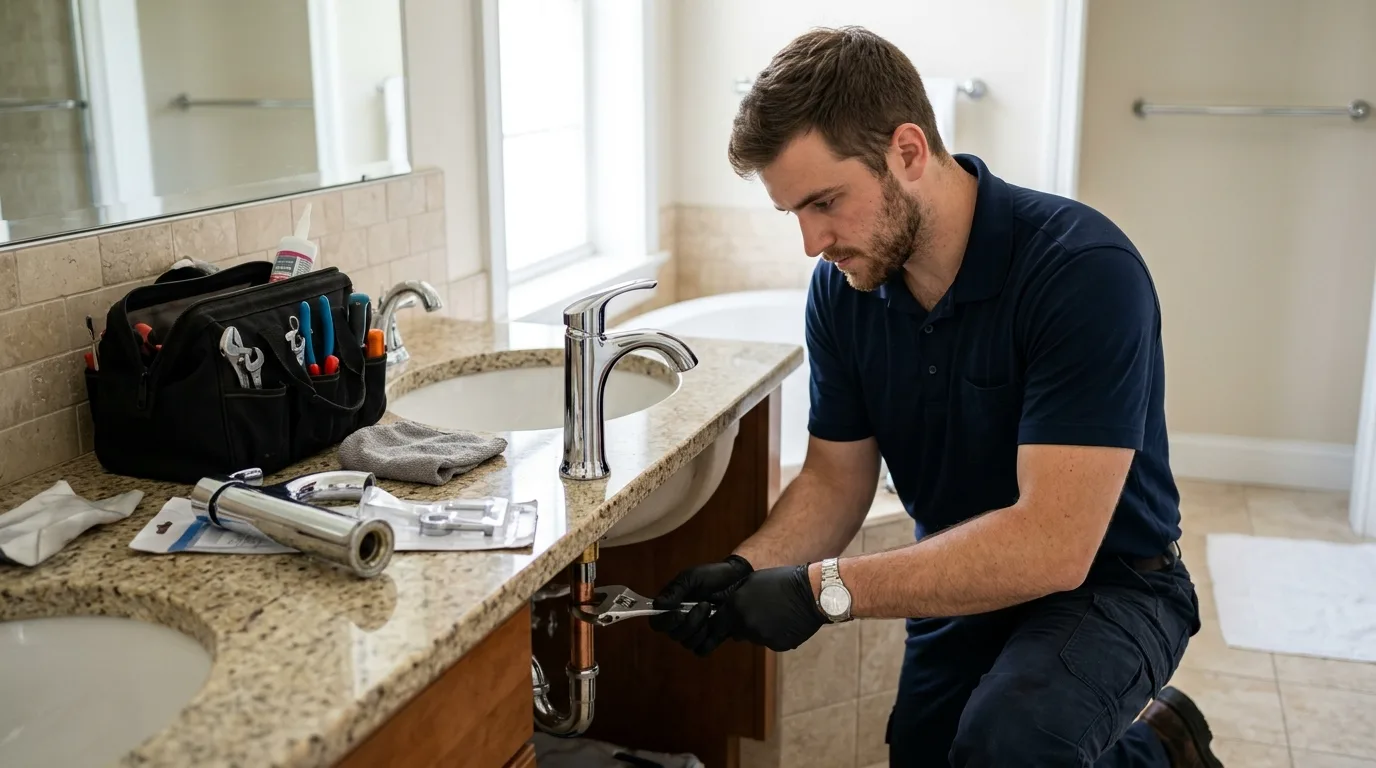
Emergency Plumbing
Answered around the clock for active leaks, backups and no-water situations.
Cerritos was built later than Norwalk and almost entirely on slab, with copper supply routed under the concrete. That single design decision generates most of the calls we take from the city.
Line answered 24/7 · same-day and emergency response
Houses from the mid-1960s through the 1970s here typically have their hot and cold supply lines cast into or beneath the slab. Copper in that position lasts decades, then starts to pit, and when it fails, the water has nowhere to go but sideways under your floor.
The good news is that these houses have generous attics and simple single-story layouts, which makes rerouting overhead a genuinely practical alternative to breaking concrete.
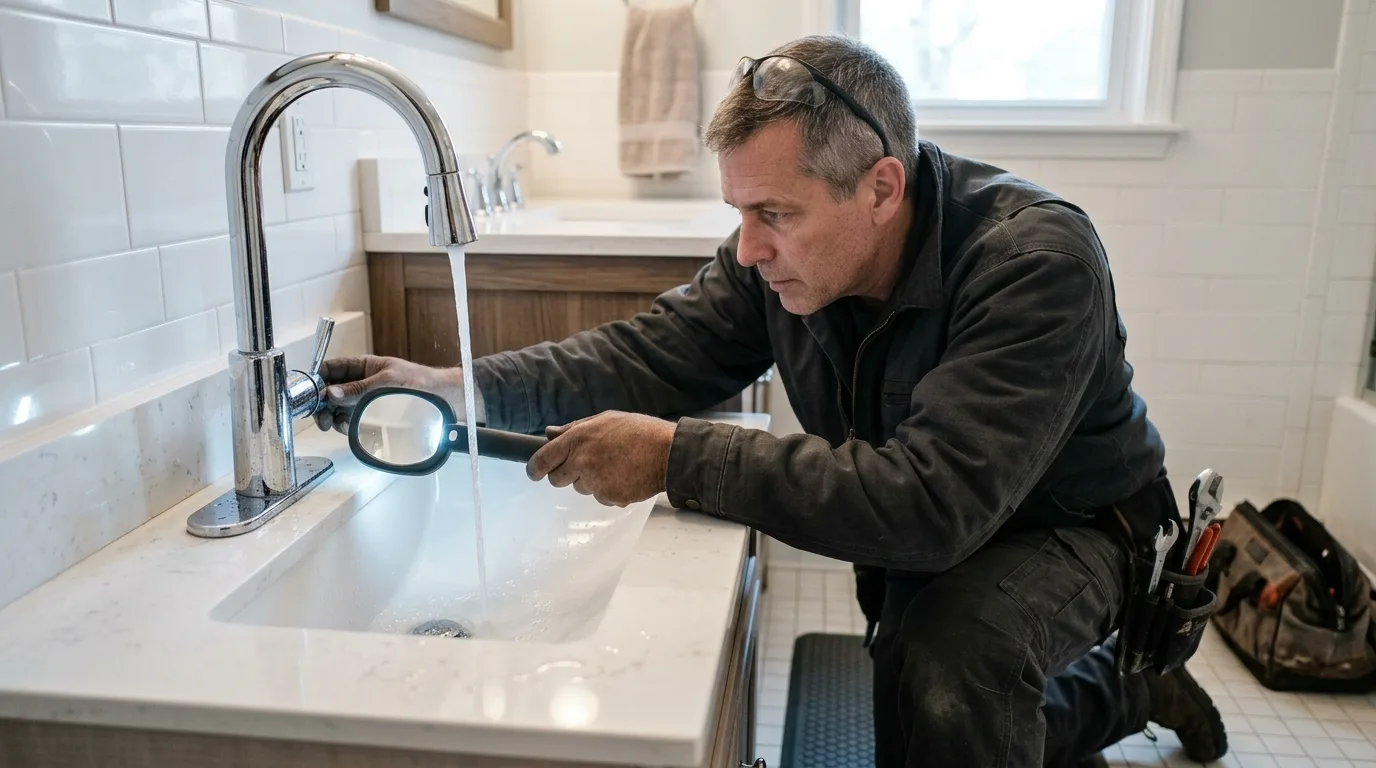 Located before opening
The call pattern here is noticeably different from Norwalk's older stock.
Cerritos borders Norwalk on the south, so response times are effectively the same as in-city. Slab leak work does need the right equipment on the truck (acoustic and thermal gear plus pressure test kit) so mention the symptom when you call.
Any slab leak quote should come with a located, marked spot and a stated reason for opening the floor rather than rerouting overhead. If it does not, get a second read before the saw comes out.
Locate it before anyone cuts. Same-day slab leak detection is usually available.
The whole list is available in Cerritos. These six are where slab construction and under-concrete copper send most calls.
Answered around the clock for active leaks, backups and no-water situations.
Located under concrete, then rerouted or opened, with the reasoning explained.
Kitchen, laundry, tub and main-line stoppages cleared and diagnosed.
Cracked clay and rusted cast-iron laterals repaired or replaced.
Tank and tankless replacement to California strapping and venting rules.
Copper or PEX through a single-story ranch, sequenced to keep water on.
Cerritos was Dairy Valley until 1967, and most of its housing went up in the decade that followed. That gives the city a fairly consistent set of plumbing: copper supply rather than galvanized, ABS or cast iron on the drains, slab-on-grade construction, and generous lots that have since grown mature landscaping and irrigation systems. Compared with the older Norwalk blocks it is a newer system, which surprises people when it starts leaking.
Copper of that generation is now at the age where pinholes appear, particularly in the runs cast into the slab. The symptom is rarely a puddle. It is a warm patch on the floor, a water heater that cycles for no reason, or a meter dial that creeps with every fixture shut off. Located acoustically and then either rerouted overhead or repaired in place, depending on how much pipe is still sound.
Large lots mean sprinkler systems, and sprinkler systems mean hose-bib vacuum breakers, anti-siphon valves and the occasional backflow device that nobody has looked at in twenty years. It is cheap to check and it protects the drinking water in the house, so it is worth doing while a plumber is on site for something else.
Often, yes. Rerouting the affected line through the attic and abandoning the run under the slab avoids concrete work entirely and eliminates any future leak on that line. Opening the slab makes sense when the reroute path is impractical or the leak is on a drain rather than a supply line.
Acoustic listening equipment, line pressure isolation and thermal imaging, cross-checked. The output is a marked spot on your floor and a stated confidence level, not a guess followed by exploratory demolition.
Frequently. If one buried copper run has pitted through, the others are the same age in the same soil. Rerouting everything overhead costs more than one repair and permanently removes the category of problem, worth pricing before you fix just the one.
Age alone is not the whole story. Water chemistry, the velocity in undersized runs and flux left inside the joints all shorten copper's life, and pipe cast into a slab has no room to move. Fifty years is a normal service life for that installation, and pinholing tends to start in clusters rather than all at once.
Most residential irrigation needs at least an anti-siphon valve or a hose-bib vacuum breaker, and some services need a testable device. What applies to your property depends on the connection and what the water provider requires, so the honest answer is that a plumber should look at the actual setup rather than guess from a description.
Same dispatch across all of them. Cerritos shares long borders with Artesia and Norwalk, and we work out which side you are on over the phone.
Tell us the cross-streets and what the house is doing. Upfront pricing before any work begins.