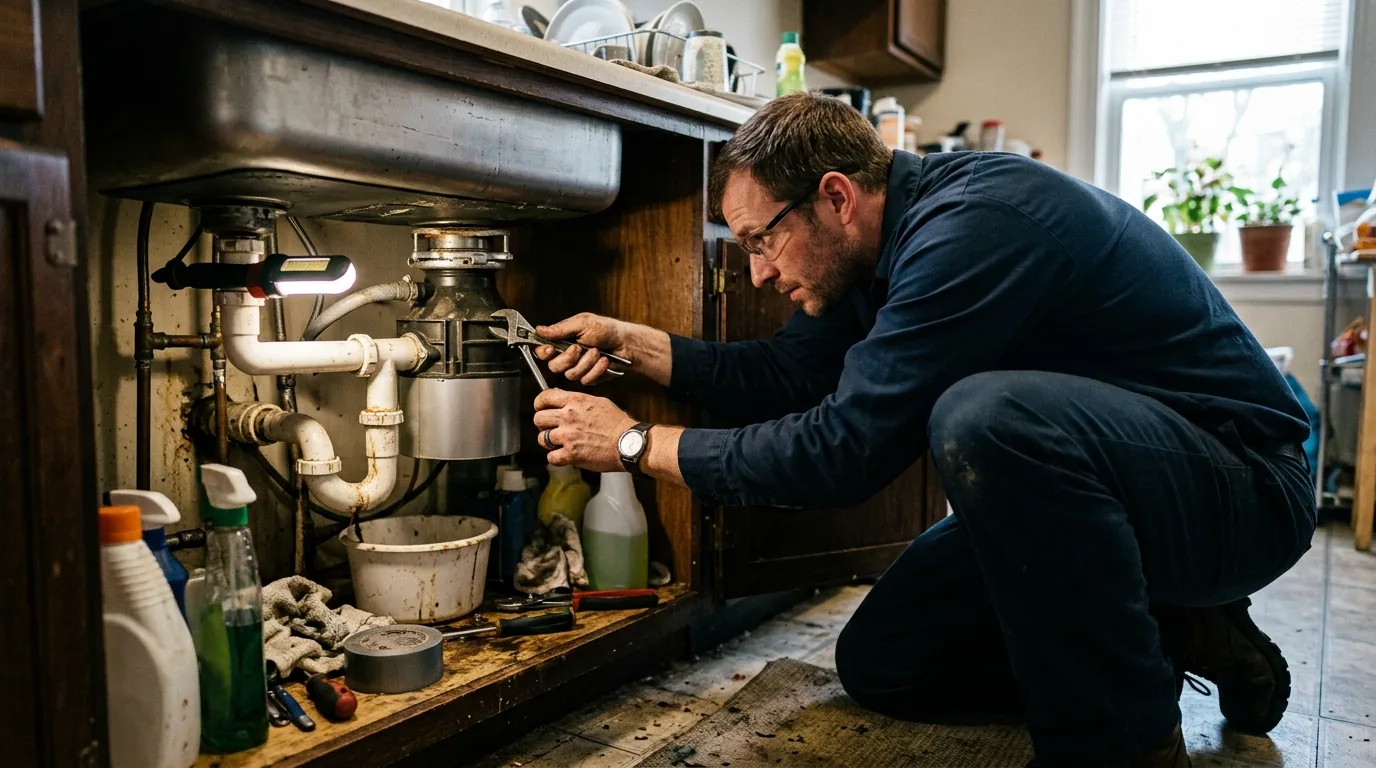
Drain Cleaning
Kitchen, laundry, tub and main-line stoppages cleared and diagnosed.
A disposal that hums is jammed. One that leaks is either a flange or a failed shell. And a sink that backs up when the disposal runs is often not a disposal problem at all; it is the branch drain telling you something.
Line answered 24/7 · most units repaired or swapped in one visit
A jam is mechanical: the motor is fine, the impeller plate is stuck. Clearing it takes minutes with the right tool, and the reset button gets the unit running again. That is the best-case call and it is common.
Leaks are about where the water is coming from. At the sink flange it is a reseal. At the dishwasher inlet or the discharge tube it is a connection. From the bottom of the housing it is a failed shell, and no sealant fixes that, the unit is done.
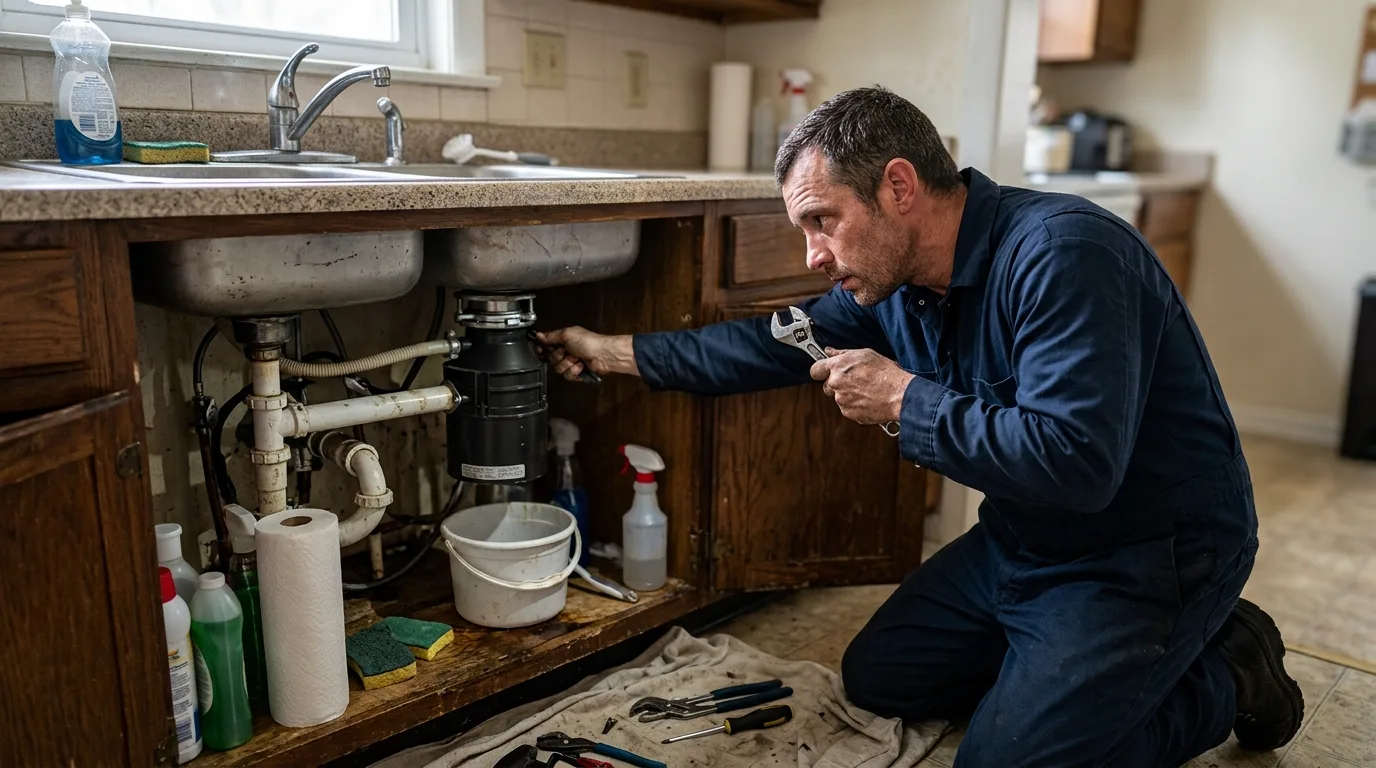
Most of these are short visits. The exception is the one where the disposal is a symptom, not a cause.
The classic jam is a bottle cap, a fruit pit, a piece of cutlery or a shard of glass wedged between the impeller and the shredder ring. Repeated attempts to run it past that point are how a repairable jam becomes a burnt-out motor.
The drain side is the more interesting finding. Kitchen branch lines in these houses are often long, shallow-fall runs into a main that has been accumulating grease for decades. A disposal adds solids to that, and the sink backing up is the drain reaching its limit, replacing the disposal changes nothing.
Coffee grounds, eggshells, potato peel, rice, pasta and grease. None of them jam the unit; all of them go down the drain and settle. If the sink is slow rather than the disposal stuck, the branch line is where the money should go.
Breaker off, not just the wall switch, before any hand goes near the chamber.
Manual rotation from below and retrieval of the obstruction, then a reset and test. If the motor is dead, that becomes clear immediately.
Flange, dishwasher inlet, discharge connection or housing, each has a different fix and only one of them means replacement.
If the sink was backing up, the branch line gets tested. A disposal swap on a blocked line is money wasted.
Reseal, reconnect, or fit a new unit, with the cost of each given before the work starts.
Run with water, check for leaks under load, test the dishwasher drain cycle, and confirm the sink drains at full flow.
Do not keep running the disposal; that is how a clog becomes a flood. Same-day visits available.
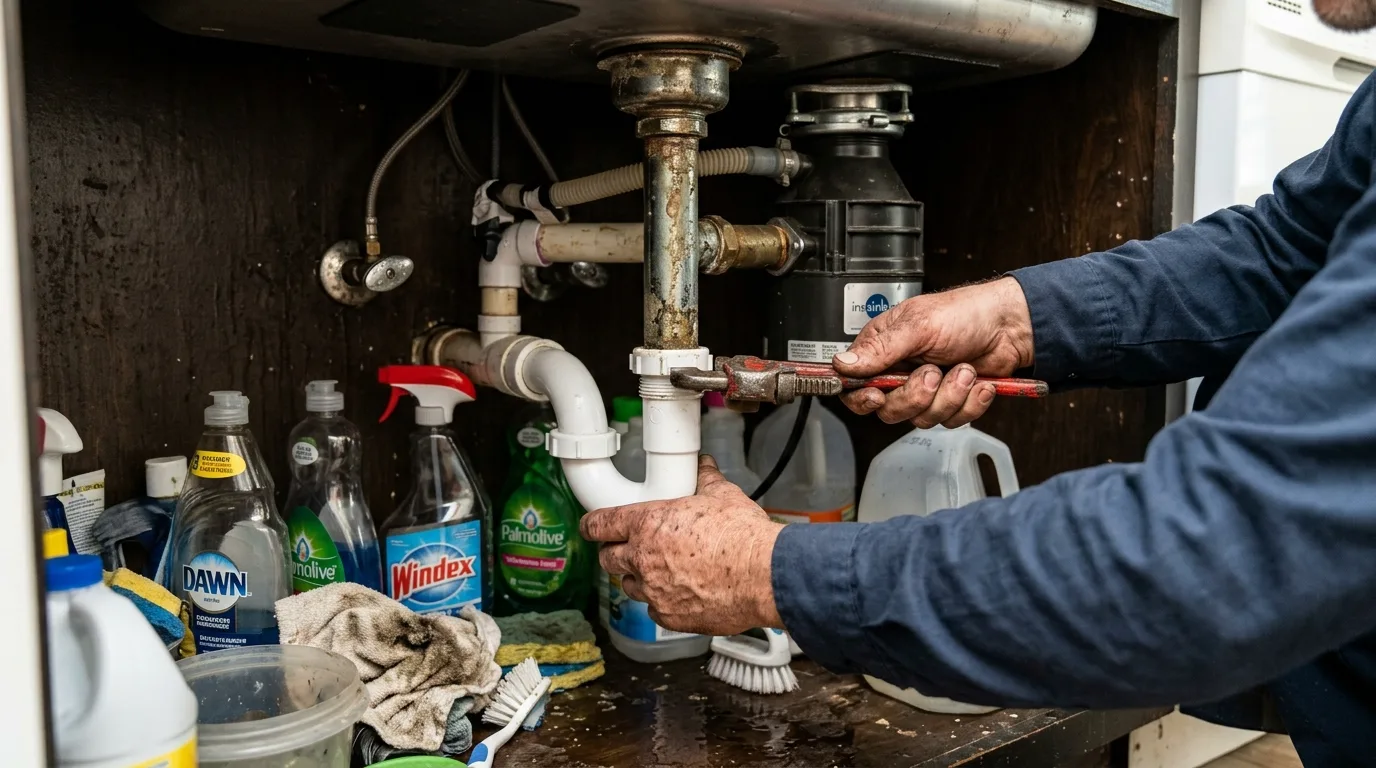
Repair covers jams, resets, flange reseals, hose replacements and mounting-ring work. Cheap, quick, and the right answer most of the time.
Replacement is for a failed motor, a leaking housing or a unit old enough that the mounting hardware is corroding. It is a short job, and stepping up in horsepower is worth it in a house that cooks a lot, more torque means fewer jams.
Sometimes the correct recommendation is neither: clear and camera the kitchen branch line, and leave the disposal alone. A pro who sells you a new unit for a drain problem has sold you a new unit that will back up the same way.
Two safe things to try, and one absolute rule.
Describe the noise and the water behaviour and you will usually get the diagnosis before anyone is dispatched.
Where the sink is the real problem, these are the pages that matter.
Kitchen, laundry, tub and main-line stoppages cleared and diagnosed.
High-pressure scouring for grease, scale and root mats a cable only punches.
Low-flow compliant fixtures fitted to decades-old valve bodies.
Almost certainly not; it is jammed. The motor is trying to turn a plate that something is blocking. Switch off the breaker, try the reset button and the hex socket underneath, and stop before the motor overheats.
No. Water from the base of the housing means the internal shell has corroded through, and the unit needs replacing. Leaks at the flange, the dishwasher inlet or the discharge tube are all repairable, those are the good news versions.
Because the branch drain cannot take what the disposal is sending it. That is a drain problem: grease, a long shallow run, or a partial blockage downstream. Clearing the line is the fix; a new disposal is not.
Grease, coffee grounds, eggshells, rice, pasta, potato peel, and fibrous material like celery or artichoke. They do not jam the unit; they settle in the pipe, which is worse and more expensive.
In a household that cooks daily, yes. Three-quarter or one horsepower units jam far less and grind finer, which is easier on the drain too. In a lightly used kitchen, the standard half-horsepower unit is fine.
Usually under two hours including removing the old unit. Longer if the mounting assembly is corroded onto the sink flange, or if the drain connection has to be reworked to line up.
One number covers all of it. If you are not sure which of these your problem is, describe it and we will tell you.
Jam cleared, leak traced, or the drain diagnosed honestly. Same-day appointments usually available.