Whole-Home Repiping
Failing galvanized or pinholed copper replaced across the house, usually in two to four days.
Most water heaters are replaced in a hurry, which is how houses end up with a unit that is too small, vented badly, or strapped to nothing. Same-day replacement is available, done to code, the first time.
Line answered 24/7 · same-day replacement usually available
Tank sizing comes down to first-hour rating against your real peak demand, how many showers, back to back, plus a dishwasher or washer running. A four-bedroom house on a 40-gallon tank with a slow recovery rate will run cold every morning no matter how new the heater is.
Tankless sizing is a different arithmetic: flow rate at your incoming water temperature. Norwalk's groundwater is mild, which works in a tankless unit's favour here, but two simultaneous showers still need real gas capacity and often a larger gas line than the old tank was fed by.
 Strapped and vented
A thermocouple or an element is worth fixing. These are the signs the tank itself is done.
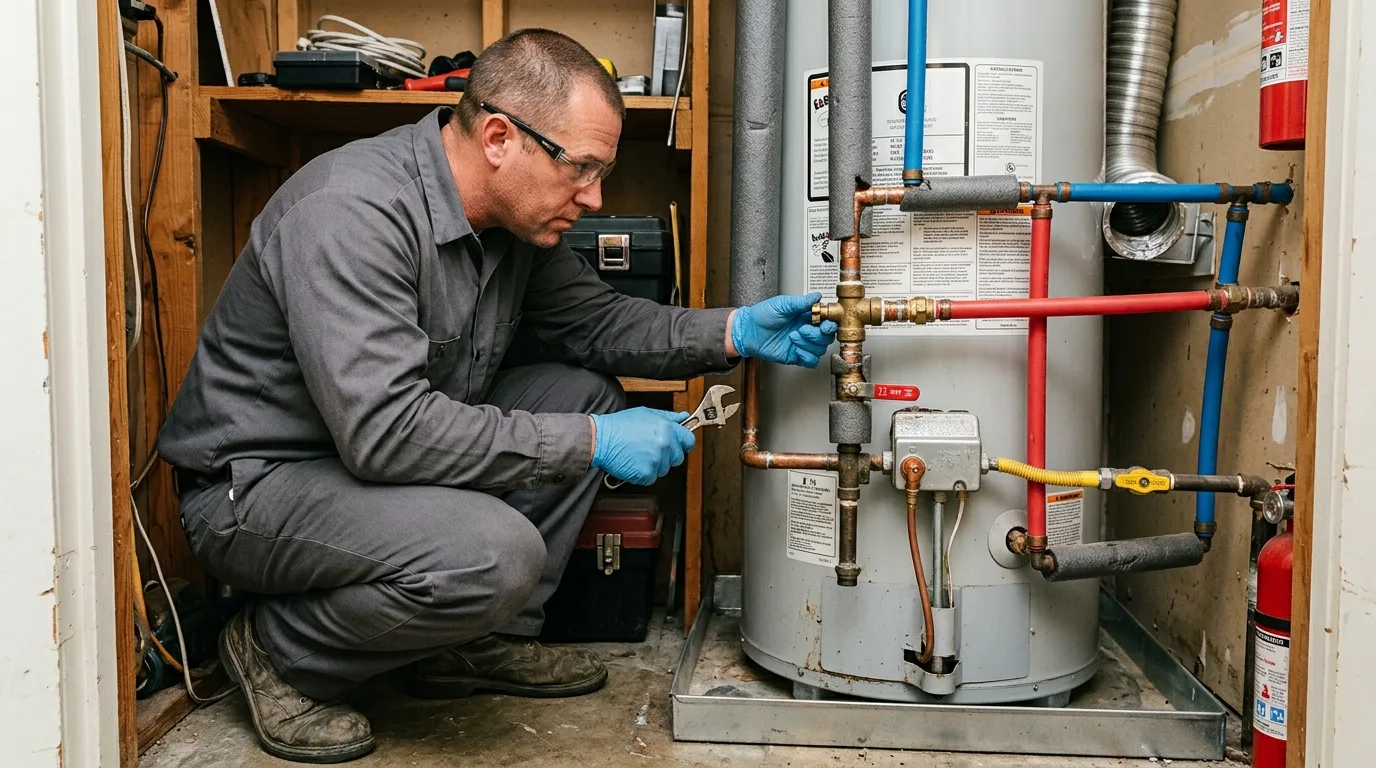
Almost every original tract house here puts the heater in the garage or an exterior closet, which is good for drainage and bad for anything mounted to older framing. The two most common code failures we see are missing or single seismic straps and a T&P relief line that discharges nowhere useful.
The other recurring find is venting. When a 30-gallon original is swapped for a modern 50-gallon unit, the draft hood and flue frequently do not match what the new appliance needs, and an atmospheric unit that cannot draft properly spills combustion gases into the garage.
California requires two seismic straps (upper and lower third of the tank) plus a proper T&P discharge, a drip pan where damage could result, and correct combustion air and venting. It is a short list, and it is the list most rush jobs skip.
Household size, fixture count, peak-hour demand, gas or electric, and whether tankless makes sense for your house, before a unit is ordered.
Gas or power isolated, water off, tank drained down and hauled out. Old units go with the truck, not to your kerb.
Flex connectors, a new gas sediment trap, dielectric unions where dissimilar metals meet, and a fresh shutoff valve if the old one is seized.
Unit set on stand or pan, two seismic straps, T&P line run to an approved discharge point, flue reconnected and sized to the appliance.
Tank filled and air purged before ignition, gas connections leak-tested, thermostat set to a safe 120°F unless you ask otherwise.
Combustion draft verified, then you get shown the shutoffs, the strap points and the maintenance interval before anyone leaves.
Tell us the model and the symptom and you will know within a minute whether it is a part or a replacement.
 Tankless option
A tank is cheaper to buy, cheaper to install, and simple to service. It heats a fixed volume and runs out; it takes floor space; and it fails in a way that puts 50 gallons on your garage floor. For most houses here, a well-sized tank is the sensible answer.
Tankless costs more up front, often two to three times more installed, because of gas line sizing, new venting and sometimes electrical work. In exchange you get unlimited sequential hot water, a wall instead of a footprint, and a service life closer to twenty years.
Tankless makes the most sense when you are already opening walls, when the heater sits somewhere you want the space back, or when your peak demand is long rather than large. It makes the least sense as a rushed emergency swap.
A leaking tank rarely stops leaking. Isolate it and keep the water off the drywall.
Have the age, capacity and fuel type ready (usually all on the label) and you will get sizing advice and a price range on the call.
While the water is already off, these are the jobs homeowners commonly fold into the same visit.
Failing galvanized or pinholed copper replaced across the house, usually in two to four days.
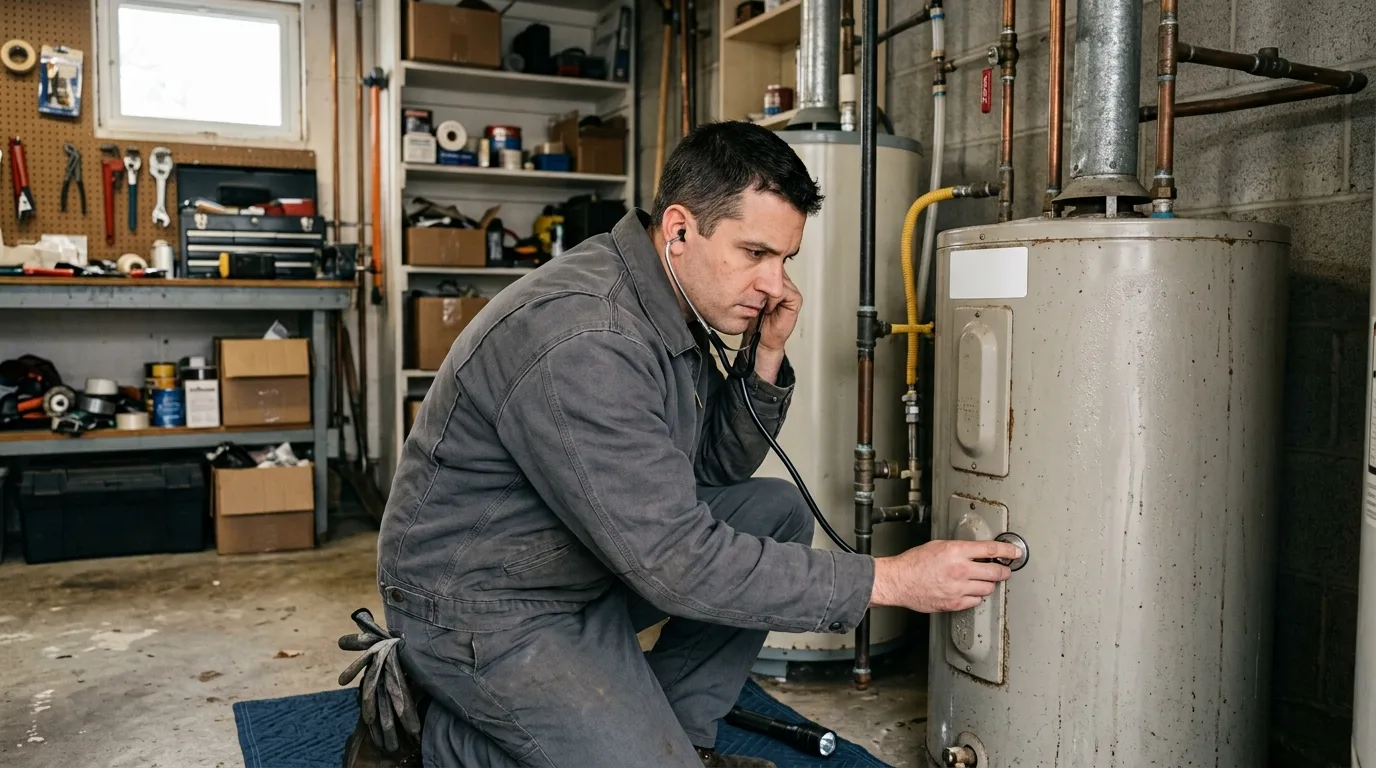
Acoustic, pressure and thermal equipment finds the leak before any wall or floor gets opened.
Any hour, any day, burst pipes, sewer backups, no water, failed heaters.
A like-for-like tank swap in an accessible garage is typically three to five hours. Add time for venting changes, upsizing, or a code catch-up. A first-time tankless conversion is usually a full day, sometimes two if the gas line has to be run.
Rough guide for this housing stock: one or two people, 30 to 40 gallons; three or four, 40 to 50; five or more, 50 to 75 or a tankless unit. Simultaneous demand matters more than headcount, two morning showers plus a washer changes the answer.
It can be, and the mild incoming water temperature here helps. It is worth it if you are staying in the house long enough to bank the efficiency, you want the floor space, or your household runs long back-to-back hot water. It is not worth it purely to solve a heater that failed last night.
Water heater replacement is permitted work in most jurisdictions in Los Angeles County, and the inspection is what confirms strapping, venting and T&P discharge were done right. A pro who suggests skipping it is telling you something about the rest of the install.
Eight to twelve years for a standard tank, longer with an annual flush and a replaced anode rod. Fifteen to twenty for a maintained tankless unit. Sediment is the main enemy of both, and both fail earlier when the thermostat is set high.
Usually yes, though the sizing conversation should happen first, a large share of homeowner-purchased units are the wrong capacity or need venting the house does not have. Manufacturer warranties also sometimes hinge on who installed it.
One number covers all of it. If you are not sure which of these your problem is, describe it and we will tell you.
Sized to your house, strapped, vented and tested. Call and a local pro can usually be out the same day.