Toilet Repair & Installation
Running, rocking, leaking at the base, or a replacement on old rough-in.
Bathroom plumbing hides behind tile, which is why small problems get tolerated for years. A dripping valve, a diverter that will not hold, a tub that drains slowly, all fixable, and all cheaper before the water finds the framing.
Line answered 24/7 · access options explained before any tile is touched
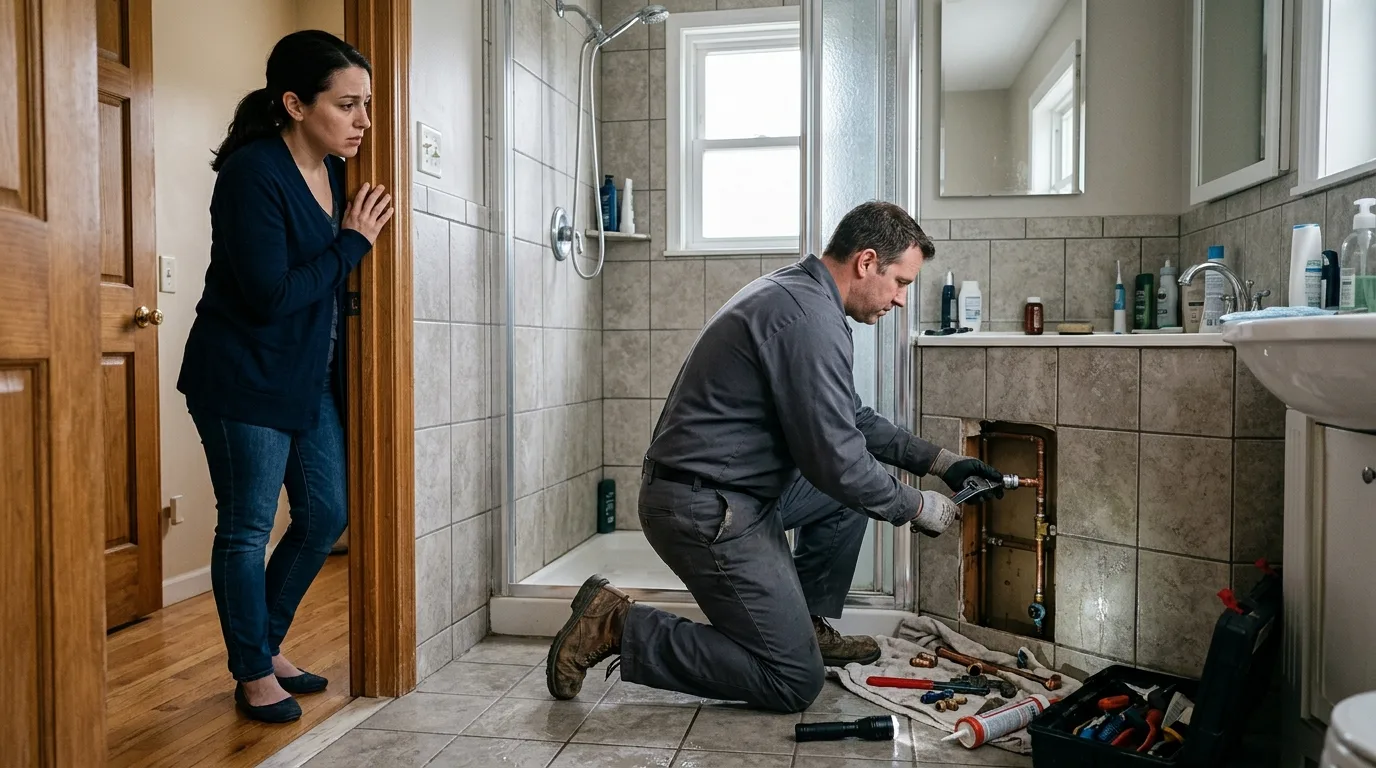
A shower valve sits in the wall. Depending on the house, it can be reached from the back (a closet, a hallway, a garage) or only from the front, through tile. That single fact determines the cost more than the part does.
So the first job is finding out what is behind that wall, and whether an access panel in a less visible surface solves the problem. Cutting tile is sometimes unavoidable, but it should be a decision rather than a default.
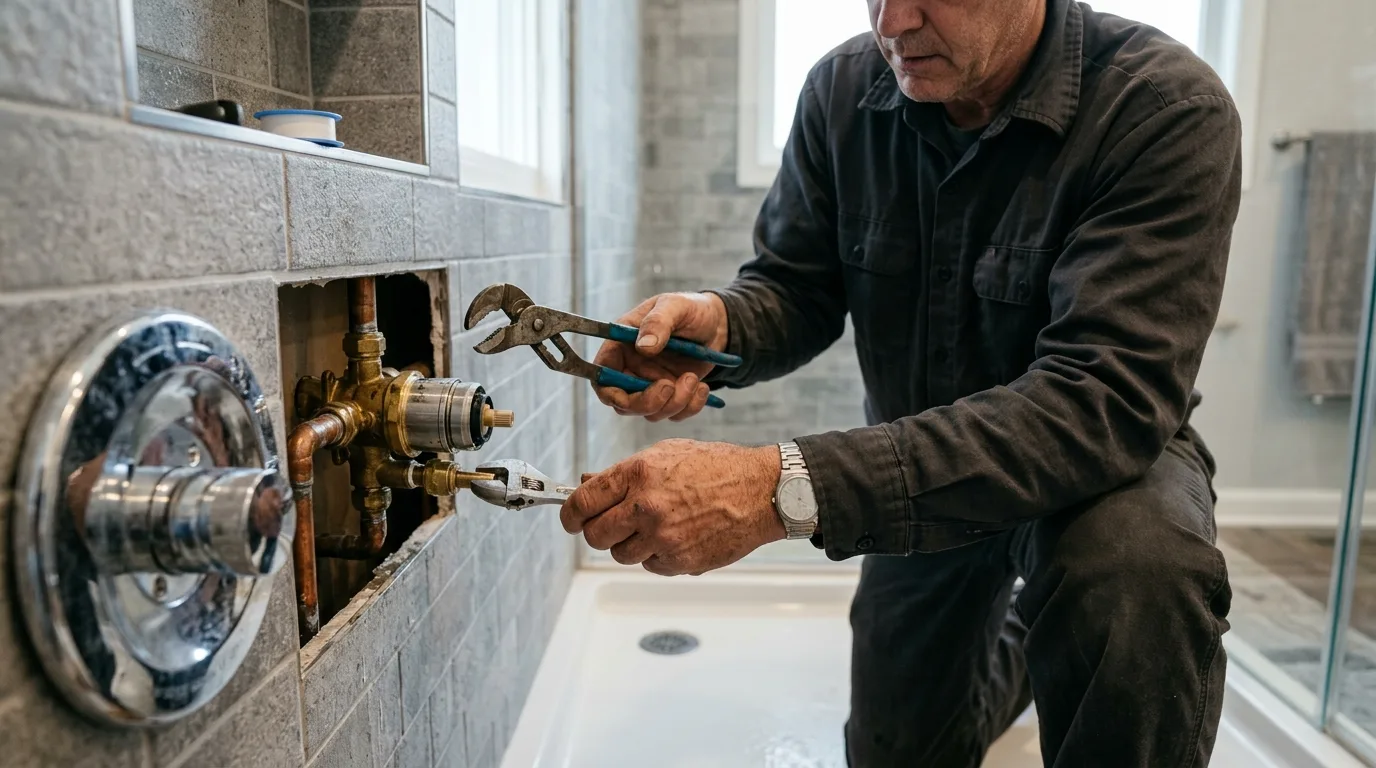
Dripping and diverter problems are the bulk of it; leaks below the pan are the ones that matter most.
Original 1950s and 60s valve bodies are often two-handle compression designs whose seats and stems can still be rebuilt, worth knowing, because a rebuild avoids opening the wall entirely. Single-handle valves of a certain vintage have no cartridge available at all, which forces the access conversation.
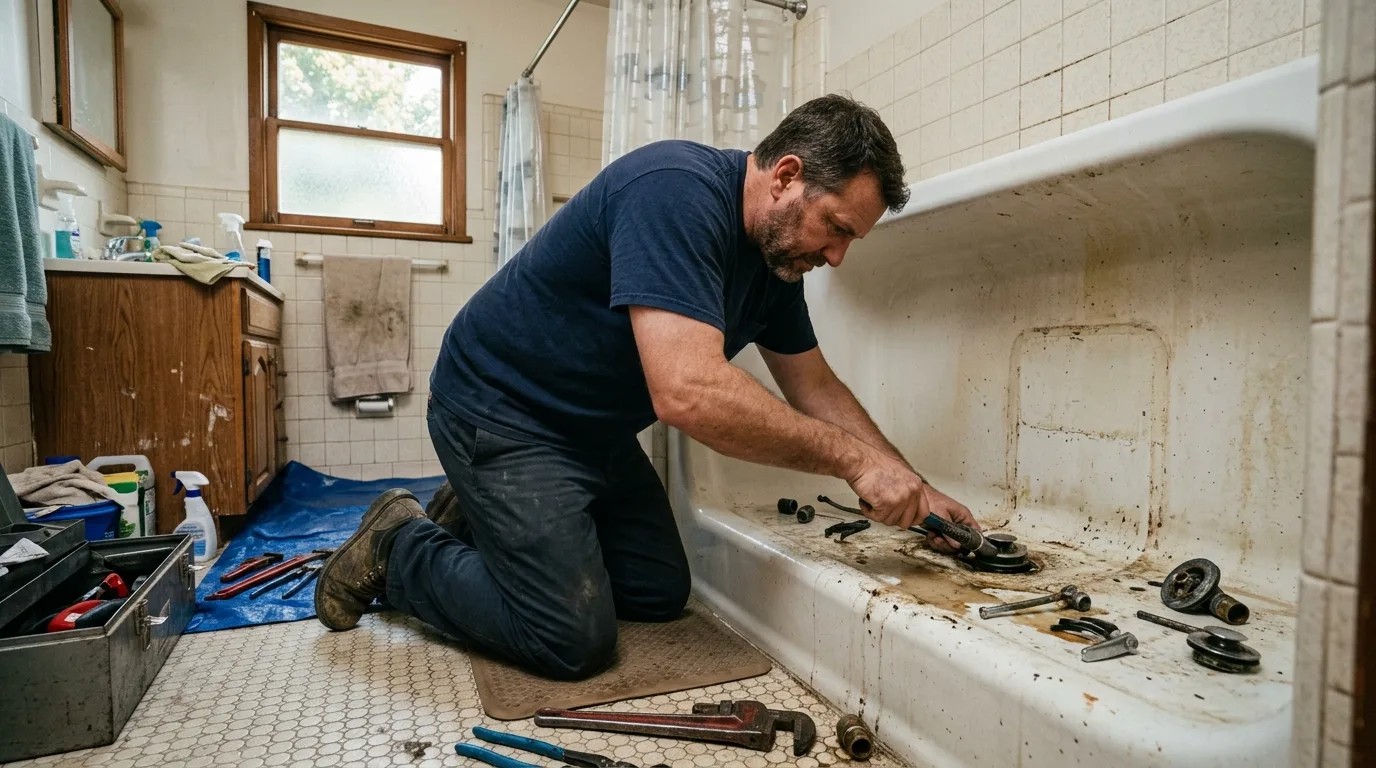
The other frequent find is the tub waste and overflow. Old brass and cast assemblies corrode at the joints below the tub, and the leak shows up as a ceiling stain downstairs or a soft floor at the tub apron rather than as visible water in the bathroom.
Before agreeing to cut tile, check what is on the other side of the valve wall. On many single-story tracts here that wall backs onto a closet or the garage, and a neat access panel there costs a fraction of tile repair.
Brand and generation identified from the trim where possible, so the correct cartridge or rebuild kit is sourced rather than guessed.
What is behind the wall, and whether a rear access panel avoids tile work. You get the options with prices before anything is opened.
Seats, stems, cartridges and diverters replaced where parts exist. Where they do not, a valve body replacement is priced honestly.
Where there is staining, the source is found (valve, supply, pan, waste and overflow, or grout failure) before repairs are made.
Slow tub drains cleared through the waste and overflow, and the branch checked if it is a recurring problem.
Full-temperature cycling, diverter held under pressure, drain flow checked at volume, and any access panel finished cleanly.
That is a leak with a source. Located before anything is opened up, call any hour.
Rebuilding an existing valve is the cheapest and least invasive path: new seats, springs, stems or cartridge, existing trim reused. On serviceable valves it restores them completely.
Re-trimming (new handles and escutcheon on the same valve body) updates the look without wall work, as long as the new trim matches the existing body. It is a narrow but useful option.
Replacing the valve body is the full job: wall access, new valve, and a modern pressure-balancing or thermostatic mixing valve, which is what stops the scald when someone flushes a toilet. If the wall is being opened anyway, this is the upgrade worth taking.
Small steps that limit damage and speed the diagnosis.
Send or describe the trim and you will often get the part identified and priced before anyone is dispatched.
The neighbouring jobs on a bathroom visit.
Running, rocking, leaking at the base, or a replacement on old rough-in.
Low-flow compliant fixtures fitted to decades-old valve bodies.
Acoustic listening and pressure testing before anyone cuts drywall or floor.
Not always. Many of these houses allow rear access from a closet, hallway or garage wall, and a tidy access panel there is far cheaper than tile repair. You will get both options with prices before anything is cut.
Because the valve is an old non-balancing design. A pressure-balancing or thermostatic valve fixes it permanently, and it is the upgrade worth taking whenever a valve body is being replaced anyway.
Usually no. On a serviceable valve it is a cartridge or a seat-and-spring rebuild, an hour or so of work and an inexpensive part, with no wall access needed.
Sometimes, but often it is hair and soap in the tub's own trap and waste arm, which clears easily. If several fixtures are slow at once, then it is the branch or the main, and that is a different job.
It could be the valve, a supply line, the pan or grout, or the waste and overflow, and they are found in very different ways. Locating it first is what stops you paying to open the wrong ceiling.
Often yes, if the new trim is compatible with the existing valve body. It is a genuine low-cost refresh. Mixing brands generally does not work, so the body has to be identified first.
One number covers all of it. If you are not sure which of these your problem is, describe it and we will tell you.
Valve rebuilt or replaced, leak located, drain cleared, with access decided before anything is opened.