Main Water Line Repair
The run from the meter to the house, leaks, pressure loss, replacement.
High water pressure is the quiet cause of a surprising share of plumbing failures: burst supply lines, weeping valves, failed heater relief valves, hammering pipes. It is also cheap to measure and cheap to fix.
Line answered 24/7 · static and dynamic pressure measured on the visit
Static pressure with everything closed, and dynamic pressure with a fixture running. Together they distinguish a pressure problem from a flow problem, which are treated completely differently.
Code generally caps residential pressure at 80 PSI, and comfortable is roughly 50 to 70. Above 80 you are shortening the life of every connector, valve, appliance and fixture in the house, and the damage accrues invisibly until something lets go.
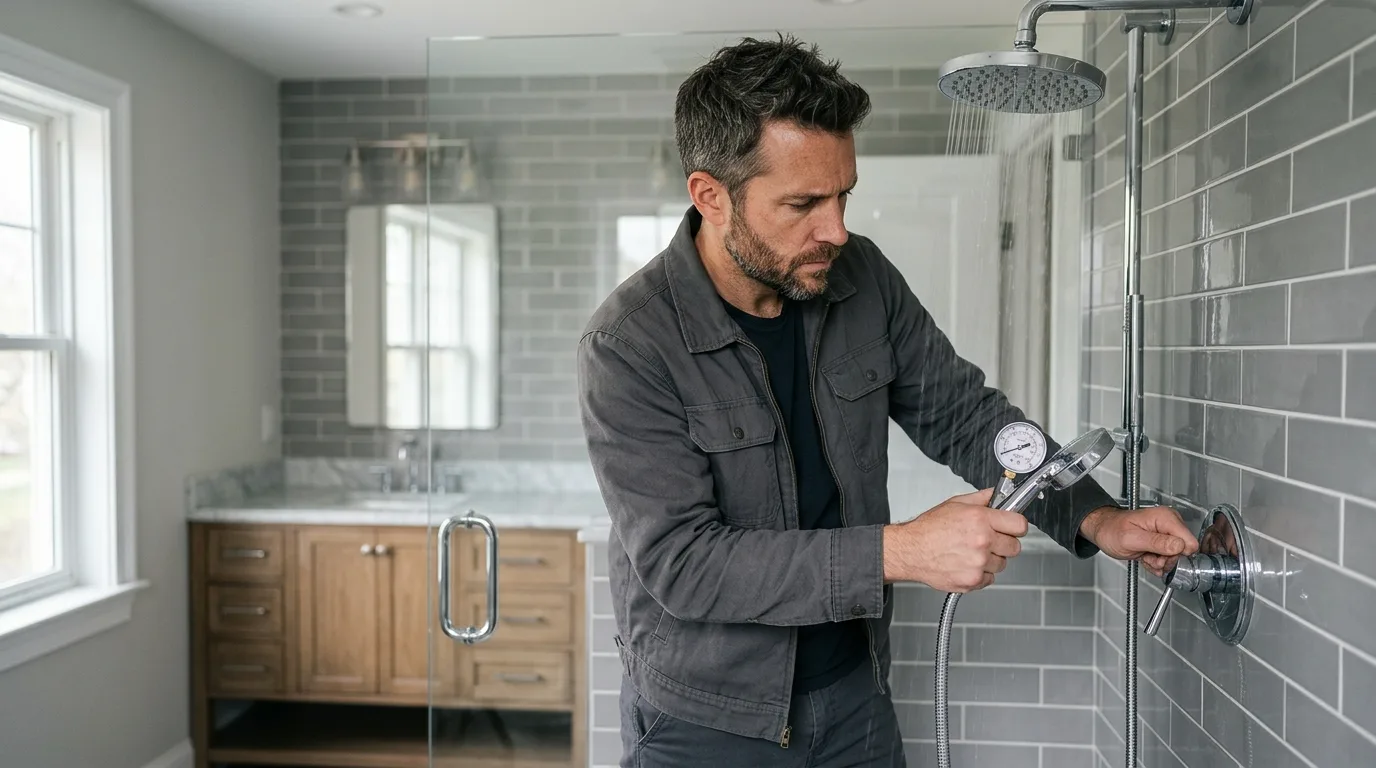
High and low pressure produce different complaints, and a failed regulator can produce either.
Municipal supply pressure in parts of southeast LA County runs well above what a house wants, which is exactly why regulators are fitted at the service entry. They are wear items with a diaphragm and a spring, and they fail, sometimes stuck open, sometimes creeping closed.
Elevation adds variation. Houses low on a street or at the bottom of the Whittier hills can see markedly higher pressure than neighbours further up, so the answer is always a gauge on your line rather than what is typical for the area.
Whole-house low pressure has three common causes: a failed regulator, a restricted or leaking service line, or corroded internal piping. They cost wildly different amounts to fix, and one gauge reading starts separating them.
Gauge on an outside hose bib, readings taken closed and under flow, so the diagnosis begins with data.
Usually just downstream of the meter or where the line enters the house. Age, condition and adjustability all get checked.
On a closed system, a failed expansion tank or missing relief path can produce pressure spikes that mimic a bad regulator.
Some regulators can simply be adjusted back into range. Failed diaphragms mean replacement, and that gets priced before the work.
New readings taken at rest and under flow, and shown to you, rather than a claim that it is fixed.
Supply lines, angle stops and the heater relief valve get a look, since sustained high pressure often leaves casualties.
High pressure is the usual reason it happened. Fix the cause, not just the hose.
Adjustment is free-ish and immediate where the regulator is sound and simply out of range. It should always be tried and verified with a gauge before parts are sold.
Replacement is the answer for a failed diaphragm, a seized adjustment, or an original unit well past its service life. It is a modest part and a short job at an accessible location.
Adding a regulator where none exists (some older properties have none) is worth doing if measured pressure is high. So is a thermal expansion tank where a check valve or regulator has made the system closed, which is the missing piece behind many mystery pressure spikes.
A hose-bib gauge costs very little and answers the first question immediately.
If you already have a gauge reading, the conversation gets much shorter and the price much more certain.
Pressure sits upstream of all three of these.
The run from the meter to the house, leaks, pressure loss, replacement.
Copper or PEX through a single-story ranch, sequenced to keep water on.
Acoustic listening and pressure testing before anyone cuts drywall or floor.
Between about 50 and 70 PSI for comfort, and below the 80 PSI code ceiling. Below 40 feels weak at fixtures; above 80 shortens the life of everything connected to the system.
Typically ten to fifteen years. They are a wear item with a rubber diaphragm and a spring, and they fail gradually, which is why a house can drift into high or low pressure without anyone noticing a single event.
Yes, and it is one of the most common causes of indoor flooding we see. Braided lines and plastic fill valves are the weakest links in the system, and sustained high pressure finds them.
It might be, and it is the cheapest thing to rule out. The other candidates are a leaking or restricted service line and corroded internal piping. Measure first, the difference in repair cost between those is very large.
When a regulator or check valve makes your plumbing a closed system, heated water has nowhere to expand into, and pressure spikes every heating cycle. An expansion tank absorbs that. Missing tanks explain a lot of weeping relief valves.
Typically it is treated as a straightforward repair, though requirements vary and any associated service line work may need one. It gets handled as part of the job either way.
One number covers all of it. If you are not sure which of these your problem is, describe it and we will tell you.
Two gauge readings and a straight answer, before anyone recommends repiping your house.