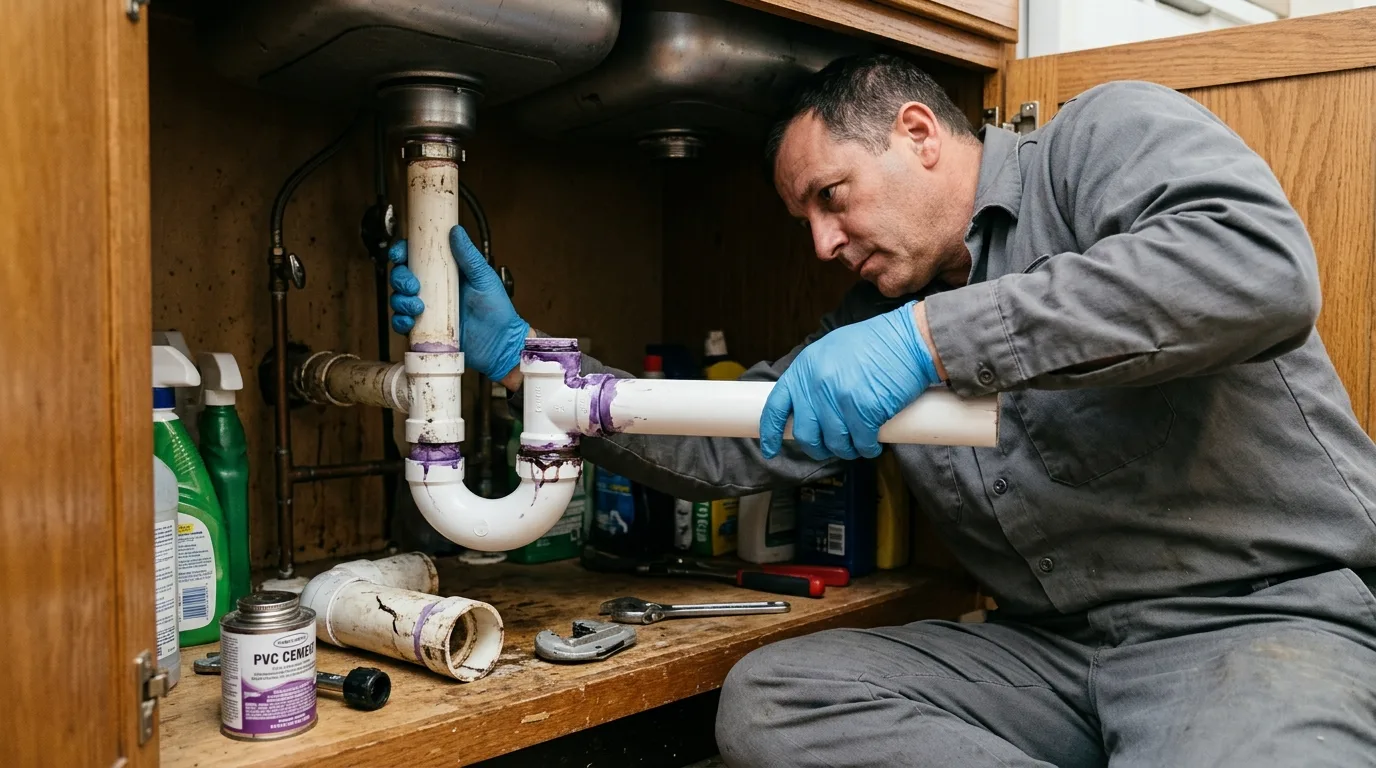
Hydro Jetting
High-pressure water that scours grease and root hair off the pipe wall instead of punching a hole through it.
A lateral that backs up repeatedly is telling you something specific. A camera run says where, how bad, and which of three very differently priced repairs you actually need, before a shovel touches the lawn.
Line answered 24/7 · you see the camera footage yourself
Sewer work has a bad reputation because the cheapest option and the most expensive one get sold for the same symptom. A repeat backup can mean a single cracked joint eight feet from the house, or a clay lateral that has been failing along its whole length for a decade.
The only thing that separates those is footage. Once we know the material, the depth, the slope and where the defect sits, the repair picks itself: a spot repair on one bad section, a cured-in-place liner through a run with sound structure, or full replacement where the pipe has lost its shape.
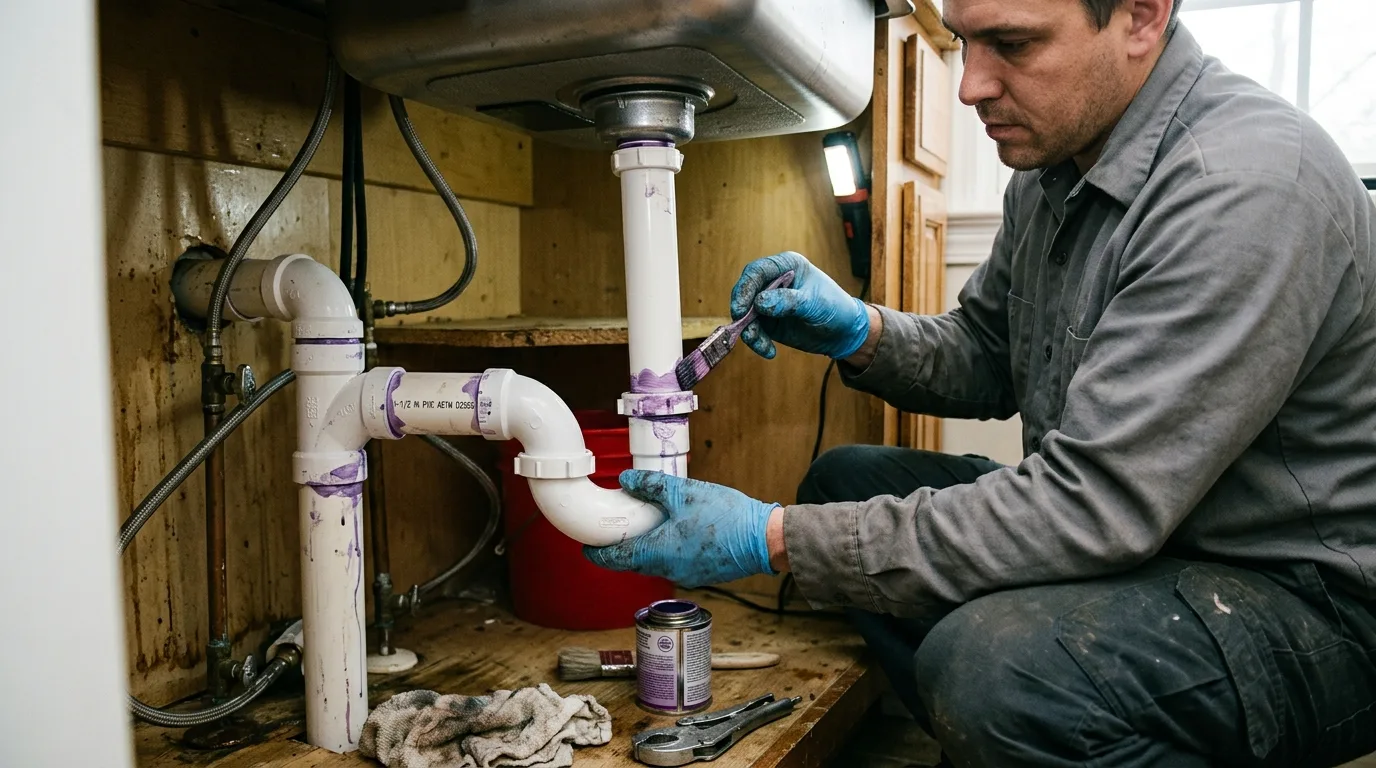 Inspection first
A single slow sink is a fixture problem. These are the symptoms that point past the fixtures to the line running out to the street.
Vitrified clay was standard for residential laterals through the postwar tract building that shaped most of this city. Clay is chemically tough and lasts a long time, but it comes in short sections, and every joint is a seam that roots can find.
Cast iron inside the house has the opposite failure mode: it corrodes from the inside out, scaling until the bore narrows and eventually going soft along the bottom of the pipe. Add decades of ground movement on Southern California soils, and offset joints and bellies (low spots where waste sits instead of flowing) become the third common finding.
Norwalk's mature street trees are a large part of why laterals fail here. Roots do not break sound pipe; they follow moisture to a joint that is already weeping, then widen it. Which is why a joint repair without a root plan comes back.
If the house cannot drain, that gets handled first. Diagnosis is worthless while sewage is standing in a tub.
From the cleanout out to the main, with distances recorded. You watch the screen, and you get the footage.
A sonde in the camera head lets the exact spot be marked on the surface, along with how deep it sits, the two numbers that drive the cost of any dig.
Spot repair, liner or replacement, each with a real price and a plain description of what it does and does not fix.
Anything in the public right-of-way or requiring a City of Norwalk permit gets handled properly, and underground utilities are marked before excavation.
The work is done, then the line is cameraed again and the site restored. You see the finished pipe, not just the invoice.
Get the footage and a second read before committing to a five-figure dig. Same-day camera runs available.
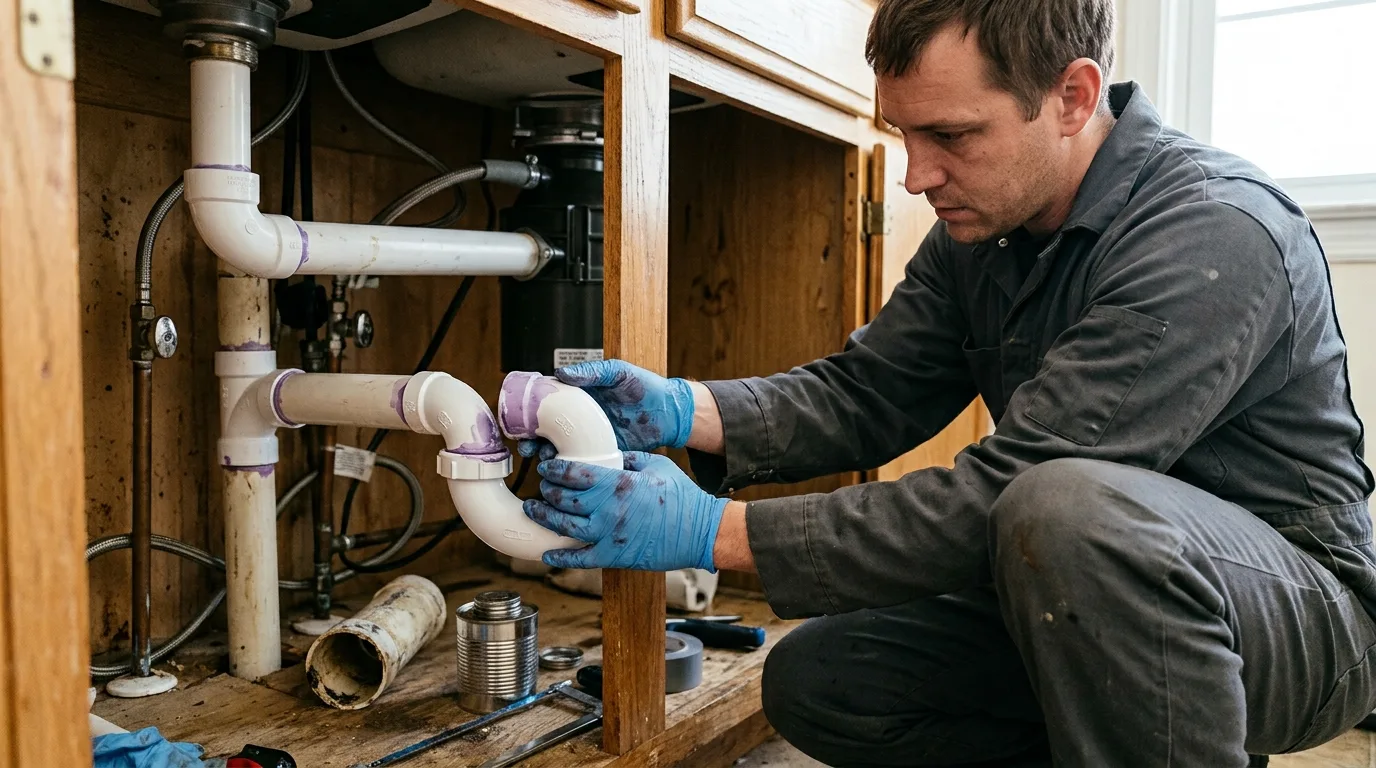 Trenched only where needed
A spot repair replaces one failed section. When the camera shows a single cracked or offset joint in otherwise sound pipe, this is the cheapest honest answer, one modest excavation, a day of work.
Cured-in-place lining pulls a resin sleeve through the existing pipe and hardens it into a new pipe inside the old one. It needs structure to bond to and roughly consistent shape, and it seals every joint along the run, so roots lose their way in. Minimal digging, higher material cost.
Full replacement is for pipe that has lost its shape, collapsed sections, deep bellies, or clay that is cracked along most of its length. It is the most disruptive and the most permanent, and on a lateral that is seventy years old it is often the option that ends the conversation for good.
Sewage backing up into the house is a health issue as much as a plumbing one. Keep the load off the line and stay out of the water.
You will get a real read on urgency, some laterals can wait for a scheduled camera run, and some cannot wait until morning.
Sewer repair rarely arrives alone. These are the neighbouring jobs homeowners here ask about.
High-pressure water that scours grease and root hair off the pipe wall instead of punching a hole through it.
Slow sinks, backed-up tubs and main-line stoppages cleared, with the cause identified before we leave.
Any hour, any day, burst pipes, sewer backups, no water, failed heaters.
Pattern and scope. A clog affects one fixture or one branch and clears properly when snaked. A lateral problem affects multiple fixtures at once, comes back on a cycle, and often shows up outdoors as odour, soft ground or a sinking patch. A camera run settles it in under an hour.
Usually not. A spot repair is one excavation at a marked location. Lining needs access at one or both ends. Full replacement is the disruptive option, and even then trenchless methods sometimes apply, which is a decision the camera footage drives, not a sales script.
The pipe repair itself typically is not covered, since it is wear. Resulting water or sewage damage inside the house often is, and some policies have a service-line rider that does cover the lateral. Photograph everything and call your carrier early.
In most Southern California jurisdictions the property owner is responsible for the lateral from the house to the connection at the public main, including the portion under the street. Work in the right-of-way needs a permit, which is part of the job on our side.
A shallow spot repair is often a single day. Lining a full lateral is typically one to two days. Full replacement runs two to five days depending on depth, length and what has to be cut through and restored.
Not through a lined or newly replaced run, the joints they used are gone. If only one section was repaired and the rest of the clay is original, roots will eventually find another seam, which is why the camera report includes the condition of everything we did not repair.
One number covers all of it. If you are not sure which of these your problem is, describe it and we will tell you.
Camera run, marked location, three priced options. Call and get the footage before you commit to a dig.