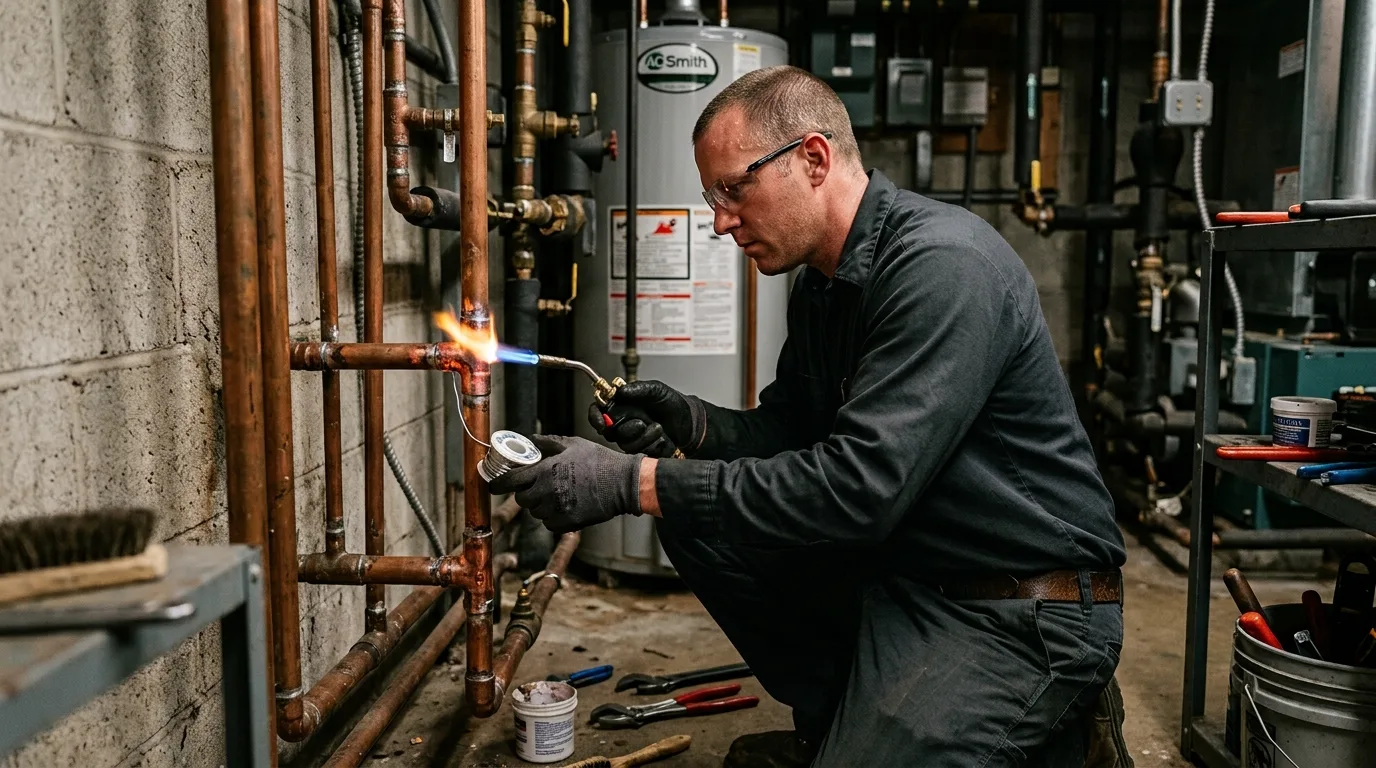
Burst Pipe Repair
Split copper and failed galvanized steel cut back to sound pipe and replaced properly.
Brown water, weak pressure and a third pinhole leak this year are not separate problems. They are one aging supply system telling you it is finished. Repiping ends the cycle, usually in two to four days.
Line answered 24/7 · walk-through and written scope before any wall is opened
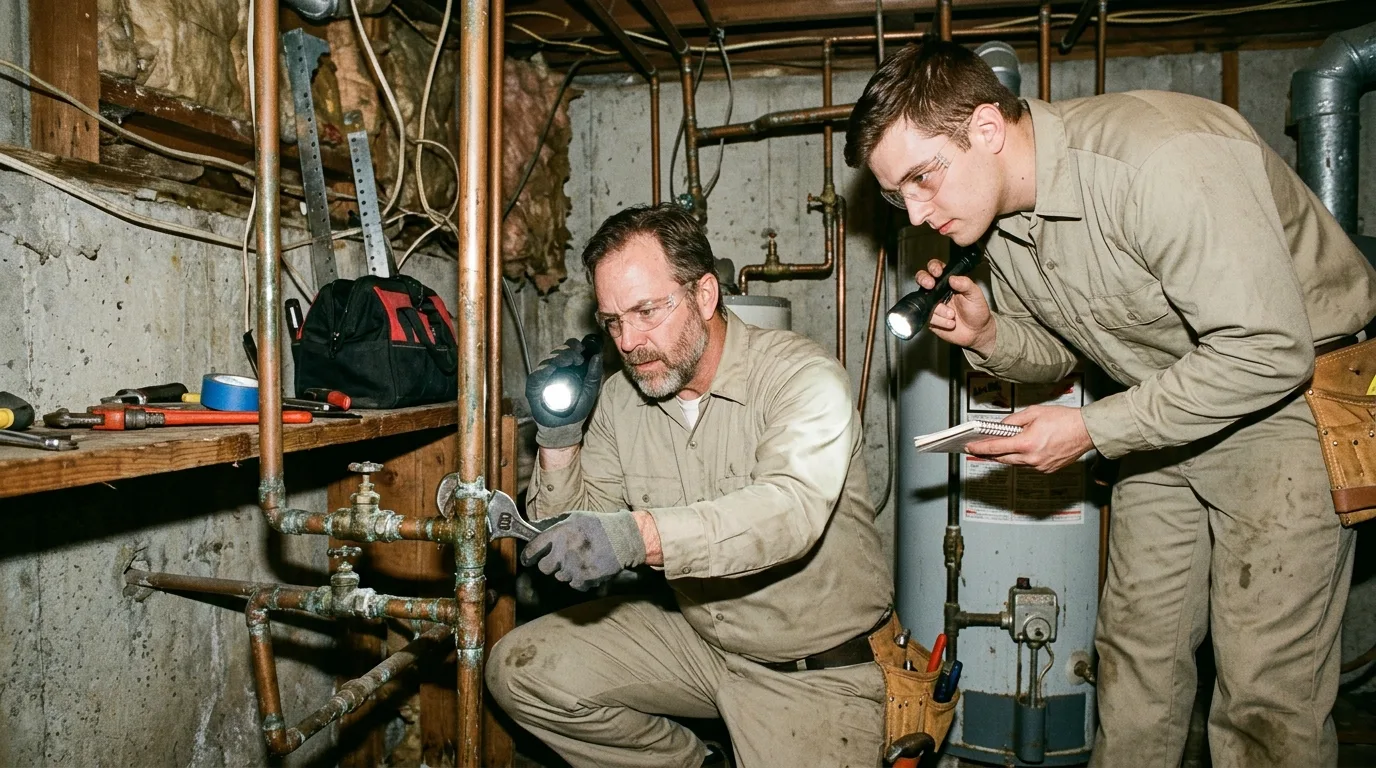
Houses built in this area before roughly 1960 were plumbed in galvanized steel. The zinc coating protects the pipe for forty or fifty years, then rust builds inward, restricting flow, discolouring water and eventually perforating the wall. Every one of those pipes is now past its design life.
Copper from the 1960s onward fails differently. Pinhole leaks from pitting corrosion show up first in horizontal runs and near fittings, and once a house starts producing them it tends to keep producing them. Patching each one is cheap; the fourth patch plus the drywall repair usually is not.
 What comes out of the wall
One bad faucet is a faucet. When the pattern is house-wide, the pipe is the story.
The postwar tracts here are mostly single-story slab-on-grade or raised-floor homes with attic access and stucco exteriors. That combination is good news: most of a repipe can run through the attic and drop down to fixtures, so the number of wall openings stays low and the work stays out of the slab.
Where the original supply runs under a slab, the pipe generally gets abandoned in place and rerouted overhead rather than jackhammered out. It is faster, less invasive, and it removes the possibility of a future slab leak on those lines entirely.
If a slab leak has already been repaired on your house and the pipe is original, a repipe is worth pricing. Rerouting the whole system overhead means the next slab leak simply cannot happen on your supply lines.
Every fixture, every run, every wall opening identified in advance, with a fixed price. No mid-job discoveries priced on the spot.
Floors covered, furniture moved off walls, plastic hung to contain dust. Water gets shut off for working hours, not for four days straight.
Access cuts made at planned points (typically small, high, and where a patch is easy) rather than opening whole walls.
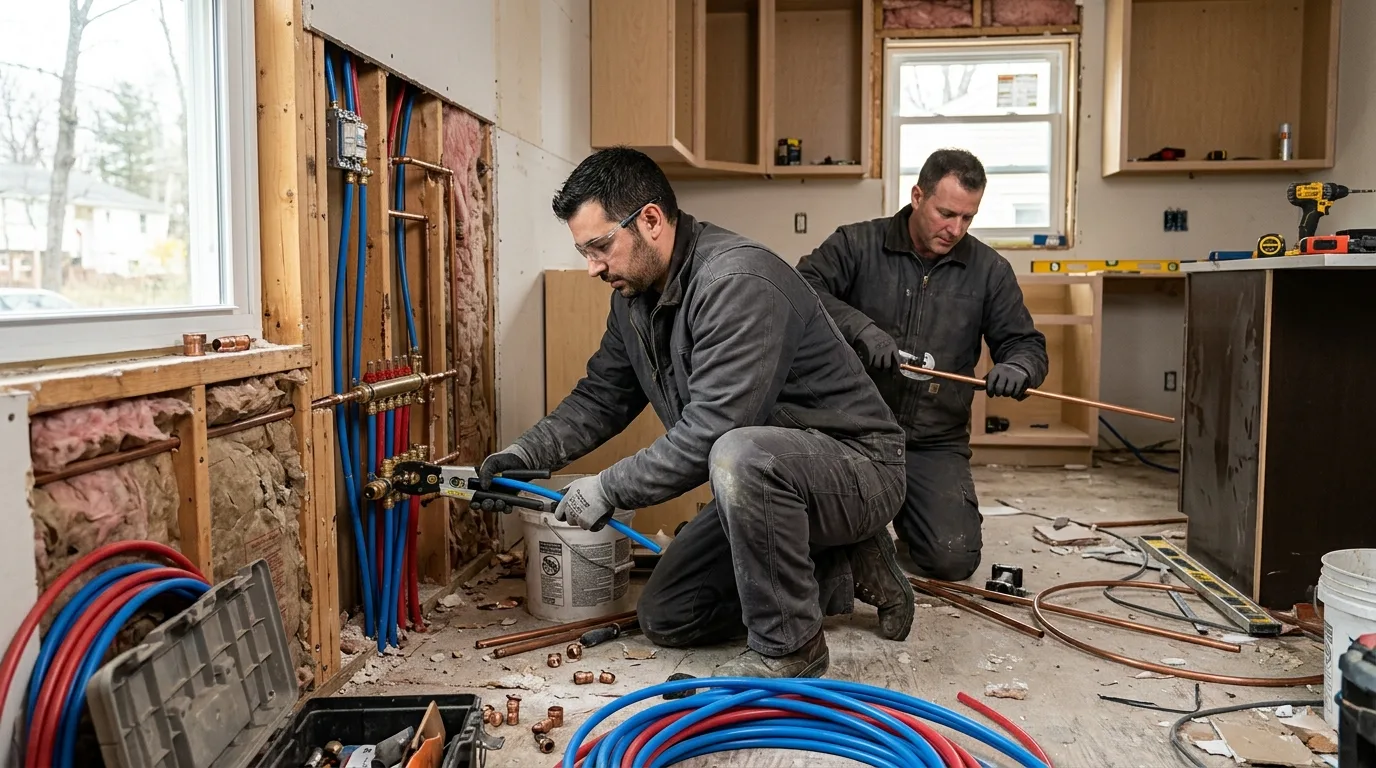
New lines routed through attic and walls, manifolded or trunk-and-branch, with new shutoffs at fixtures and a new main shutoff at the house.
The system is pressure-tested and inspected before anything is closed up. Old lines are cut out or capped and abandoned.
Drywall patched, textured and left paint-ready, or finished, if that is in scope. The house gets cleaned before the crew leaves.
Get a written repipe scope and compare it against what you have already spent patching. The call is free.
 Routed overhead
Copper is rigid, proven, and what most people picture when they think of good plumbing. It handles heat well, it does not care about UV, and it is fully recyclable. It costs more in both material and labour because every joint is soldered, and in water chemistry that pits, it can eventually pinhole again.
PEX is flexible tubing run in long continuous lengths, which means far fewer joints and far fewer wall openings. It is cheaper, faster, quieter, freeze-tolerant, and immune to the pitting corrosion that kills copper. It must be kept out of sunlight and away from direct heat sources.
For most Norwalk homes, PEX through the attic is the lower-cost, less invasive answer, and copper is worth the premium where runs are exposed, where local code or an HOA requires it, or where resale expectations favour it. Both are a permanent fix compared with what is in your walls now.
A repipe is disruptive, not uninhabitable. Most families stay put the whole time.
Give us the year, square footage and bathroom count and you will get a realistic range before anyone visits.
Repiping usually comes up after one of these. They are worth reading together.
Split copper and failed galvanized steel cut back to sound pipe and replaced properly.
Warm floors and hidden under-slab leaks located, then rerouted or repaired in place.
Tank or tankless, sized to the house, strapped and vented to current California code.
Two to four days for a typical single-story Norwalk home with attic access, one to two days of pipe work, then patching. Two-story homes and houses with more bathrooms run longer. Water is restored at the end of each working day.
Almost never. Water is off during working hours and back on each evening. The rooms being worked in are dusty and loud, so people who work from home usually plan around one or two of the days.
PEX for most houses here: fewer joints, fewer wall openings, lower cost, and immune to the pitting that pinholes copper. Copper where runs are exposed, where code or an HOA requires it, or where you simply prefer it and the budget carries it.
Yes. Patched, taped and textured to paint-ready as standard. Full finish and paint matching can be included, say so during the walk-through so it is in the written scope rather than a change order.
Often. Galvanized supply lines and a history of pinhole leaks both come up in inspection and get negotiated against hard. A completed repipe with a permit and documented, inspected work is a straightforward line in the disclosure instead of a bargaining chip.
If the cause is corroded, restricted supply lines (which it usually is in houses of this age) yes, dramatically. If the pressure problem is at the street, a failed regulator, or an undersized main, the repipe alone will not fix it, and that gets checked before you commit.
One number covers all of it. If you are not sure which of these your problem is, describe it and we will tell you.
A walk-through, a written fixed price, and a firm start date. Call and get the number you have been putting off.