
Toilet Repair & Installation
Running, rocking, leaking at the base, or a replacement on old rough-in.
Swapping a faucet is a twenty-minute job in a new house and a two-hour job in a seventy-year-old one. The difference is everything underneath: seized angle stops, corroded nuts and supply lines that snap rather than turn.
Line answered 24/7 · shutoffs and supply lines replaced as part of the job
On original plumbing, the parts that have to move first have not moved in decades. Angle stops seize, compression nuts fuse, and the escutcheon or the sink flange is often holding the whole assembly together with corrosion.
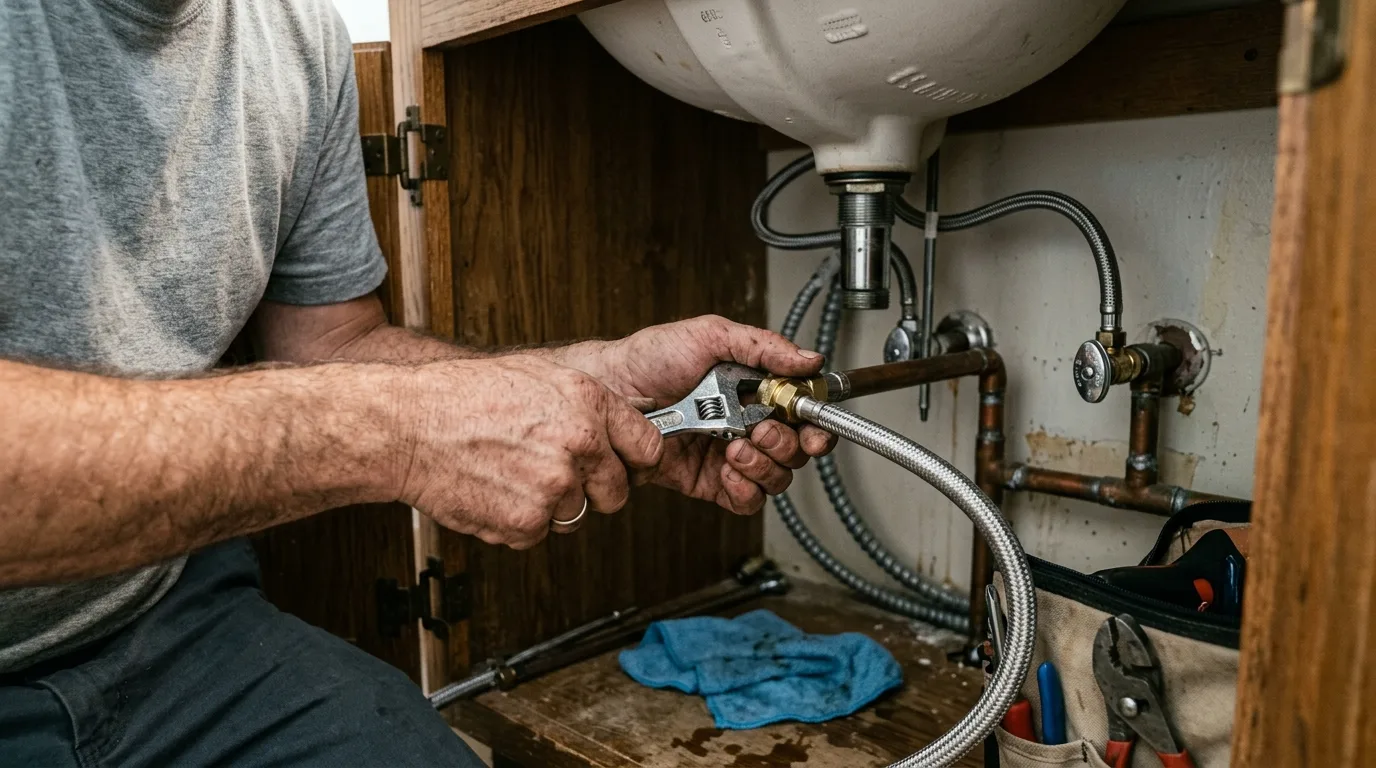
Doing it properly means replacing the shutoff and the supply line while the space is open. That is a small addition to the job and it is the difference between a clean install and a call-back, the next person to need that shutoff will be doing it in an emergency.
Mostly straightforward work, and much of it is worth bundling into one visit.
Original single-handle valve bodies from the 1950s and 60s frequently have no available cartridge, which turns a repair into a fixture replacement, and behind a tiled wall, that can mean an access decision. It is far better to know that before starting.
Galvanized stub-outs are the other complication. Threads corrode from the inside, and a stop that will not seal on a rotten thread needs the stub replaced rather than tightened harder. A pro will say so rather than crank on it and hope.
If your house still has original angle stops, replacing them across the house in one scheduled visit is genuinely worth it. Every seized shutoff is a small repair that turns into a whole-house water shut-off later.
Hole count and spread, supply configuration, and drain alignment checked against the fixture you have or want.
Shutoff tested before anything is loosened. If it does not hold, that gets replaced first rather than working around it.
Corroded nuts cut rather than forced where needed, so a stuck fixture does not become a broken sink or a snapped stub.
New quarter-turn stops and braided lines fitted as standard, so the next service call is not an emergency.
Fixture set, escutcheons and gaskets seated, connections torqued properly and sealant used only where it belongs.
Run hot and cold, check every joint dry, cycle the diverter and aerator, and clean up before leaving.
That is the moment to stop and call, before a small job becomes a wet one.
Repair is worth it when cartridges and seats are still available and the finish is sound. A cartridge replacement is inexpensive and returns a good faucet to new performance.
Replacement wins when parts are obsolete, when the body is pitted or the finish is failing, or when a cheap fixture has already been repaired once. Ceramic-disc cartridges in current mid-range fixtures last far longer than the compression washers they replaced.
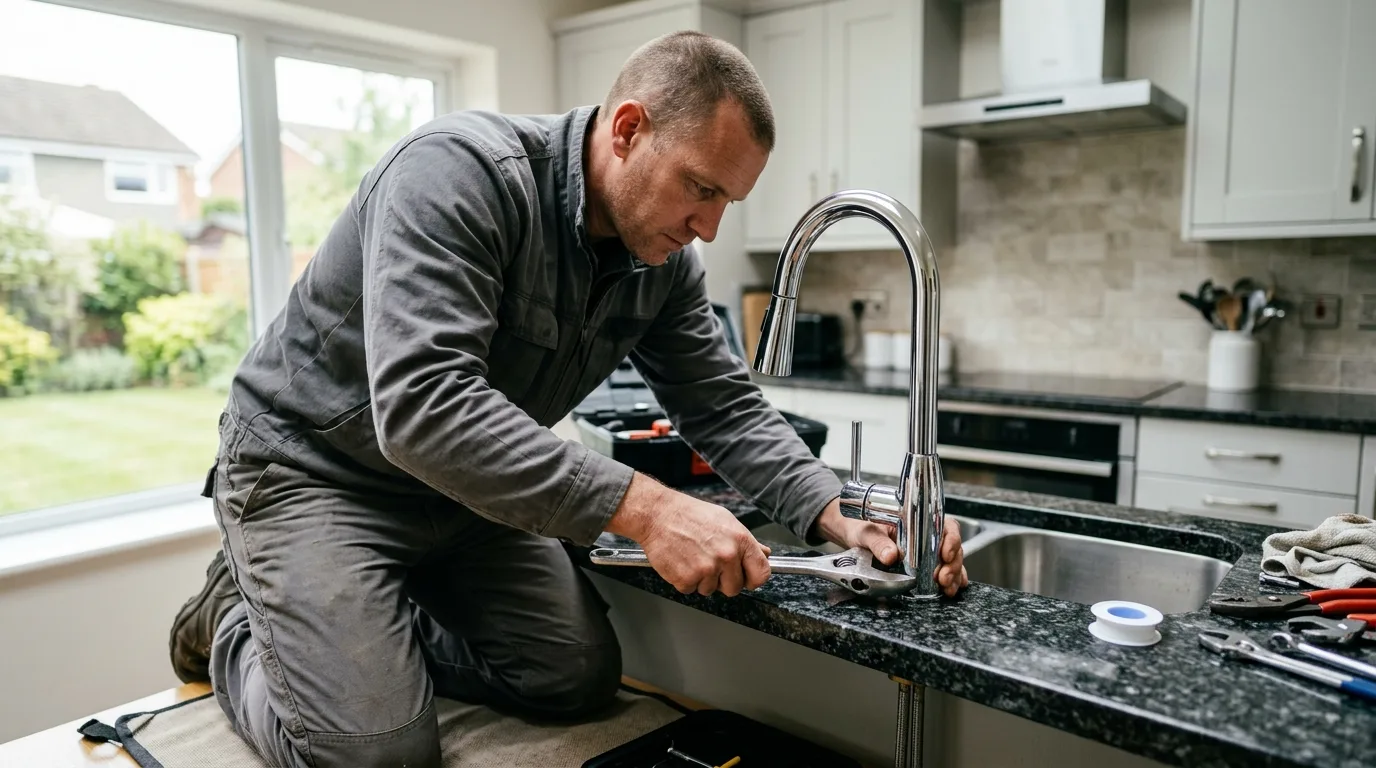
For fixtures you supply yourself, we will fit them, with one caveat: very low-cost faucets have thin bodies and plastic internals that fail early, and no installation quality compensates for that.
A little preparation shortens the appointment and the invoice.
Fixture swaps are easy to price accurately by description, so you will usually get a firm number before dispatch.
These three are the usual companions on a fixture visit.
Running, rocking, leaking at the base, or a replacement on old rough-in.
Valve replacement, diverters, slow tub drains and pan-level leaks.
Humming, jammed, leaking at the flange, or backing up into the sink.
Yes. Have it on site and unopened parts included. The only thing worth checking beforehand is that the hole count and spread match your sink, and that a deck plate is included if you are going from three holes to one.
Usually debris in the cartridge from the supply lines, or a supply line that was not flushed after work upstream. Occasionally it is a faulty cartridge. Either way it is a warranty-and-service conversation, not a re-buy.
We recommend it and quote it, because the old ones are the actual risk in an old house. If yours are modern quarter-turn stops in good condition, they stay.
Either a matched-body replacement that fits the existing rough-in, or wall access to change the valve. Both get priced before anything is opened, because the second one involves tile or drywall repair.
Yes, current California requirements apply to fixtures sold and installed, and modern low-flow aerators and showerheads perform far better than early versions. If you have noticeably weak flow, that is usually pressure or corroded supply, not the aerator.
Several. Three or four straightforward swaps in one appointment is common and much cheaper per fixture than separate trips. Say what you have when you call so the time is booked properly.
One number covers all of it. If you are not sure which of these your problem is, describe it and we will tell you.
Stops and supplies replaced, everything tested under pressure, cabinet left dry and clean.