Drain Cleaning
Slow sinks, backed-up tubs and main-line stoppages cleared, with the cause identified before we leave.
A cable punches a hole through a blockage. A jetter takes the pipe back to bare wall, grease, scale, sludge and root hair flushed out to the main. If your line keeps backing up every few months, this is the difference.
Line answered 24/7 · camera inspection before and after the jet
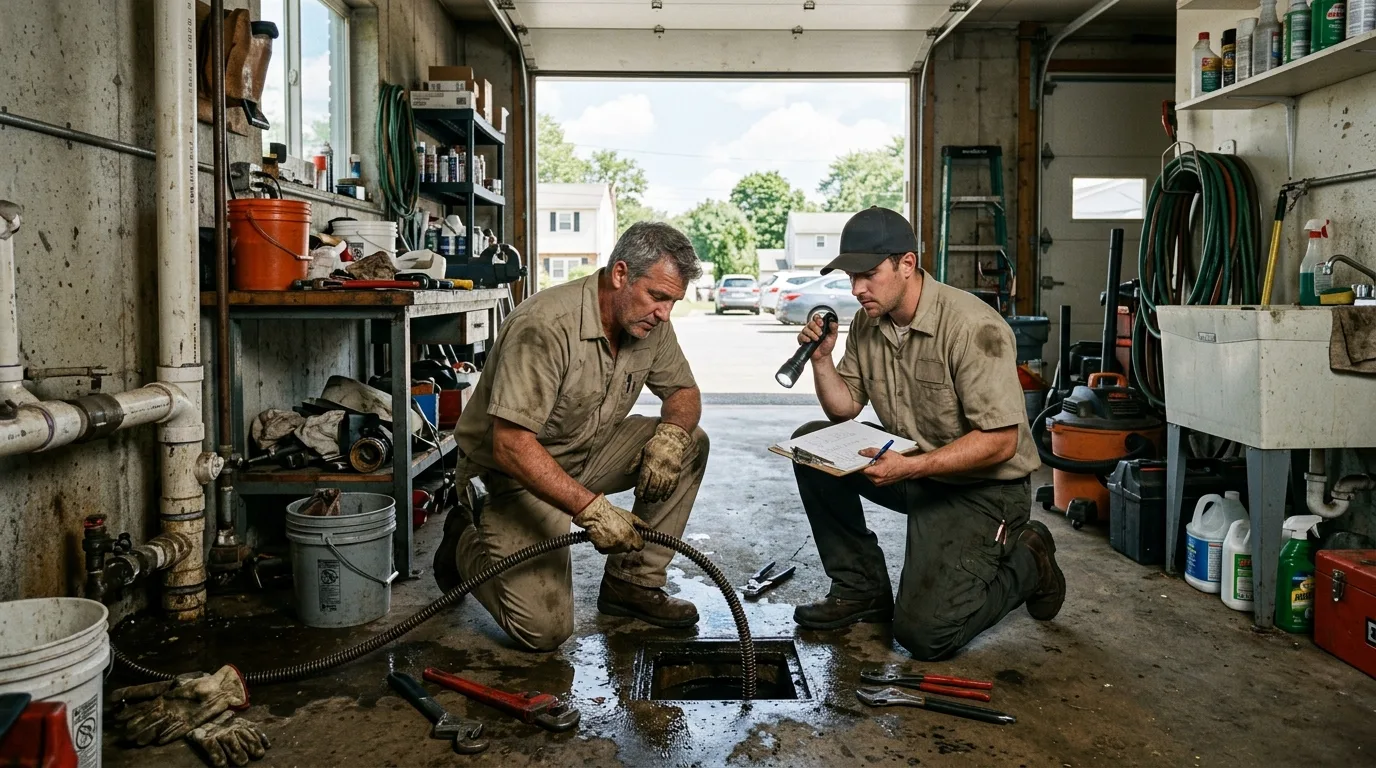
A jetter is a hose with a nozzle that fires most of its water rearward. The back jets pull the hose up the pipe and blast the walls on the way, so debris is driven toward the cleanout behind the head rather than compacted ahead of it.
Nozzles get matched to what is in the line. A chisel head for hardened grease, a rotating head for scale in cast iron, a root-cutting head where a lateral runs under mature trees. Pressure gets dialed to the pipe, not to the maximum the machine can produce.
 Jetter at the cleanout
Cabling is faster and cheaper, and plenty of stoppages only need that. Jetting earns its cost when the pipe itself is coated or the problem keeps coming back.
Most of Norwalk went up between the late 1940s and the mid 1960s, which means a lot of original cast iron and clay laterals are still in service. Cast iron scales from the inside as it ages, and every millimetre of scale is another place grease can grab.
Clay lateral joints are the other half of the story. They are short sections with mortared or gasketed joints, and mature street trees along the older tracts send feeder roots straight to the moisture at those seams. Root hair catches paper and grease, and the pipe closes in from the wall inward.
If your house is on an original clay lateral, jetting is maintenance, not a cure. It buys years of clear flow, but a camera run afterwards will tell you whether lining or replacing that segment is coming.
Access first. Most Norwalk homes have an exterior cleanout near the foundation or at the property line; if there is not one, we discuss installing one rather than pulling a toilet every time.
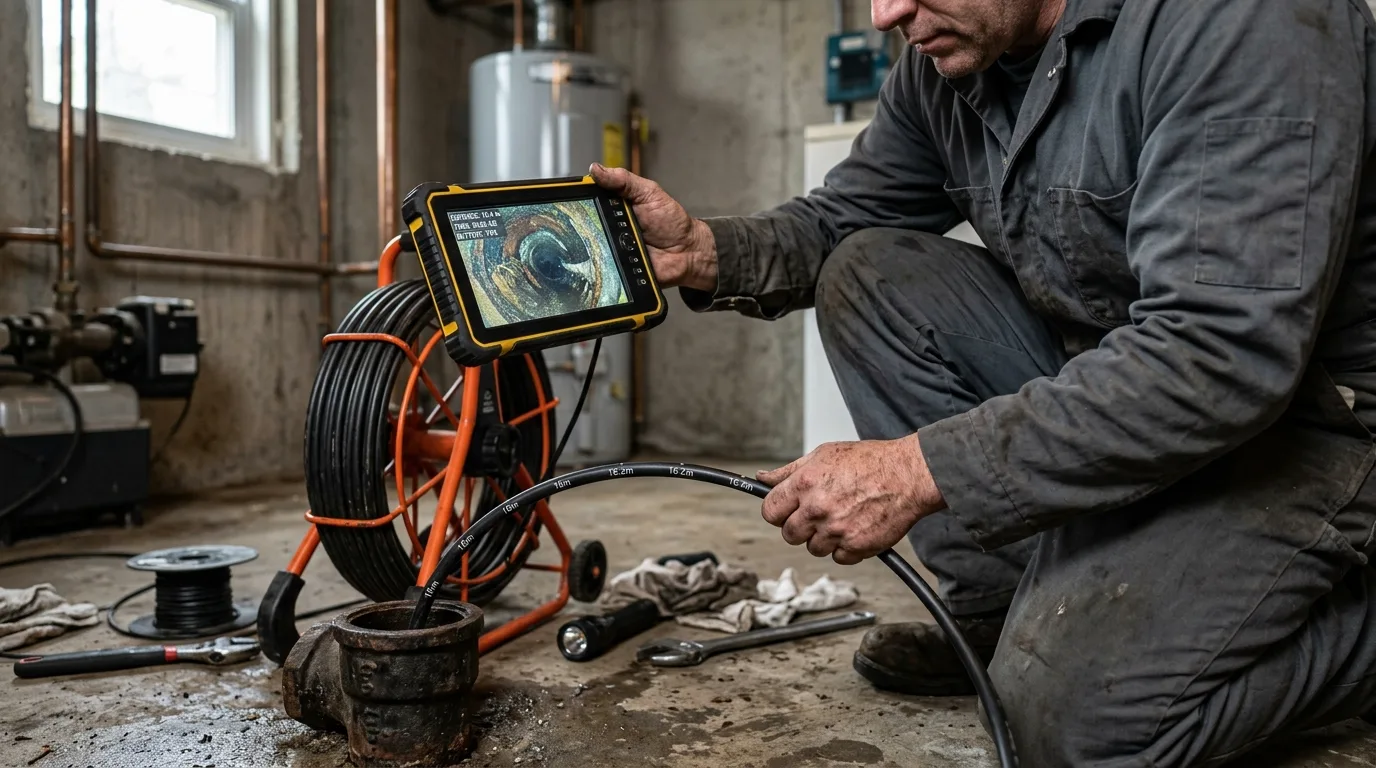
The pipe gets inspected before anything is cleaned so the material, the condition and the actual restriction are known, not guessed.
If the line is standing full, flow gets restored first. Nobody jets into a pipe backed up to the fixture.
Nozzle and pressure matched to the pipe, working out from the cleanout in passes rather than one long push, so debris moves to the main.
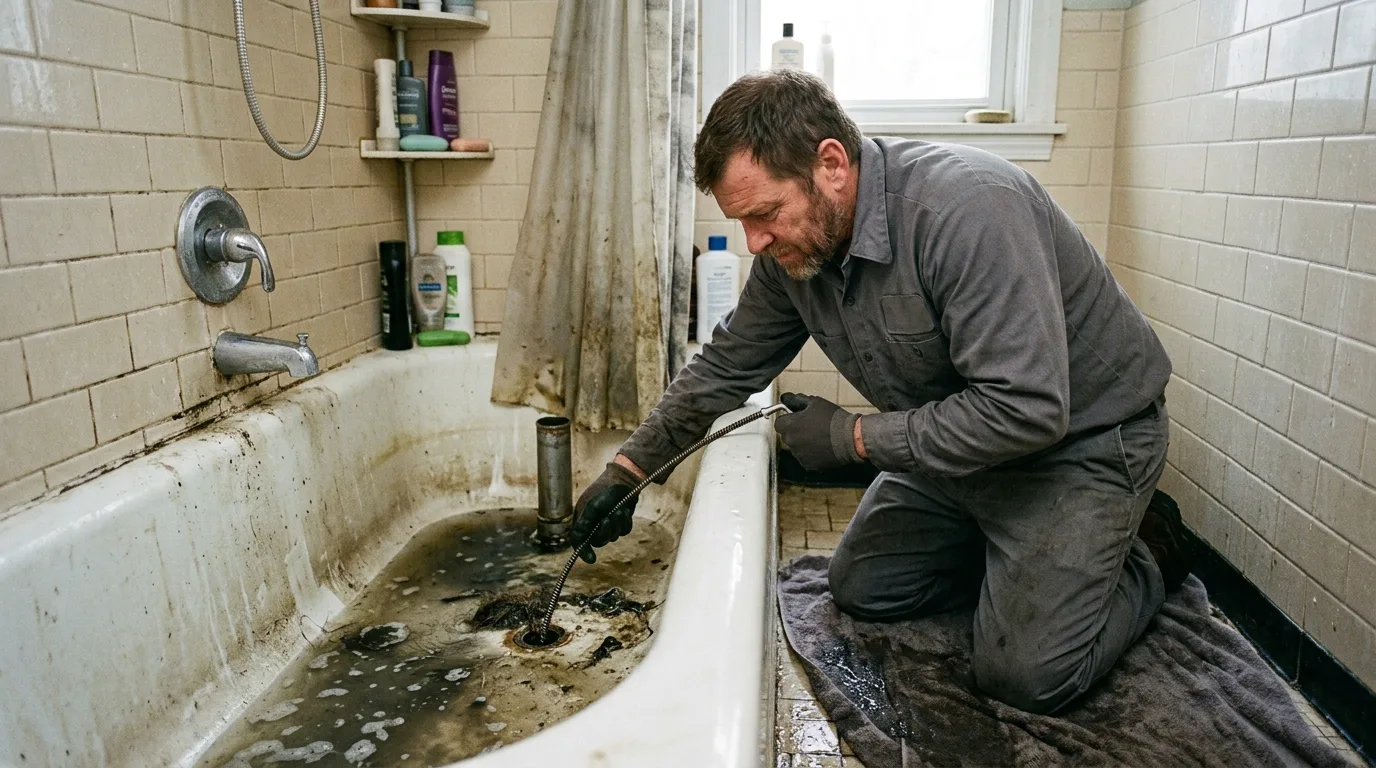
The second pass is the receipt. You see bare pipe wall, and you see any defect the build-up was hiding, a belly, an offset joint, a crack.
If the pipe is sound, you get an interval to jet again. If it is not, you get the option list and rough costs before anyone leaves.
That is the pattern jetting is for. One call, and a pro with a jetter and a camera can be out the same day.
 Camera before and after
Cabling clears a specific stoppage. It is the right tool for a one-off blockage, a fixture branch, or an emergency where flow has to come back now.
Jetting cleans the whole run. It costs more and takes longer, and on fragile pipe it needs a lighter hand, badly deteriorated cast iron or cracked clay can be made worse by full pressure, which is exactly why the camera goes in first.
Lining or replacement fixes the pipe. When the camera shows the wall is gone, no amount of cleaning helps and jetting only buys months. In that case jetting becomes step one of a repair, not the repair.
A few minutes of prep keeps a backup from becoming a cleanup.
Describe the symptom and you will get a straight read on whether this is a cable job, a jetting job, or something a camera has to answer first.
Jetting is often one step in a larger drain story. These are the pages homeowners read next.
Slow sinks, backed-up tubs and main-line stoppages cleared, with the cause identified before we leave.
Camera first, then spot repair, pipe lining or replacement of the failed run, clay and cast iron both.
Any hour, any day, burst pipes, sewer backups, no water, failed heaters.
Not when pressure is matched to the pipe, which is why the camera goes in first. Sound cast iron, clay, ABS and PVC all take jetting fine. Pipe that is already cracked, badly scaled through, or offset at a joint gets either a reduced-pressure pass or no jet at all, because in that case cleaning is not the answer anyway.
A straightforward residential lateral with good cleanout access is usually two to three hours including both camera runs. Heavy root work or a long run to the street can push it to most of a day.
If the camera shows sound pipe and the house has a normal load, most homes here do well on an 18-to-36-month interval. Heavy kitchen use or a lateral under mature trees tends to want it annually.
Yes, with a root-cutting head, and it clears them more completely than a cable does because it takes the hair off the wall too. What it cannot do is close the joint the roots came through, so expect them back on a schedule until that segment is lined or replaced.
Not always, but it makes every future visit cheaper and less invasive. If a jetter has to be run through a pulled toilet or a roof vent, you are paying more in labour than a cleanout would have cost.
Often, yes, paired with a camera run. A clean line and recorded footage answer the buyer's inspection question before it gets asked, and it is cheaper than negotiating against an unknown.
One number covers all of it. If you are not sure which of these your problem is, describe it and we will tell you.
Camera in, jet through, camera again. Call and a local pro with the right nozzle for your pipe can be out today.