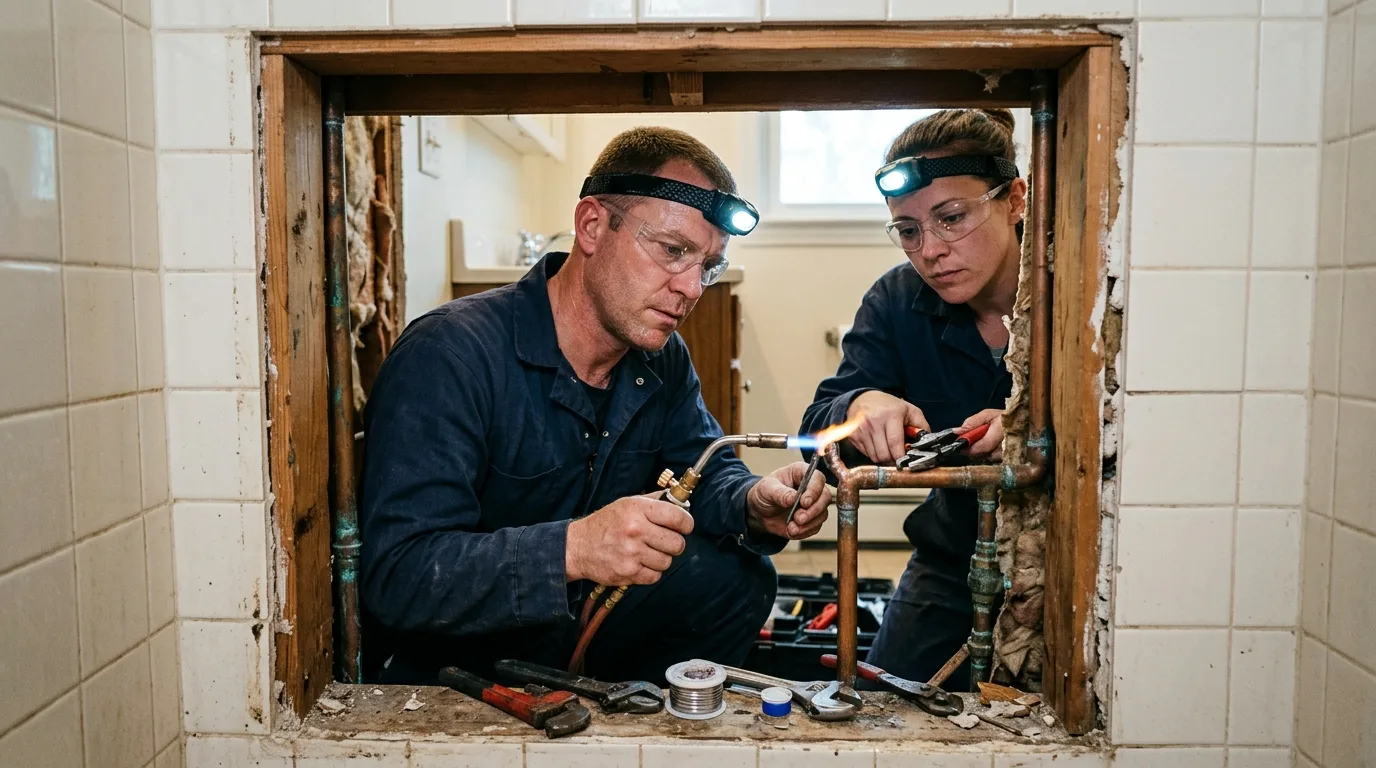
Emergency Plumbing
Answered around the clock for active leaks, backups and no-water situations.
Whittier is the oldest housing we cover and the only part with real elevation. Both matter: pre-war pipe below the floor, and hillside runs that make pressure a live question rather than a given.
Line answered 24/7 · same-day and emergency response
Houses in the older Whittier neighbourhoods can predate 1930. Expect galvanized supply, cast-iron drains, clay laterals, and at least one generation of partial repairs in mismatched materials, which is its own source of corrosion where dissimilar metals meet.
Elevation adds the second variable. Uphill properties can sit at the low end of acceptable supply pressure while houses at the bottom of the same street run high enough to hammer pipes and shorten the life of every fixture. A regulator check is often the first useful measurement.
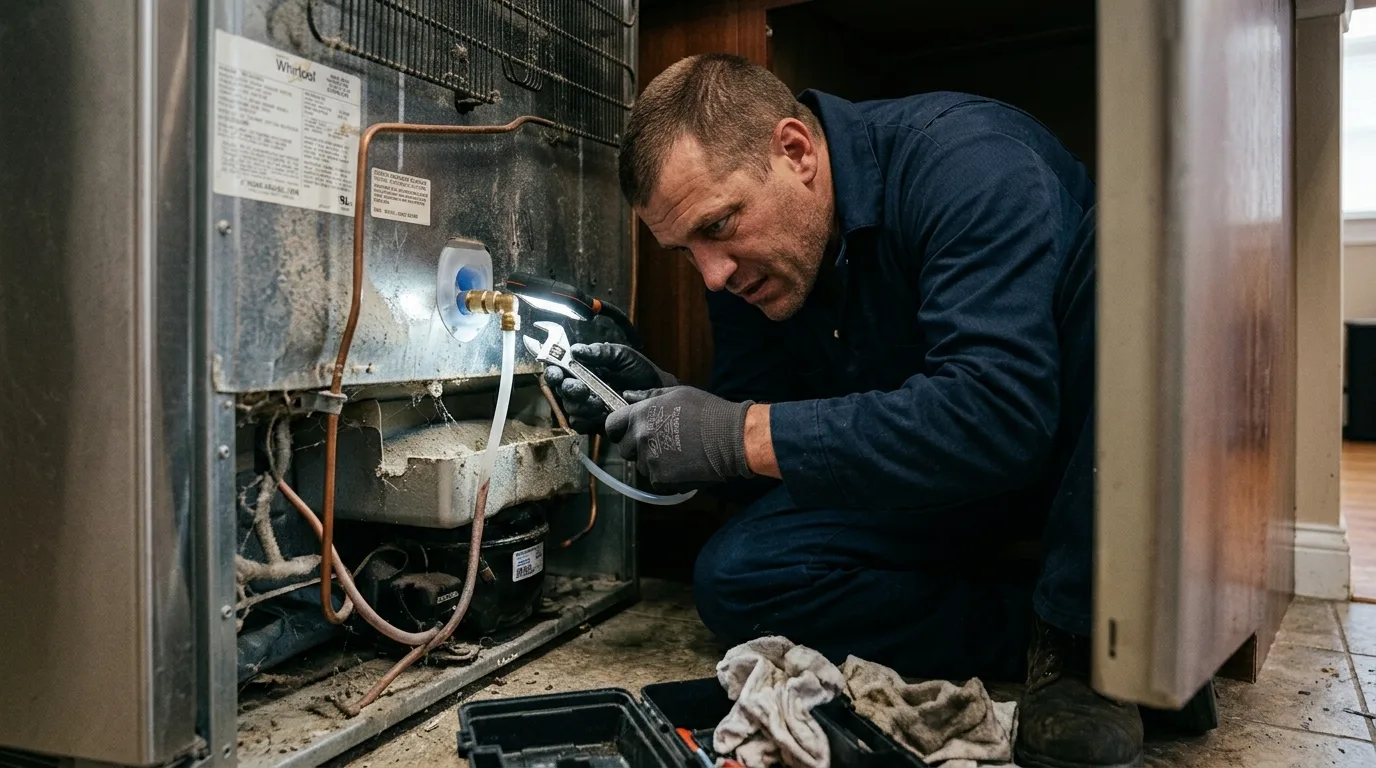 Pressure first
Old-pipe failures, plus pressure at both extremes.
Whittier is at the outer edge of the core service area but fully covered, including overnight. If you are far up into the hills, say so on the phone and you will get a realistic time window rather than an optimistic one.
Before repiping for pressure reasons, have static and dynamic pressure measured at the main. A failed regulator or an undersized service line produces the same symptom as corroded pipe, and costs a fraction to fix.
Get it measured before you commit to a repipe. The call is free.
Everything we do covers Whittier. These six are what pre-war pipe and hillside pressure produce between them.
Answered around the clock for active leaks, backups and no-water situations.
Located under concrete, then rerouted or opened, with the reasoning explained.
Kitchen, laundry, tub and main-line stoppages cleared and diagnosed.
Cracked clay and rusted cast-iron laterals repaired or replaced.
Tank and tankless replacement to California strapping and venting rules.
Copper or PEX through a single-story ranch, sequenced to keep water on.
Whittier is older than most of what surrounds it, and it has three kinds of housing rather than one: pre-war stock in and around Uptown, postwar tracts on the flat, and hillside blocks where the ground does the plumbing no favours. The pre-war houses bring cast iron drains and galvanized supply that has had the longest time to scale. The hillside brings elevation, and elevation brings pressure that varies street to street.
That variation is the thing people find hardest to believe. A house lower on the hill can sit well above 80 psi while a neighbour higher up runs soft, and both are being served correctly. High static pressure quietly destroys flexible connectors, fill valves and heater relief valves; low pressure makes every fixture feel tired. Both are answered by measuring at the hose bib before anybody buys a part.
Older houses here have been extended more often than the postwar tracts, and the additions are where venting and fall get compromised. A fixture that gurgles, drains slowly and smells is usually telling you about its vent rather than its trap, and that is a different, cheaper repair than replacing everything downstream of it.
Elevation costs you roughly half a PSI per foot of rise, so a hillside house starts at a disadvantage. Add a partially closed valve, a failed regulator or corroded supply lines and it drops below usable. Measuring at the main separates the plumbing from the physics.
It is worth attending to. Water hammer usually means high pressure, a failed regulator, or missing arrestors, and sustained high pressure shortens the life of every fixture, connector and appliance in the house; it is a common cause of supply line failures.
Galvanized supply, cast iron inside, clay out to the street, and a history of partial repairs. That is not a crisis, but it does mean a proper assessment beats fixing symptoms one at a time. Start with pressure at the main and a camera run on the lateral.
Elevation. On a hill, static pressure changes with height above the supply, so two houses on the same street can read very differently and both be normal for their position. What matters is whether yours is inside the range fixtures are designed for, which is a gauge test, not a guess.
Some do, but it is the last option rather than the first. Scaled galvanized pipe, a failed regulator or a partly closed valve all imitate low supply pressure and all cost less to fix. We would rule those out before recommending a pump you would then have to maintain.
One number covers all of these. Whittier’s hill edges meet several of them, and elevation matters more to the repair than the boundary does.
Tell us the cross-streets and what the house is doing. Upfront pricing before any work begins.