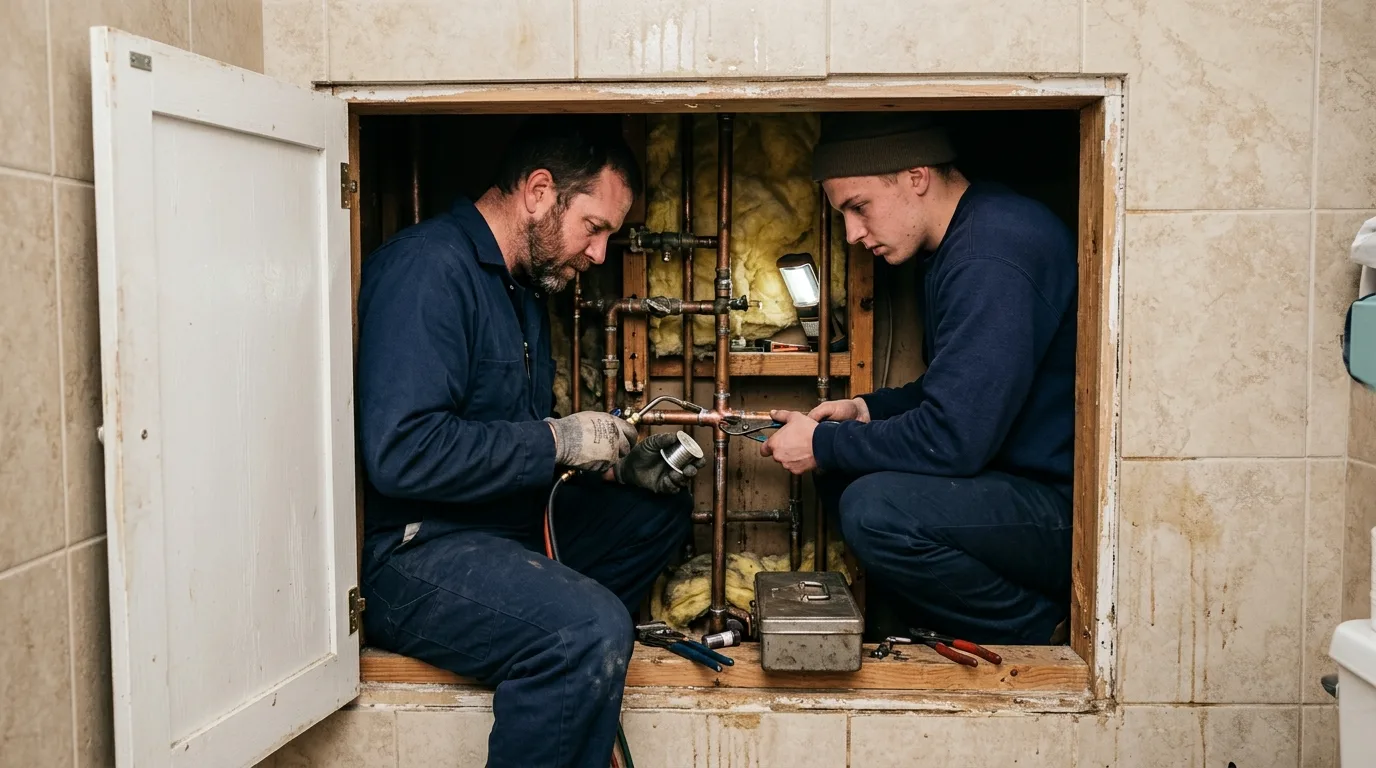
Emergency Plumbing
Answered around the clock for active leaks, backups and no-water situations.
The tracts either side of Studebaker Road are some of the oldest continuously occupied housing in the city, and the plumbing shows it. Original galvanized supply, clay laterals, and street trees that have had sixty years to find the joints.
Line answered 24/7 · same-day and emergency response
These are small-footprint single-story houses on generous lots, raised floor in the older sections and slab in the later infill. Kitchens and baths have usually been remodelled once or twice; the supply and drain lines behind them frequently have not.
That mismatch is what generates most of the calls here. A new faucet on a seventy-year-old galvanized stub, or a modern high-flow shower fed by a pipe whose bore has closed to the diameter of a pencil.
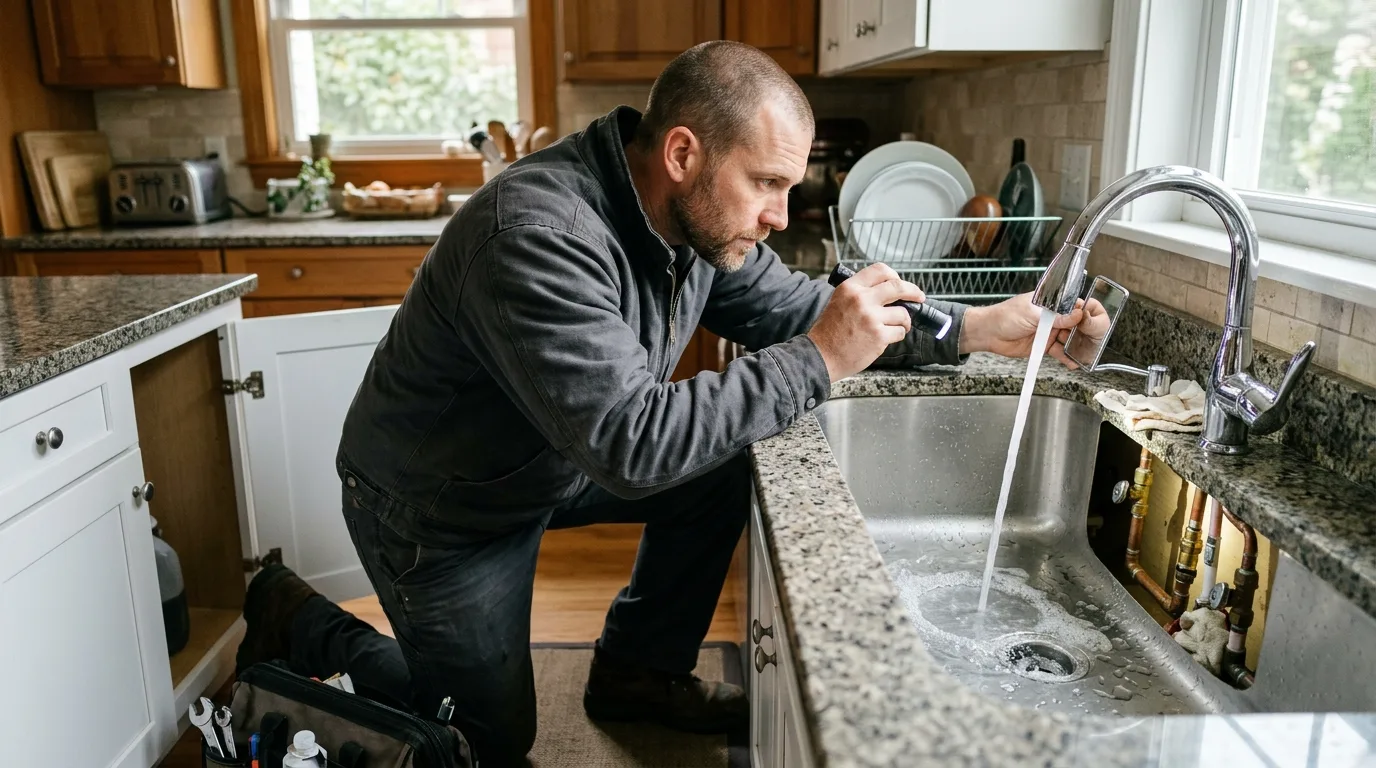 Studebaker Rd tracts
We see the same handful of failures over and over in this pocket, which is useful; it means diagnosis is usually quick.
Studebaker sits close to the freeway, which cuts both ways: fast access outside peak, slower on a weekday afternoon. Emergency calls get the closest available pro rather than the next one on a rota, so a burst line at 2am is generally a shorter wait than a scheduled visit at 4pm.
If your neighbours have been repiped, price it for your house. These blocks were plumbed together and they fail together, usually within a couple of years of each other.
Shut off the main, then call. A pro who knows these tracts can be out today.
Every service reaches the Studebaker blocks. These six are what sixty-year-old pipe and patient street trees keep sending us.
Answered around the clock for active leaks, backups and no-water situations.
Located under concrete, then rerouted or opened, with the reasoning explained.
Kitchen, laundry, tub and main-line stoppages cleared and diagnosed.
Cracked clay and rusted cast-iron laterals repaired or replaced.
Tank and tankless replacement to California strapping and venting rules.
Copper or PEX through a single-story ranch, sequenced to keep water on.
The housing along and off Studebaker Road went up in the postwar build-out, and it carries the standard package for that period: galvanized steel supply, a slab with the main run cast into it, and vitrified clay from the house to the street. These are solid houses, and the plumbing has done sixty-odd years of service. What it has not done is get any newer while the trees above the lateral kept growing.
The failure we are called to most is a lateral that has developed a belly, a low section where the ground settled and the pipe followed. Waste sits in the dip instead of running through it, dries into a hard shelf and gradually closes the pipe. Snaking bores a channel through the shelf and the line runs for a while. Jetting takes the shelf off the pipe wall, and the camera afterwards shows whether the sag is bad enough to need a section replaced.
Water heaters in these houses are usually in the garage, and two things are worth checking whenever anyone is out: seismic strapping, which many older installations either lack or have loose, and the flue. Both are quick to look at and both matter more than the age on the label.
Yes, the older Studebaker tracts are one of the areas we dispatch to most. Give the operator your cross-streets and the approximate build year of the house and the pro arrives with a strong idea of what they are walking into.
Not necessarily, but partial replacement has limits. Replacing the worst horizontal runs buys time and pressure; leaving old branches in place means the discolouration and the leaks continue from whatever is left. A pro will show you which runs are worth staging and which are false economy.
Jetting with a root-cutting head clears the line properly and buys years. It cannot close the joint the roots entered through, so on original clay the long-term fix is lining or replacing that segment. A camera run tells you which one your lateral has earned.
A low spot where the pipe has sagged and no longer drains through. Waste settles in the dip, hardens, and slowly reduces the bore until the line blocks. It is a structural fault rather than a blockage, which is why clearing it repeatedly never holds for long, the dip is still there.
Two straps, upper and lower third of the tank, anchored into structure rather than drywall; that is the standard, and plenty of older installations do not meet it. It is a short job and it is the difference between a tank that stays upright and a gas line that does not.
One line covers all of them. The Studebaker tracts run along the city edge, so if your street straddles it, we will sort it out on the phone.
Tell us the cross-streets and what the house is doing. Upfront pricing before any work begins.