Faucet & Fixture Installation
Low-flow compliant fixtures fitted to decades-old valve bodies.
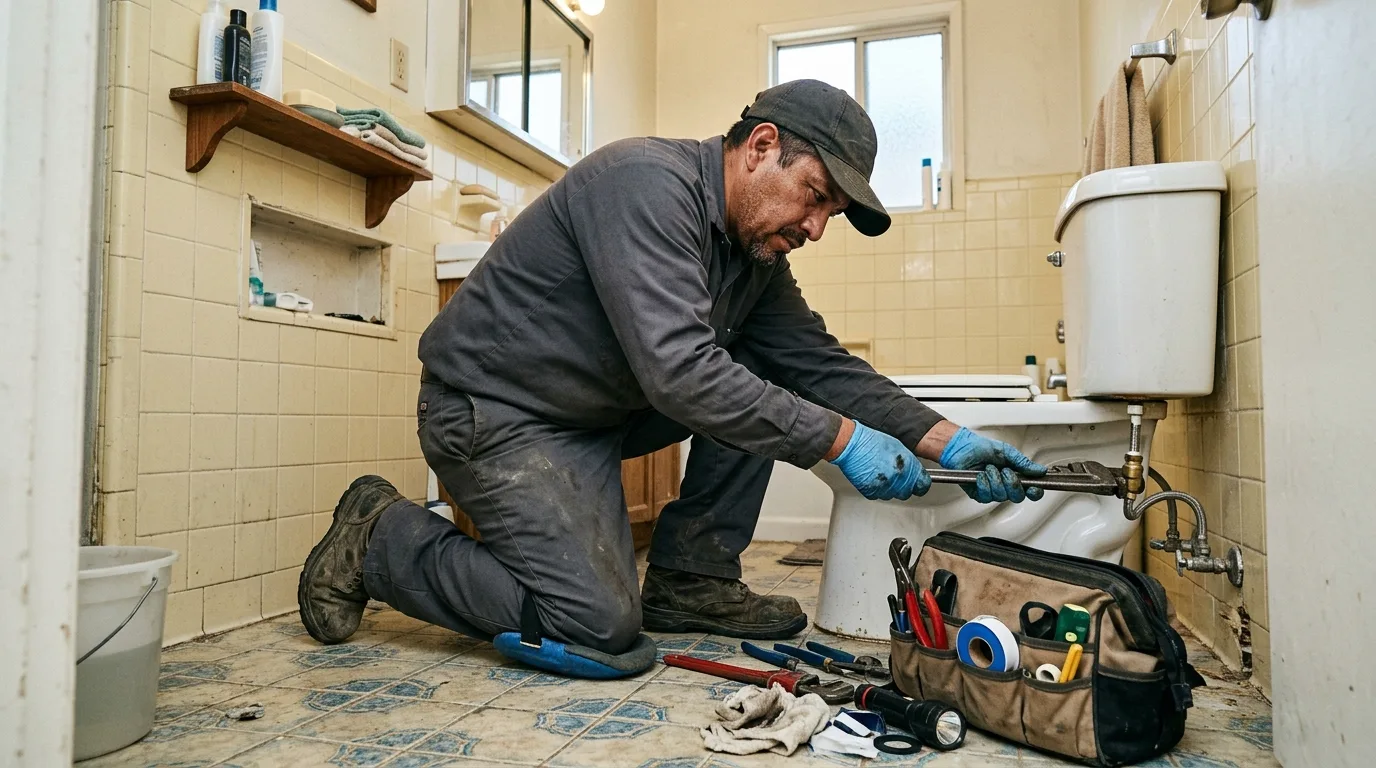
A running toilet wastes more water than most household leaks combined, and a rocking one is usually a failed seal quietly working on your subfloor. Both are same-day jobs at a modest price.
Line answered 24/7 · most repairs completed in a single visit
A flapper that does not seat can pass hundreds of gallons a day, and it shows up as a bill rather than a puddle. A fill valve that will not shut off does the same thing more audibly.
The failures that matter structurally are at the base. A wax ring that has broken down lets water escape at floor level on every flush (into the subfloor, or into the ceiling below on a two-story house) and the only symptom for months is a toilet that moves slightly when you sit on it.

Almost all of it is a single visit with parts on the truck.
Original bathrooms in these tracts often have a 10-inch or 14-inch rough-in rather than the modern 12-inch standard, which is why a homeowner-bought toilet sometimes will not fit against the wall. It is solvable, but it needs knowing before purchase.
The other recurring find is a closet flange sitting below finished floor level after a tile or flooring job. Stack enough wax rings to bridge that gap and the seal fails within a couple of years, the correct fix is a flange extension, not more wax.
Measure from the wall behind the tank to the centre of the closet bolts. Ten, twelve or fourteen inches; that number determines what will actually fit, and it is the most common reason a new toilet goes back to the store.
Fill valve, flapper, flush valve seat, chain and float all get checked before anything is pulled, most running toilets end here.
Rock, seal condition, flange height and bolt condition, plus a look at the floor around it for soft spots.
Closet auger through the trap rather than a plunger and hope, and a look further down the branch if the same toilet keeps blocking.
You get the cost of the repair and the cost of a replacement before either happens, including whether the old rough-in limits your options.
New wax or foam seal, flange repaired or extended if needed, closet bolts snug not overtightened, and shimmed level to stop rock.
Multiple flushes checked for seal and fill, water shutoff and supply line replaced if tired, and the old unit hauled away.
It is quietly the largest water leak in most houses. A same-day visit usually fixes it in under an hour.

Repair is right for almost anything mechanical: fill valves, flappers, flush valves, supply lines, angle stops, wax rings and flange work. Parts are inexpensive and a good repair lasts years.
Replacement makes sense when the china is cracked, when the toilet is an early low-flow model that never flushed properly, or when repeated repairs have added up. Modern 1.28 gallon fixtures flush better than the first generation of low-flow units did, which is often a pleasant surprise.
If you are replacing for water use alone, check whether your existing unit is already 1.6 gallons. Going from 1.6 to 1.28 is a real but modest saving; going from a pre-1994 3.5 gallon unit is dramatic.
Two minutes of action stops the water loss and limits the damage.
Most toilet symptoms are diagnosable by description, so the right parts arrive on the first visit.
Commonly folded into the same visit.
Low-flow compliant fixtures fitted to decades-old valve bodies.
Valve replacement, diverters, slow tub drains and pan-level leaks.
Kitchen, laundry, tub and main-line stoppages cleared and diagnosed.
A flapper that is not sealing. Water seeps into the bowl, the level drops, the fill valve tops it up. It is inexpensive to fix and it can be quietly costing you a noticeable amount every month.
Worth attending to promptly. Movement breaks the seal at the base, and the leak that follows goes into the subfloor where you cannot see it. Shimming alone treats the symptom; the seal and flange need checking at the same time.
Yes, and it usually goes smoothly. The one thing to check first is the rough-in measurement (wall to bolt centres) because a mismatch there is the main reason a purchased fixture does not fit.
Typically one to two hours including removing and hauling the old unit. Add time for flange repair, an extension where flooring has raised the floor level, or any subfloor damage found underneath.
Either the fixture flushes weakly (common on early low-flow designs) or there is a restriction in the branch drain beyond it. If it is the second, a camera or a drain clearing visit is the actual fix, not another auger.
In a house with weak drain fall or a history of blockages, sometimes yes. They flush hard and clear long runs well. They are noisier and the parts cost more, so it is a trade rather than an upgrade.
One number covers all of it. If you are not sure which of these your problem is, describe it and we will tell you.
Same-day appointments, parts on the truck, and a price before the work starts.