Hydro Jetting
Scouring grease and root mats back to the pipe wall.
A sink that will not empty is a nuisance. Every drain in the house slowing at once is a main line, and that is a different job. Either way, one call gets a local pro out with the right machine.
If wastewater is coming back up, stop using water in the house and call, the next flush makes it worse.
It is the single most useful distinction in drain work, and you can answer it yourself in two minutes. If one fixture is slow and everything else runs fine, the blockage is in that fixture's branch, a trap, a tailpiece, the short run to the stack. If several fixtures are slow, or the lowest drain in the house gurgles and backs up when you run the washing machine, the problem is in the main line that carries everything out to the sewer.
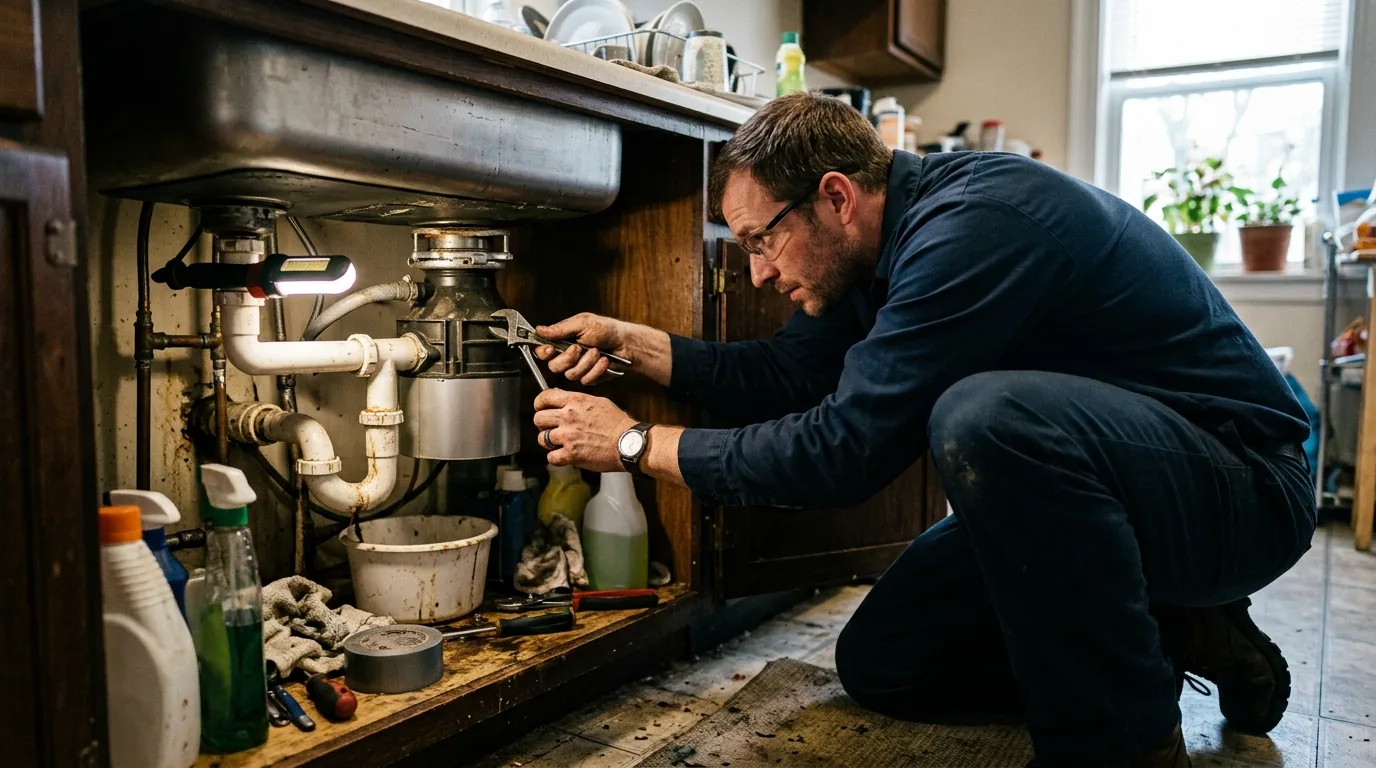
The difference matters because the work is different. A fixture branch is often cleared with a small cable through the cleanout or the trap arm, sometimes with nothing more than disassembling and cleaning the trap. A main line needs a larger machine fed through a proper cleanout, and it needs a diagnosis afterward, because a main line that blocked once will block again if the cause is structural.
The second question is why it blocked. Kitchen lines close up with grease and food waste that cools and coats the pipe wall. Laundry lines fill with lint and detergent scale. Bathroom lines are hair and soap. Main lines in this city are frequently roots, because clay and cast-iron laterals under mature parkway trees are exactly what roots seek out. Clearing without answering the why is how households end up on a first-name basis with the drain machine.
 Line inspection
Slow is a warning. Backing up is the emergency version of the same message.
The trees are the headline. Older Norwalk tracts have mature parkway trees whose roots run straight under the front lawn and driveway, which is exactly where the sewer lateral runs. Clay pipe joined in short sections, and cast-iron with corroded joints, both leak a little moisture, and a root will find that moisture, enter the joint, and grow into a mat inside the pipe. The mat catches paper and grease until flow stops entirely. Cabling cuts a channel through it; the roots grow back.
Pipe age is the second factor. Houses built in the rush after the city's 1957 incorporation were plumbed with cast-iron drains inside and clay or cast-iron laterals outside. Cast iron scales internally over decades, and that scale is rough, so it grabs everything passing over it. A sixty-year-old cast-iron kitchen line has an effective diameter noticeably smaller than the day it was installed, which is why a modern household's grease load overwhelms it.
Then there is what goes down the drain. Compact kitchens with disposals encourage people to put food waste into a line that was designed when disposals were rare. Wipes labelled flushable are the single most reliable cause of a main-line stoppage in any city. Cooking oil poured hot goes down as liquid and sits as solid. None of this is unique to Norwalk, but it lands on older, narrower, rougher pipe here than it would in newer construction.
Condos and townhouses have their own version. Stacked plumbing means your fixture shares a vertical line with units above and below, so a blockage may not originate with you at all, and clearing it may require access the HOA controls. Mentioning the building type when you call saves an argument later.
A main-line cleanout is a capped fitting, usually outside near the foundation or in the front lawn, that lets a plumber get a machine into the lateral without going through a toilet. If your house does not have an accessible one, installing one is a genuinely useful upgrade; it makes every future drain call faster and cheaper.
Which fixtures are affected, in what order, and how the house is plumbed. Running a machine before understanding the layout is how the wrong line gets cabled.
Through a cleanout where one exists, or by pulling a toilet or removing a trap where it does not. Access through a proper cleanout is faster, cleaner and less risky to fixtures.
A drum machine and appropriate cutter head for a main line; a smaller cable for a fixture branch. The head is matched to the line size and the suspected blockage, root cutters for roots, spring heads for grease and soft debris.
Not a trickle. Water is run in volume, several fixtures at once where relevant, to confirm the line carries a full load rather than just opening enough to look fixed.
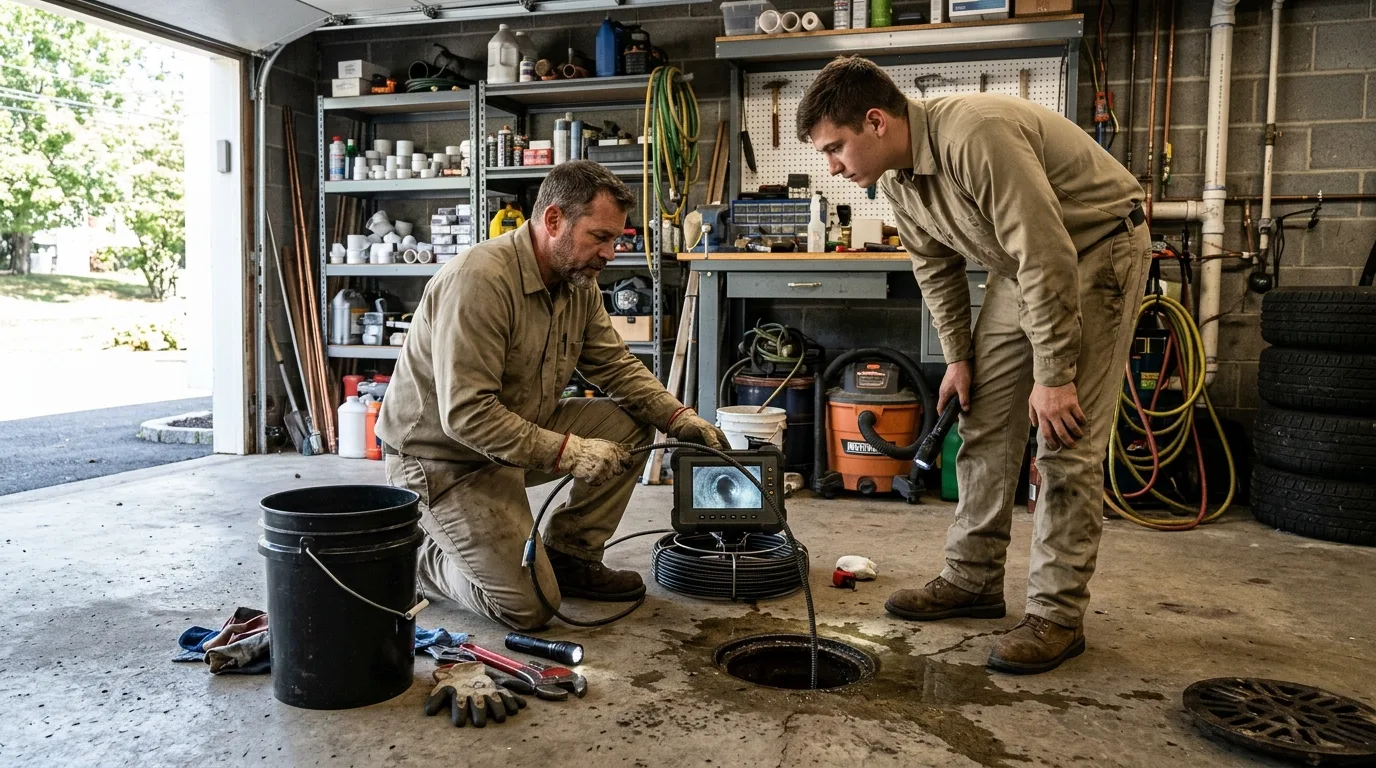
For repeat or main-line blockages, a camera run tells you whether it was grease, roots, an offset joint or a belly in the pipe. That decides whether the next step is jetting, a spot repair, or nothing at all.
If the line will block again (because the roots are structural or the pipe is failing) you should hear that, with the options and prices, rather than being sold a subscription to cabling.
Stop using every drain, toilet and appliance, then call. A main-line stoppage gets worse with every gallon you add.
 Fixture branch
Cabling is the right first move for most stoppages. A rotating cable with a cutter head punches through and breaks up the blockage, restoring flow quickly and at modest cost. Its limitation is that it clears a channel rather than the pipe wall, grease coating, scale and the remaining root mass are still there, so a line with a real underlying problem will close again on a predictable schedule.
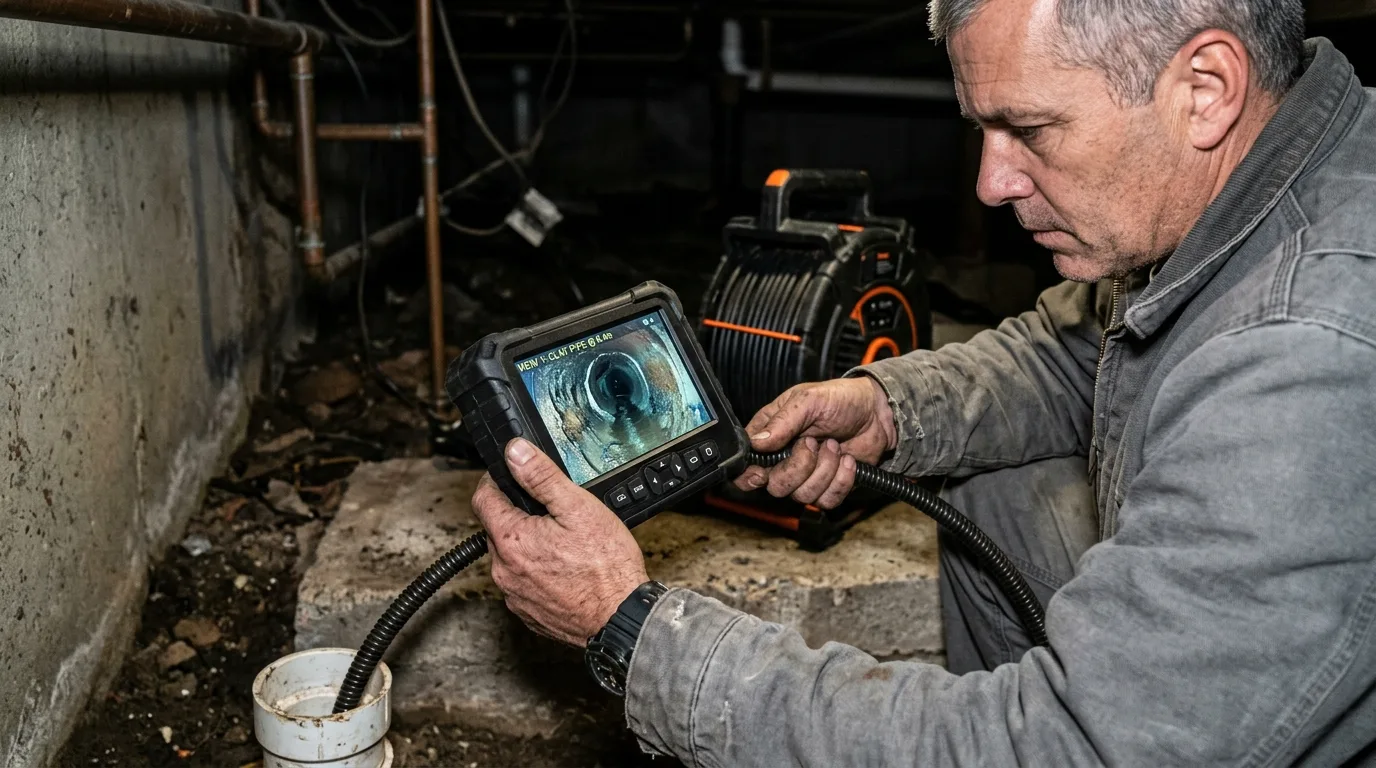
Hydro jetting is the step up. High-pressure water scours the full circumference of the pipe, taking grease, scale and root hair back to the wall, and flushing debris out rather than pushing it along. On a kitchen line thick with decades of grease, or a lateral with a root mat, jetting is the difference between six months and several years of clear flow. It is not appropriate on badly deteriorated cast iron or crushed clay, which is one reason camera inspection often comes first.
Sometimes the honest answer is that no cleaning method fixes it. A collapsed section, an offset joint where the pipe has shifted, a belly where the line sags and holds water, or clay that has cracked along its length, those are structural, and clearing them buys weeks. That is when the conversation moves to spot repair, or to trenchless lining that rehabilitates the whole run without trenching the driveway. A camera run is what tells you which category you are in, and it is worth paying for once rather than cabling four times.
Mostly this is about not making it worse, which is easier said than done in a busy house.
It determines which machine goes on the truck.
Clearing the line is often the first half. These pages cover what a camera run tends to reveal in houses of this age.
Scouring grease and root mats back to the pipe wall.
See why it blocked before paying to clear it again.
Cracked clay, offset joints and rusted cast iron.
Rehabilitating a failing lateral without trenching the yard.
A jammed or leaking disposal is often the real kitchen problem.
Slow tub drains, pan leaks and old waste and overflow assemblies.
We would advise against it. Caustic openers work on soft soap and hair right at the trap, and do almost nothing to grease, scale or roots further down. What they reliably do is sit in the line as a hazard for whoever opens it next, and in older cast iron they can accelerate corrosion. A cable or an enzyme product used for maintenance is a better use of your money.
Usually because the horizontal run out of the kitchen is coated with hardened grease, and every new load of warm fatty water builds on it. In houses with original cast-iron drains the pipe is also internally rough and effectively narrower than it looks. Cabling opens a channel through the grease; jetting removes it. If the line has clogged three times in a year, jetting once is cheaper than cabling three more times.
It means the two share a line that cannot carry the load, and the blockage is downstream of both, usually in the main. The washing machine discharges a large volume quickly, so it is often the first thing to reveal a partial main-line stoppage. Treat it as a main-line problem, not a shower problem, and stop running the washer until it is cleared.
Yes, consistently. They do not break down like tissue, they catch on any rough spot, scale ridge or root strand, and they build a mat that traps everything after it. Plumbers pull them out of main lines constantly. Nothing but toilet paper and human waste should go down a toilet, and that goes double in a house with sixty-year-old cast-iron and clay drains.
It depends entirely on what your line is dealing with. A house with a known root problem in the lateral often benefits from a scheduled jetting every year or two, timed before the wet season. A kitchen line in a household that cooks heavily may want the same. A house with newer plastic drains and no history of trouble needs nothing but sensible habits. A camera run once gives you the information to decide instead of guessing.
In good hands, rarely. In fragile old cast iron or cracked clay it can dislodge material, and an aggressive cutter head in a badly deteriorated line can turn a crack into a hole, which is why an experienced pro reads the pipe before choosing a head, and why repeat blockages should be inspected with a camera rather than cabled harder each time. If a plumber tells you your line is too far gone to cable safely, that is usually an honest assessment rather than a sales tactic.
If your house does not have an accessible one, it is worth pricing. Without a cleanout, every main-line call starts by pulling a toilet or working through a roof vent, which adds time, mess and cost each time. Installing a proper two-way cleanout near the foundation is a one-off job that makes every future drain visit simpler, and it also gives the camera a sensible entry point.
Not in the sense that it needs a midnight visit, but do not let it run for months. A slow drain means the line is partially blocked, and partial blockages collect material faster because flow slows and solids settle. It is also much easier and cheaper to clear a partial stoppage than a complete one, and it does not come with sewage on your floor.
Generally, the property owner is responsible for the lateral from the house to the connection at the public sewer, and the city is responsible from that point on. The exact boundary and any permit requirements are matters for the City of Norwalk and LA County, so ask before assuming, particularly if the blockage or damage appears to be right at the property line. A camera run that shows where the fault sits is useful evidence either way.
Yes, with the caveat that stacked plumbing changes who is affected and who authorises the work. Your fixture may share a vertical stack with several units, the blockage may be below your unit entirely, and access is often through common areas the HOA controls. Tell us the building type when you call so the pro arrives expecting it.
One number covers all of it. If you are not sure which of these your problem is, describe it and we will tell you.
One call connects you with a local pro who clears the stoppage and tells you honestly whether it will come back.