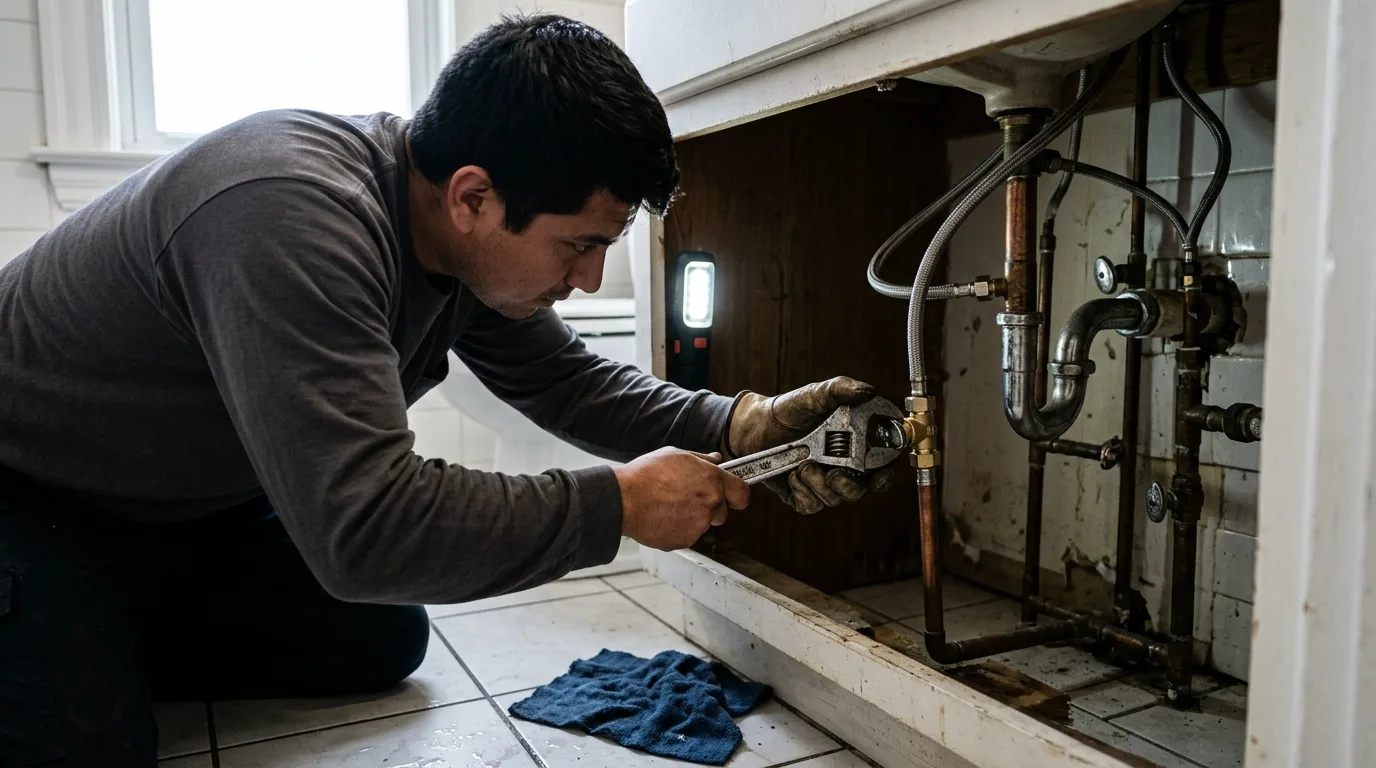
Leak Detection
Acoustic listening and pressure testing before anyone cuts drywall or floor.
The service line is the one pipe that carries everything. When it leaks you pay for water you never used, and when it restricts you feel it at every fixture at once, usually with no visible clue above ground.
Line answered 24/7 · leak located before anything is excavated
From the meter at the property line to the point it enters the house, the service line is usually a single continuous run of copper, galvanized steel or (on newer work) polyethylene. It is buried, unmonitored, and generally forgotten until the water bill jumps.
Because it sits under the front yard, a leak often shows as a soft patch, an unexplained green stripe in the lawn, or nothing at all. The meter is the honest witness: if it creeps with every fixture in the house closed, water is leaving the line.

What separates a main line issue from a fixture issue is that it affects the entire house at once.
Pre-1960 houses in this area frequently still have galvanized service lines, and galvanized fails from the inside: rust closes the bore, then perforates it. A house can lose half its pressure to a pipe that looks intact from outside.
Copper service lines fail differently, pitting from soil chemistry, plus mechanical damage from decades of landscaping, root pressure and ground movement. And every line that passes under a driveway has been carrying vehicle load its whole life.
Anything upstream of the meter belongs to the water utility; the line from the meter to the house is yours. Call the utility first if the leak is at or before the meter; that repair should not be on your invoice.
Isolate the house, watch the meter. This distinguishes a service line leak from an internal one in minutes, before anyone digs anything.
Static and dynamic pressure measured at a hose bib, then acoustic and line-tracing equipment used to mark the leak on the surface.
A single mechanical failure in sound pipe is a spot repair. Corroded galvanized is a replacement, patching one hole in a rusted line buys weeks.
Underground services marked, and a route chosen that avoids the driveway and mature roots where possible.
Open-cut where it is straightforward, or a pulled replacement along the existing path where the surface matters.
New line pressure-tested and flushed, connections at both ends inspected, then the surface restored.
That is a leak on your service line. Every hour it runs is on your bill, call now.
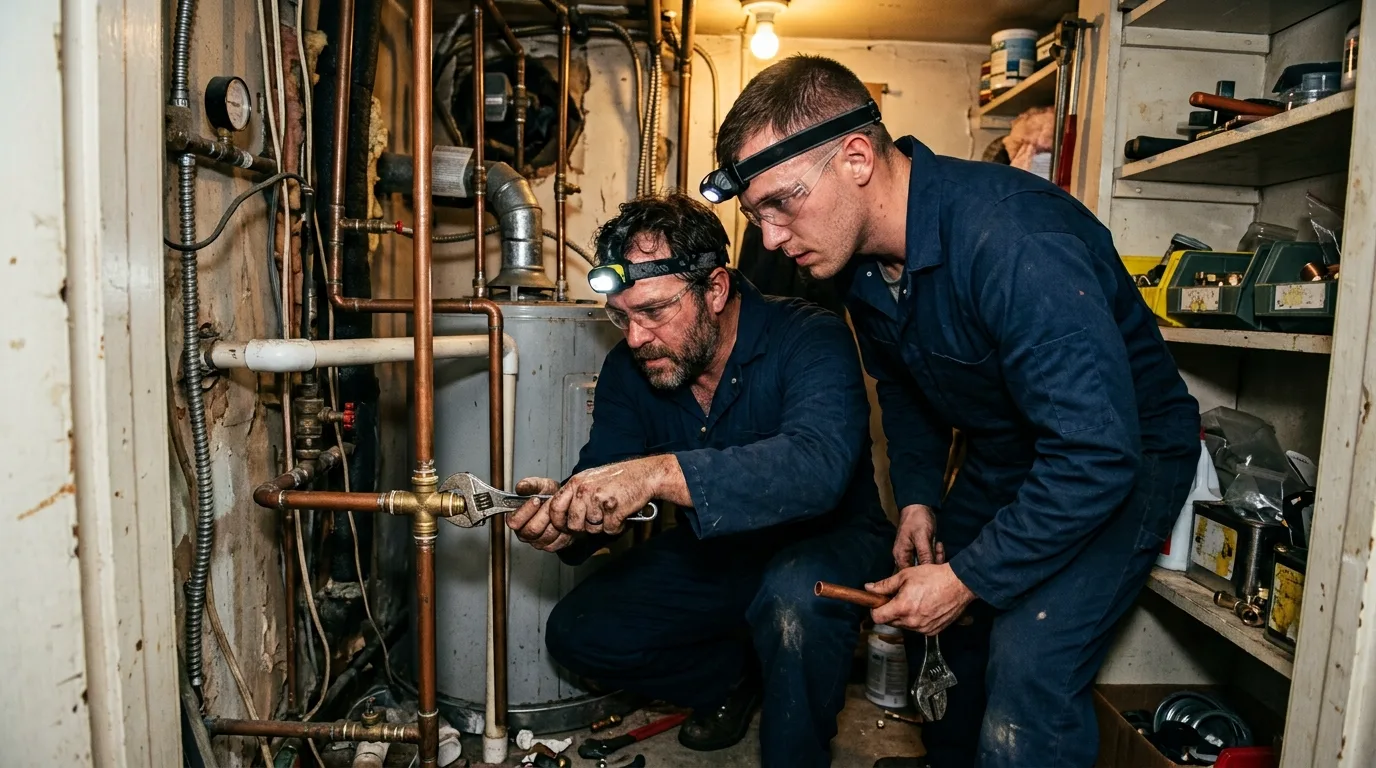
A spot repair makes sense when the line is otherwise sound, a copper service line damaged by a shovel or a root, for example. One excavation, one coupling, done in a day.
Replacement is the answer for galvanized, for lines with a history of repeat leaks, and for anything where the pipe's condition means the next failure is a matter of when. Modern polyethylene is jointless along the run and immune to the corrosion that killed its predecessor.
Where the line runs under a driveway or hardscape, replacement can often be pulled along the existing route or bored rather than trenched, which changes the restoration cost far more than the pipe cost.
A service line leak is rarely an indoor emergency, but it is a meter running against you.
Meter behaviour plus the age of the house usually narrows this to one answer before anyone is dispatched.
Main line problems and these three tend to travel together.
Acoustic listening and pressure testing before anyone cuts drywall or floor.
Copper or PEX through a single-story ranch, sequenced to keep water on.
Banging pipes and blown supply lines from pressure that is too high.
The meter test. Shut the main valve where the line enters the house: if the meter still moves, the leak is between meter and house. If it stops, the leak is inside. That five-minute check saves a great deal of guesswork.
Sometimes. Many utilities have a leak adjustment policy that applies once you can show the repair was made promptly. Keep the invoice and the before-and-after meter readings, and ask them directly.
Rarely. Most repairs are one excavation at a located point. Full replacements are a narrow trench along the route, or a pulled line where the surface has to be protected.
A typical residential service line replacement is one day, sometimes two with a driveway crossing or a permit inspection to schedule. Water is off for part of that day, not the whole job.
For a buried service line, generally better. It has no joints along the run, does not pit in aggressive soil, and flexes with ground movement instead of cracking. Copper remains the choice where it surfaces or where code requires it.
Yes, badly. A leak or a corroded bore on the one pipe feeding the house shows up at every fixture simultaneously, which is why whole-house pressure loss should always be measured at the main before anyone talks about repiping.
One number covers all of it. If you are not sure which of these your problem is, describe it and we will tell you.
Located first, repaired or replaced with reasons given, and the surface put back. Call any hour.