Hydro Jetting
High-pressure scouring for grease, scale and root mats a cable only punches.
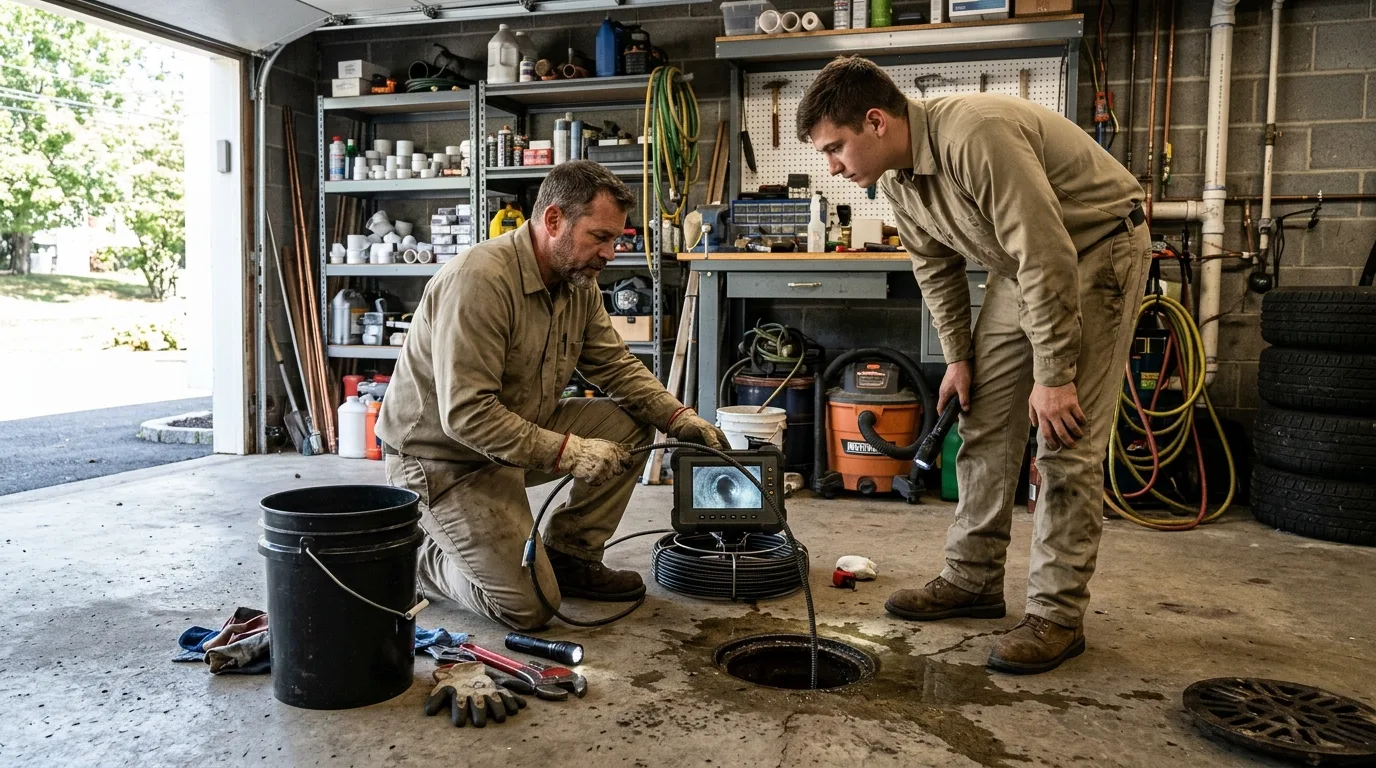
Every expensive sewer mistake starts with a guess. An hour with a camera gives you the material, the condition, the distance to the defect and the depth, the four facts every honest quote is built on.
Line answered 24/7 · you watch the screen and keep the footage
A camera run costs a fraction of any repair it informs. It tells you whether the recurring backup is roots at one joint, grease along a shallow run, or a belly that no amount of cleaning will fix.
It is equally useful as a negative result. Finding sound pipe and a simple blockage saves you from a replacement quote you did not need, and that outcome is common enough to justify looking every time.
Some of these are urgent, some are simply good timing.
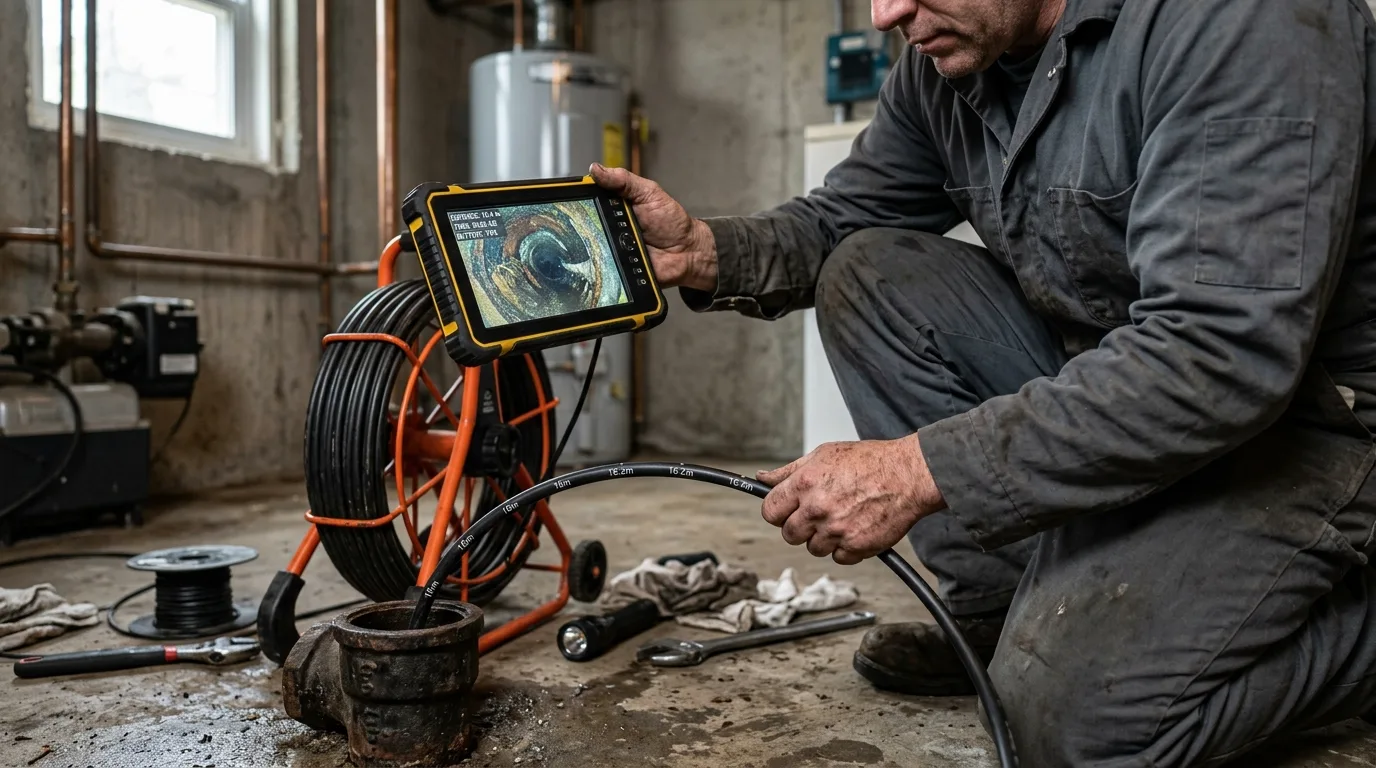
In Norwalk's housing stock the findings cluster: root intrusion at clay joints, scale narrowing cast iron, offset joints from decades of ground movement, and bellies where a section has settled and now holds waste.
Each has a different fix and a very different price. Root hair at one joint can be a spot repair; a belly cannot be lined away; heavy scale might only need descaling and jetting. Sorting them is the entire value of the footage.
A standard home inspection does not include the sewer lateral. On a seventy-year-old Norwalk house that is the single largest unknown left on the property, and it routinely runs five figures. Add the camera run.
An exterior cleanout is ideal. If there is not one, the options are a pulled toilet, a roof vent, or installing a cleanout, with cost implications explained first.
A line standing full cannot be inspected. Minimal clearing happens first if needed, and you are told before that becomes billable work.
Camera fed from the house out to the main, with footage distances called out so every finding has a location.
A sonde in the camera head is tracked from the surface, so defects get marked on the ground with a depth.
Material, condition, defects, and what is normal wear versus what needs action, in plain terms, while you watch.
You keep the recording and the notes, whoever ends up doing the work.
An hour and a camera is the cheapest protection against a five-figure surprise. Book it before the inspection period ends.
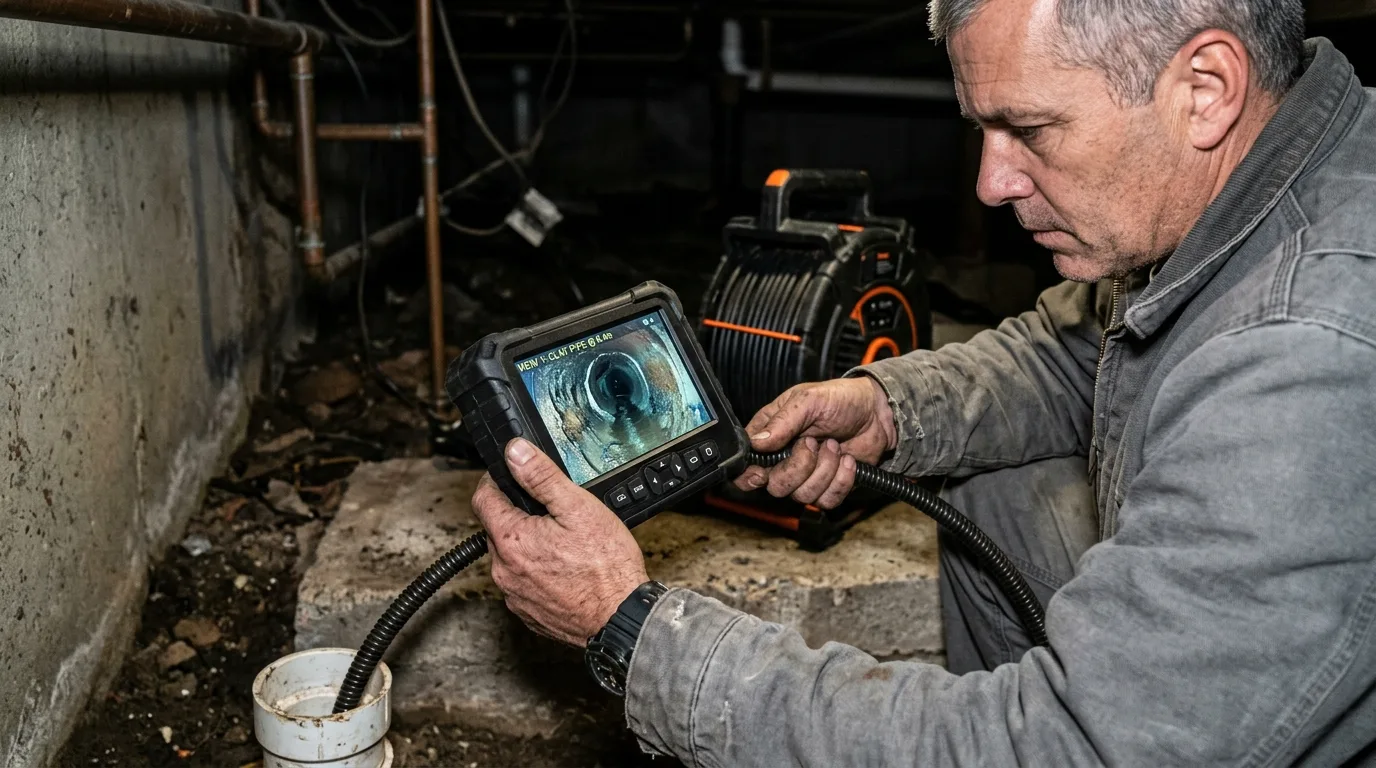
It reliably establishes pipe material, internal condition, blockage cause, defect locations and depths, and the slope problems that cause repeat stoppages. That is enough to price any repair properly.
It cannot see through standing water in a belly, it cannot measure wall thickness from inside, and it cannot inspect past a hard blockage until that is cleared. Those limits get stated on the day rather than papered over.
It also cannot inspect what it cannot enter. Small-diameter fixture branches and some older vent configurations are beyond a mainline camera, which is when a smaller push camera or a different approach applies.
Five minutes of preparation makes the hour more useful.
You will get a price for the run, and a straight answer on whether your situation actually needs one.
The footage points to one of these three, and the price gap between them is why the footage matters.
High-pressure scouring for grease, scale and root mats a cable only punches.
Camera first, then spot repair, lining or replacement of the failed run.
Lining or pipe bursting so the driveway and lawn stay largely intact.
Usually forty-five minutes to an hour and a half with good cleanout access. Add time if the line has to be cleared first or if access has to be created.
Yes. You keep the recording and the written findings, including locations and depths. It is your line and your evidence, and it is useful whether or not we do the repair.
Only up to the blockage. Past that, the line has to be cleared first. Sometimes that partial view explains the problem; often the useful footage comes after clearing.
Less often, but not never, construction debris, poor bedding and bad slope all happen on new builds, and root intrusion starts within a decade or two where trees are close. On anything pre-1970 here it is close to essential.
No. It is a flexible push cable with a lit head, carrying no pressure and no cutting edge, which is exactly why it goes in before a jetter does.
Honestly, only in ranges. Footage shows condition, not remaining wall thickness. What you get is a clear statement of what is failing, what is stable, and what to watch, not a false expiry date.
One number covers all of it. If you are not sure which of these your problem is, describe it and we will tell you.
An hour, a camera, marked locations and footage you keep. Call and get the facts your quote should be based on.