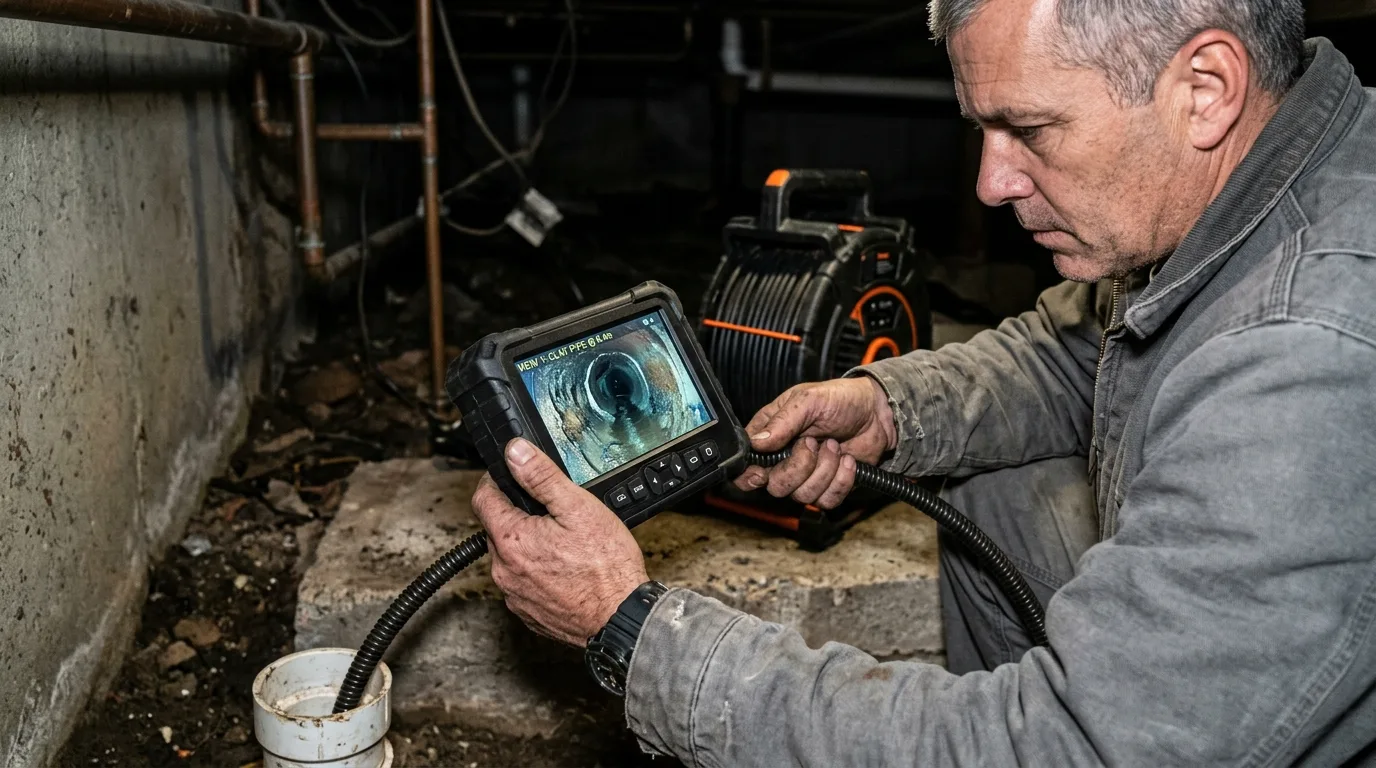
Sewer Camera Inspection
See the inside of the line before you buy a house or approve a repair.
A failed lateral under a driveway, a mature tree or new hardscape does not automatically mean an excavator. Lining and bursting rebuild the pipe from access pits at either end, often in a day, with the surface largely intact.
Line answered 24/7 · camera footage decides whether trenchless applies
Cured-in-place lining pulls a resin-saturated sleeve through the existing lateral and inflates it against the wall, where it hardens into a continuous jointless pipe inside the old one. Every joint roots used is sealed shut.
Pipe bursting is the heavier option: a bursting head is pulled through the old pipe, fracturing it outward while towing new HDPE into the same path. It replaces the pipe entirely and can upsize the line, but it needs pits at both ends and reasonable soil.
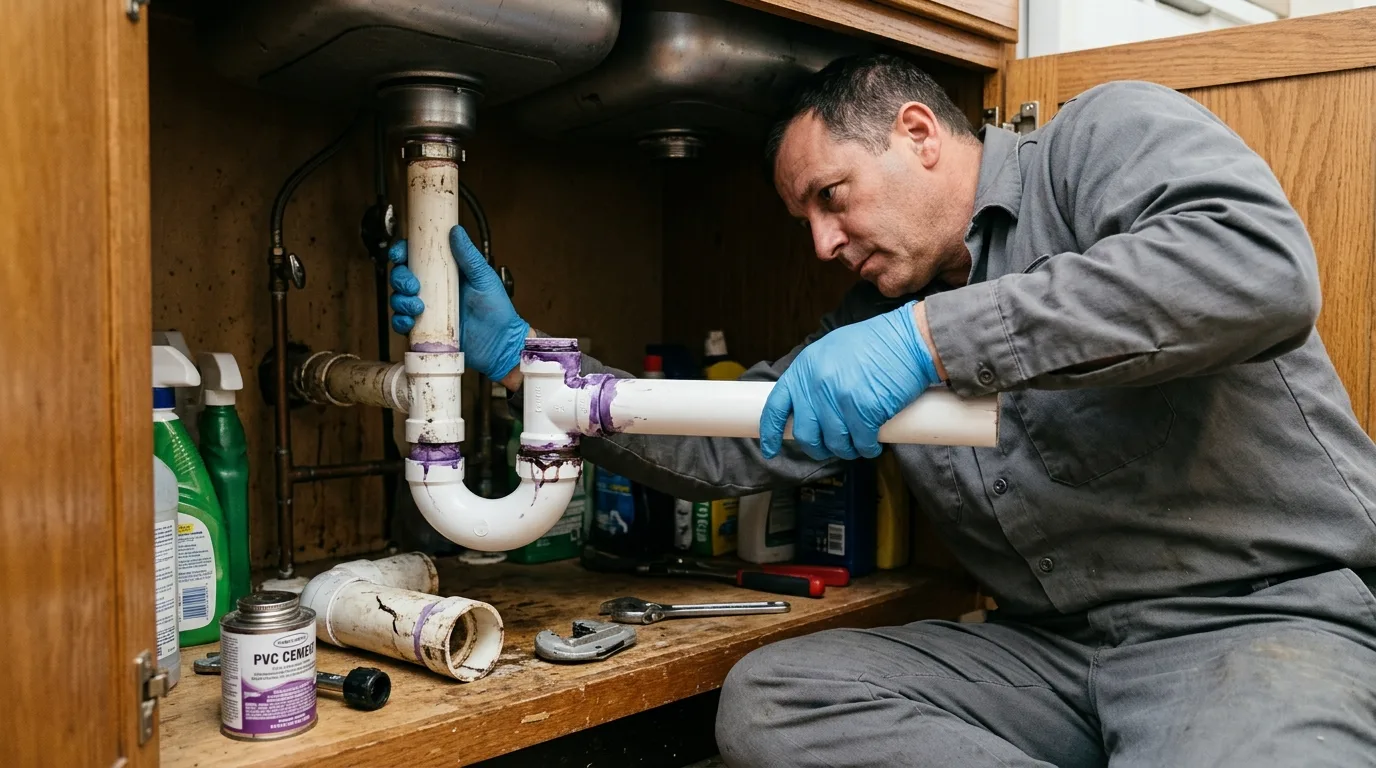
It is not always cheaper than trenching, but it is often far cheaper once restoration is counted. These are the conditions that make it worth pricing.
The postwar clay laterals under this city fail in a specific way: joints open, roots enter, sections crack, but the pipe generally holds its line and shape long after that. That is exactly the condition lining is designed for.
What disqualifies a line is loss of shape, a collapsed section, a severe belly holding water, or a run so deteriorated there is nothing for the liner to bond to. That is a camera judgement, which is why nobody should quote trenchless from the kerb.
Driveway and porch slabs on these tracts are usually poured over the lateral run. If your line fails under one, cutting, replacing and matching that concrete frequently costs more than the pipe repair itself, which is the case trenchless is built on.
Full-length inspection with distances and depths recorded, plus an honest read on whether the pipe can be lined at all.
Jetting and root cutting take the wall back to bare pipe. A liner bonds to clean pipe or it does not bond.
Usually one at the cleanout and one near the connection, two small excavations instead of a trench along the whole run.
The liner is inserted and cured in place, or the bursting head is winched through while new HDPE follows it in.
Branch connections are reopened, and the transition at each end is tied in and tested.
Final inspection footage, pits backfilled and compacted, surfaces put back.
Get the footage reviewed for a trenchless option before the saw comes out. Same-day camera runs available.
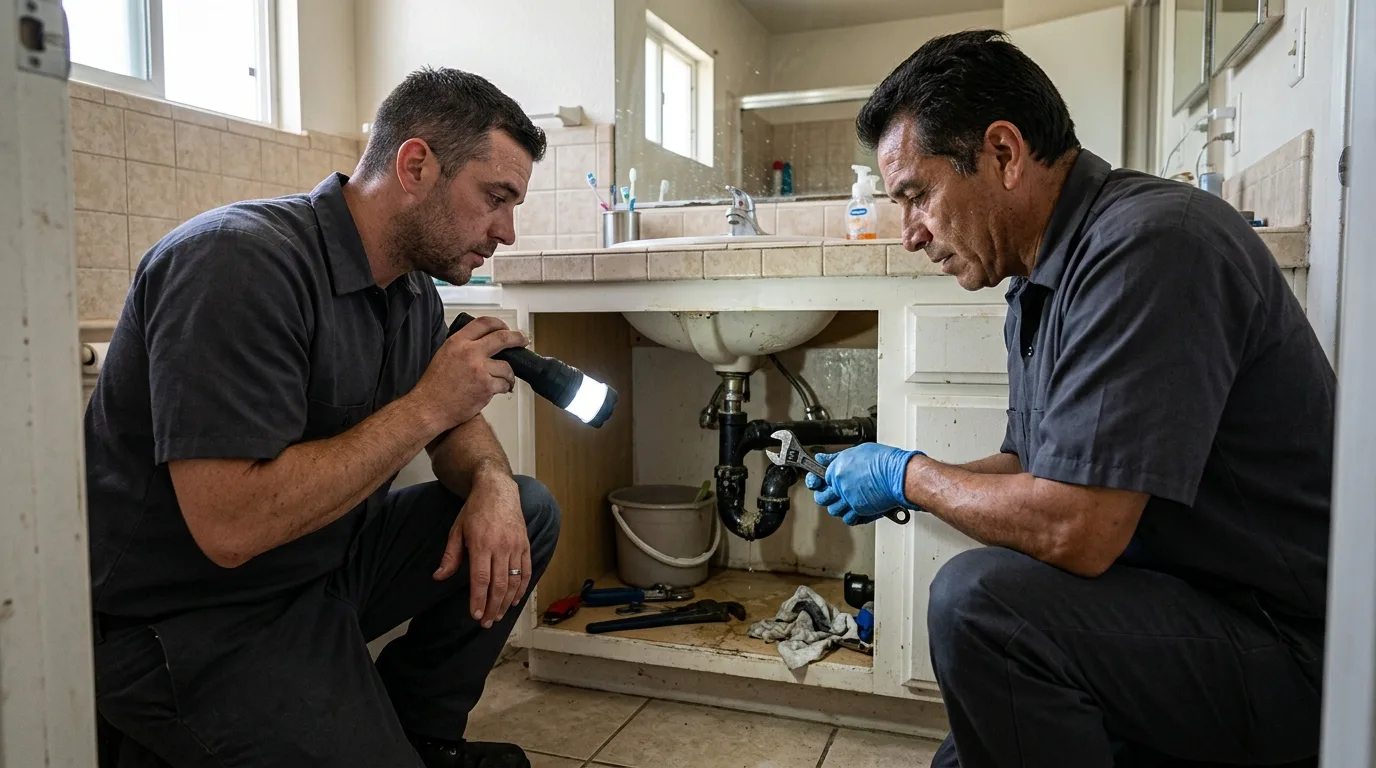
Lining suits a pipe with sound geometry and bad joints. Least disruptive, quickest, and it slightly reduces internal diameter, usually irrelevant on a residential lateral.
Bursting suits a pipe that has lost integrity but sits in workable soil, and it is the option when you want to upsize from four inches to six. More equipment, more cost, still no full trench.
Open-cut remains right when the line has collapsed, when the run is short and shallow with nothing valuable over it, or when the yard is bare dirt anyway. There is no prize for going trenchless on a line you could reach in an afternoon.
Trenchless work is planned work. Keeping the house drainable in the meantime is the immediate job.
You will get a straight read on whether your line is a lining candidate, and what the open-cut alternative would cost.
Trenchless is one branch of a decision tree that starts with a camera.
See the inside of the line before you buy a house or approve a repair.
Camera first, then spot repair, lining or replacement of the failed run.
High-pressure scouring for grease, scale and root mats a cable only punches.
Manufacturers rate cured-in-place liners at fifty years, and the material has no joints for roots to exploit. In practice the limiting factor is install quality (cleaning, resin ratio and cure) not the material.
No. The pipe work often costs more per foot; it wins on restoration. If the line runs under bare lawn at three feet, open-cut is usually cheaper. Under a driveway at eight feet, trenchless usually is.
Marginally. A liner takes a few millimetres off the internal diameter, and a smooth jointless bore actually flows better than scaled clay of the nominal size. On a residential lateral you will not notice it.
No, and anyone who says otherwise has not looked. Collapsed sections, severe bellies and badly deformed pipe rule it out. Bursting or open-cut covers those cases, which is why the camera run comes before the quote.
Usually yes, particularly for work in the right-of-way. Permitting and utility marking are handled as part of the job, and the inspection puts the repair on record for a future sale.
Typically two pits roughly a metre square, at the access points. Lawn and irrigation in those spots are affected; the rest of the run is not opened.
One number covers all of it. If you are not sure which of these your problem is, describe it and we will tell you.
Camera first, then an honest read on lining, bursting or open-cut, each with a real price.