Water softeners & filtration
What the job involves, what it costs to put right, and how quickly it needs doing.
Water in this part of Los Angeles County typically runs somewhere between 10 and 17 grains per gallon. That is firmly hard, and hardness is not a taste problem; it is a slow tax on every water-carrying thing you own.
· 5 min read · Reviewed by Derek Lawson, Senior Plumbing Specialist
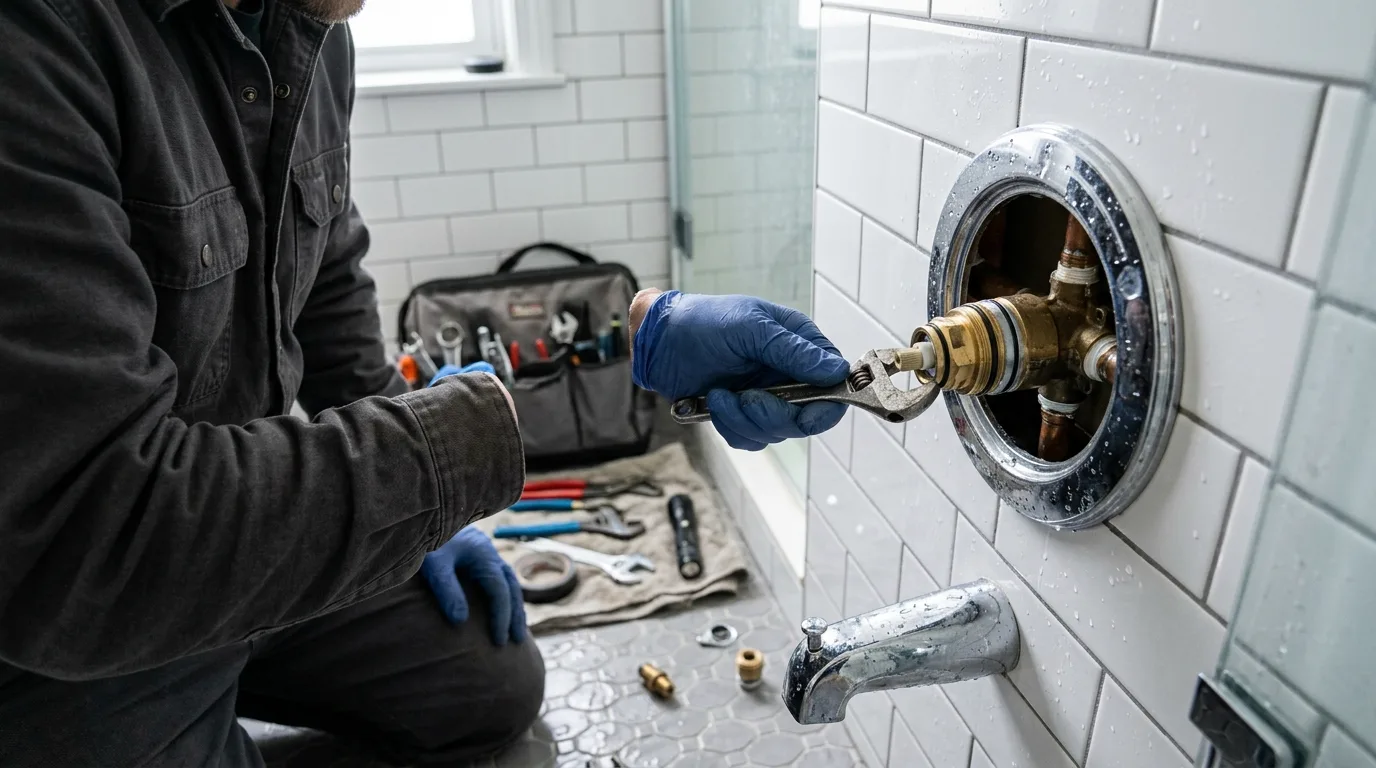
Dissolved calcium and magnesium come out of solution when water is heated or when it evaporates. That is the whole mechanism. Everything downstream follows from it.
Water heaters. This is the big one. Scale settles on the bottom of a tank and insulates the burner from the water it is supposed to heat, so the unit runs longer for the same output. A scaled heater can lose a meaningful share of its efficiency and several years of its service life. Tankless units are worse off, their narrow heat exchanger passages scale faster and need descaling on a schedule, not on failure.
Fixtures. Aerators clog, shower heads spray sideways, cartridges stiffen and fail. These are small individually and constant collectively.
Pipes. Scale narrows the bore over decades, which raises velocity, which accelerates erosion at elbows. Hard water does not cause copper pinholes by itself, but it is a contributing member of the committee.
Appliances and everything else. Dishwashers and washing machines wear faster, detergent works less well so you use more of it, and glassware clouds permanently.
A popping or kettling water heater is scale on the tank floor trapping steam bubbles under it. It is the most audible sign of hardness in the house, and it means the unit is already working harder than it should be.
Ion-exchange softener. The real fix. Swaps calcium and magnesium for sodium, so the water leaving the unit is genuinely soft. Needs salt topped up and a drain connection, and adds a small amount of sodium to the water, which is why most installs leave the kitchen cold tap unsoftened.
Salt-free conditioners. These do not remove hardness; they change how the minerals crystallise so scale is less likely to stick. Genuinely useful for protecting a water heater and pipework, useless if what you want is lathering soap and spot-free glasses. Sold as equivalent to softening, which they are not.
Magnetic and electronic descalers. Evidence for these is thin. We do not recommend them.
Doing nothing, but flushing the heater annually. A legitimate strategy in a rental or a house you are leaving in a few years. It does not protect fixtures, but it protects the most expensive single item.
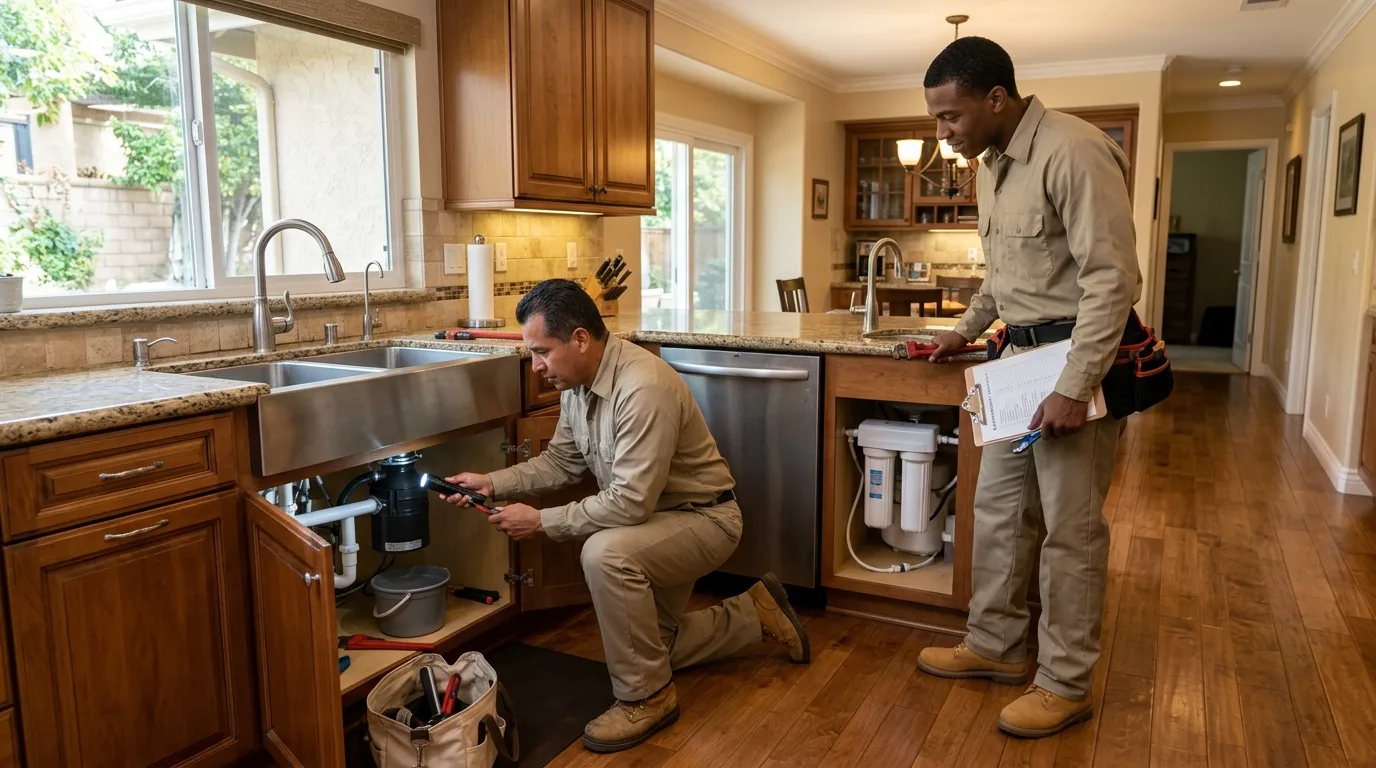
At 10 to 17 grains, in a house you intend to keep, with a tank heater you would rather replace in fifteen years than eight, usually yes. In a condo with a shared heater and no drain access at the point of entry, often no.
The honest way to decide is to test rather than assume. Hardness varies across the county, and there is no point paying to soften water that is already moderate. See water softener and filtration for what an install involves.
What the job involves, what it costs to put right, and how quickly it needs doing.
Diagnosis, options and honest trade-offs before anyone starts cutting.
Practical writing about the plumbing problems this corner of Los Angeles County actually has.
Norwalk was built fast in the 1950s on soft copper laid under concrete. Here is why those lines fail now, the early signs, and what a repair involves.
A step-by-step for the first five minutes of a burst pipe: shutting off water, killing power safely, and what to photograph before you start cleaning up.
A cable clears a blockage. A jetter cleans the pipe. Knowing which your drain needs saves money on the wrong job and repeat visits on the right one.
One call, a plain description of the problem, and an honest answer on how urgent it is.