Hydro jetting
What the job involves, what it costs to put right, and how quickly it needs doing.
These two get sold as competing solutions to the same problem. They are not. They do different jobs, and picking the wrong one either wastes money or guarantees you call again in six weeks.
· 5 min read · Reviewed by Derek Lawson, Senior Plumbing Specialist
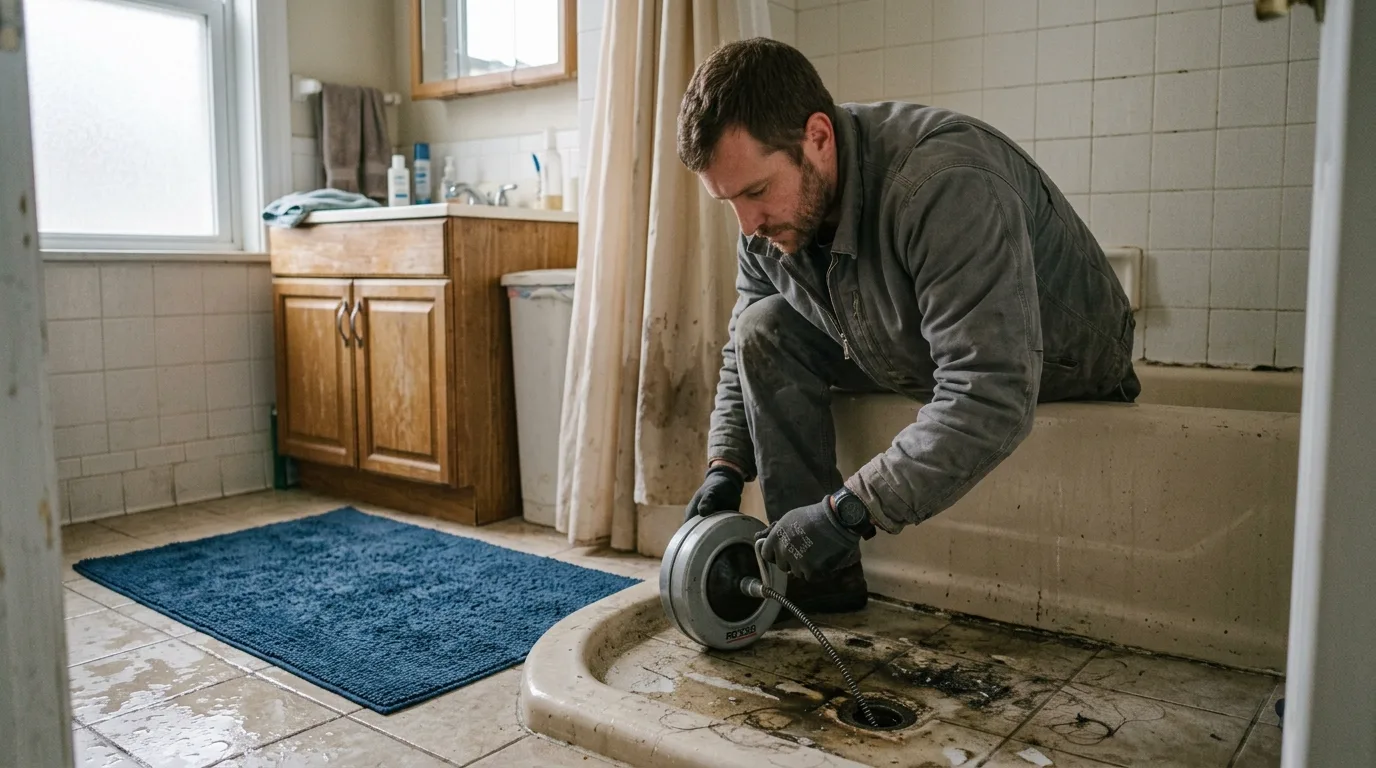
A drain snake is a rotating steel cable with a cutting head. It bores through the obstruction, breaks it up, and restores flow. Fast, cheap, and completely appropriate for the majority of household clogs.
What it does not do is clean the pipe wall. A cable punches a hole through a blockage the way a pencil goes through a tissue. The grease, scale and root hair lining the pipe stay exactly where they were, and they start catching debris again immediately.
Hydro jetting pushes water through a specialised nozzle at very high pressure. Rear-facing jets drive the hose up the line and scour the full circumference of the pipe as it travels, cutting grease off the walls and shearing root hair back to the pipe wall.
The result is a pipe closer to its original bore, not just a channel through the middle of the deposit. That is the entire difference, and it is why the interval before the next blockage is measured in years rather than weeks.
A cable clears a blockage. A jetter cleans a pipe. If the drain has blocked twice in a year, the blockage was never the problem.
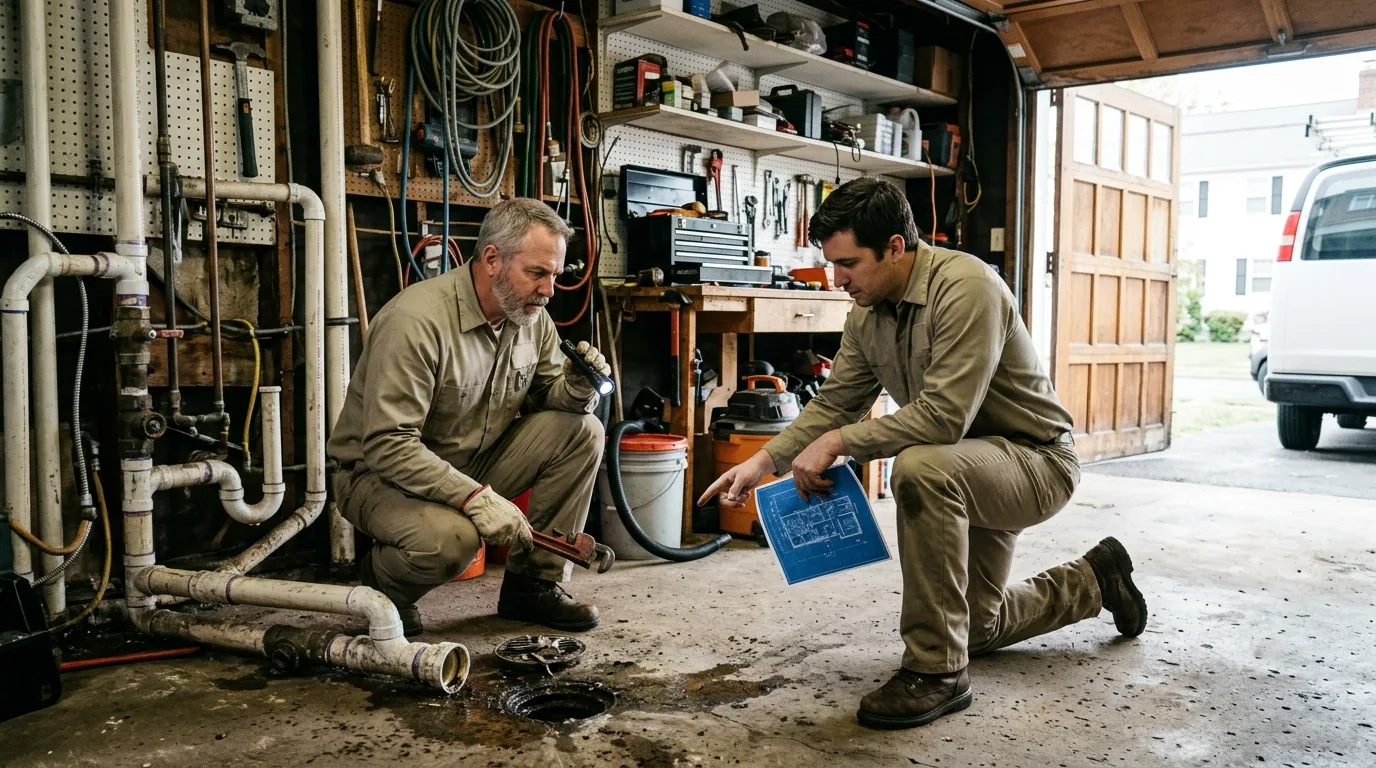
On any line with repeat blockages, a camera inspection before either treatment is money well spent. It answers three questions no amount of guessing will: what the obstruction is made of, where it sits, and whether the pipe itself is still sound.
That last one matters most. Jetting a healthy clay or cast iron line cleans it. Jetting a line that is already cracked, offset or collapsing can make the damage worse. Any plumber willing to put a jetter down an unknown older line without looking first is taking a risk with your pipe, not theirs.
In Norwalk’s older neighbourhoods the sewer laterals are frequently clay, joined every few feet, running under mature street trees. Roots find those joints. Jetting shears them back and buys real time (often several years) but it does not kill the root or seal the joint. Recurring root intrusion is eventually a repair or lining conversation, and a camera is what tells you when you have reached that point.
What the job involves, what it costs to put right, and how quickly it needs doing.
Diagnosis, options and honest trade-offs before anyone starts cutting.
Practical writing about the plumbing problems this corner of Los Angeles County actually has.
Norwalk was built fast in the 1950s on soft copper laid under concrete. Here is why those lines fail now, the early signs, and what a repair involves.
A step-by-step for the first five minutes of a burst pipe: shutting off water, killing power safely, and what to photograph before you start cleaning up.
Norwalk tap water runs hard. Here is what the mineral load does to water heaters, fixtures and copper over time, and when softening is worth the money.
One call, a plain description of the problem, and an honest answer on how urgent it is.