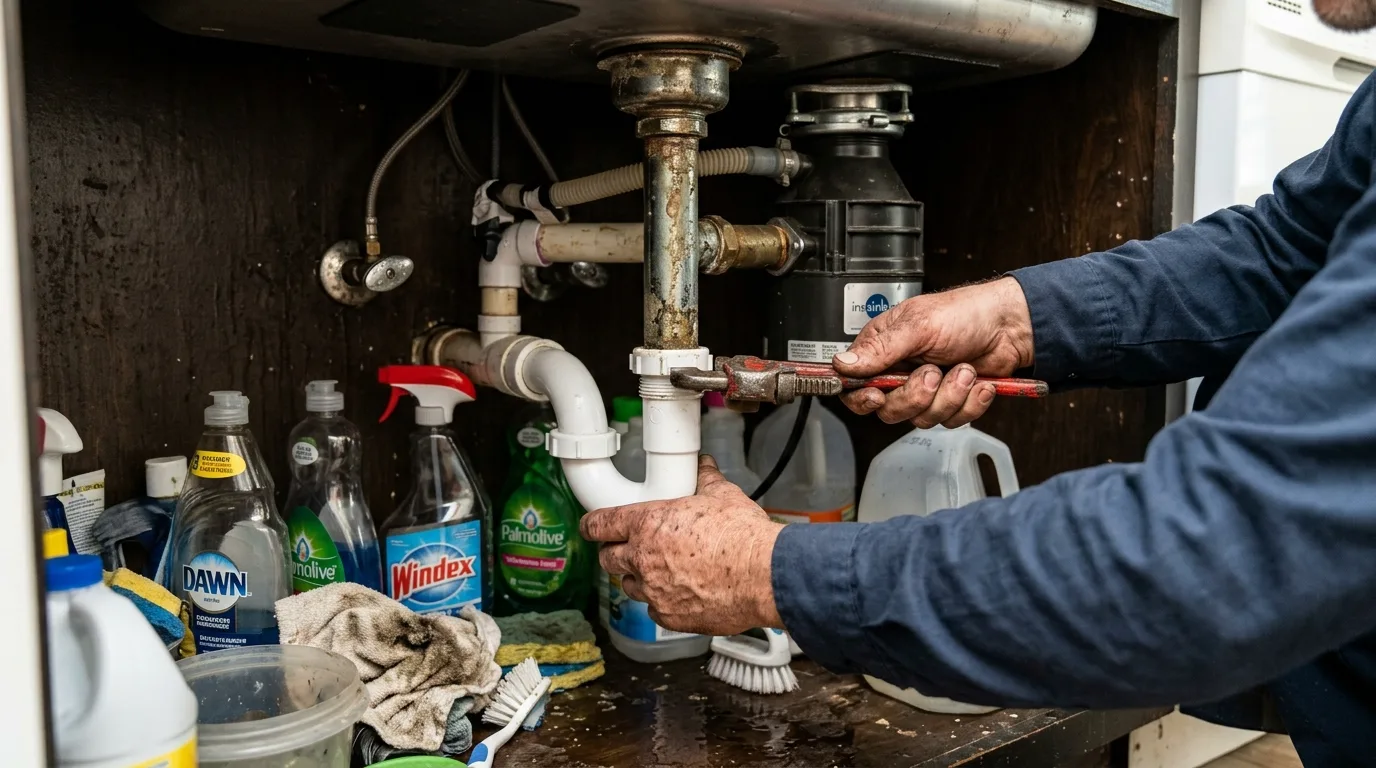
Emergency Plumbing
Answered around the clock for active leaks, backups and no-water situations.
Fulton Wells carries the oldest name in this area and some of its oldest plumbing. Where houses predate the big postwar tracts, expect galvanized supply, cast iron inside the walls, and clay out to the street.
Line answered 24/7 · same-day and emergency response
The blocks that carry the Fulton Wells name are a mix: a handful of genuinely early houses, the postwar tracts that grew around them, and later infill on subdivided lots. Three eras of plumbing sharing the same street.
That mix is why diagnosis here starts with the build year rather than the symptom. The same slow drain means a scaled cast-iron stack in one house and a grease-loaded ABS branch in its neighbour.
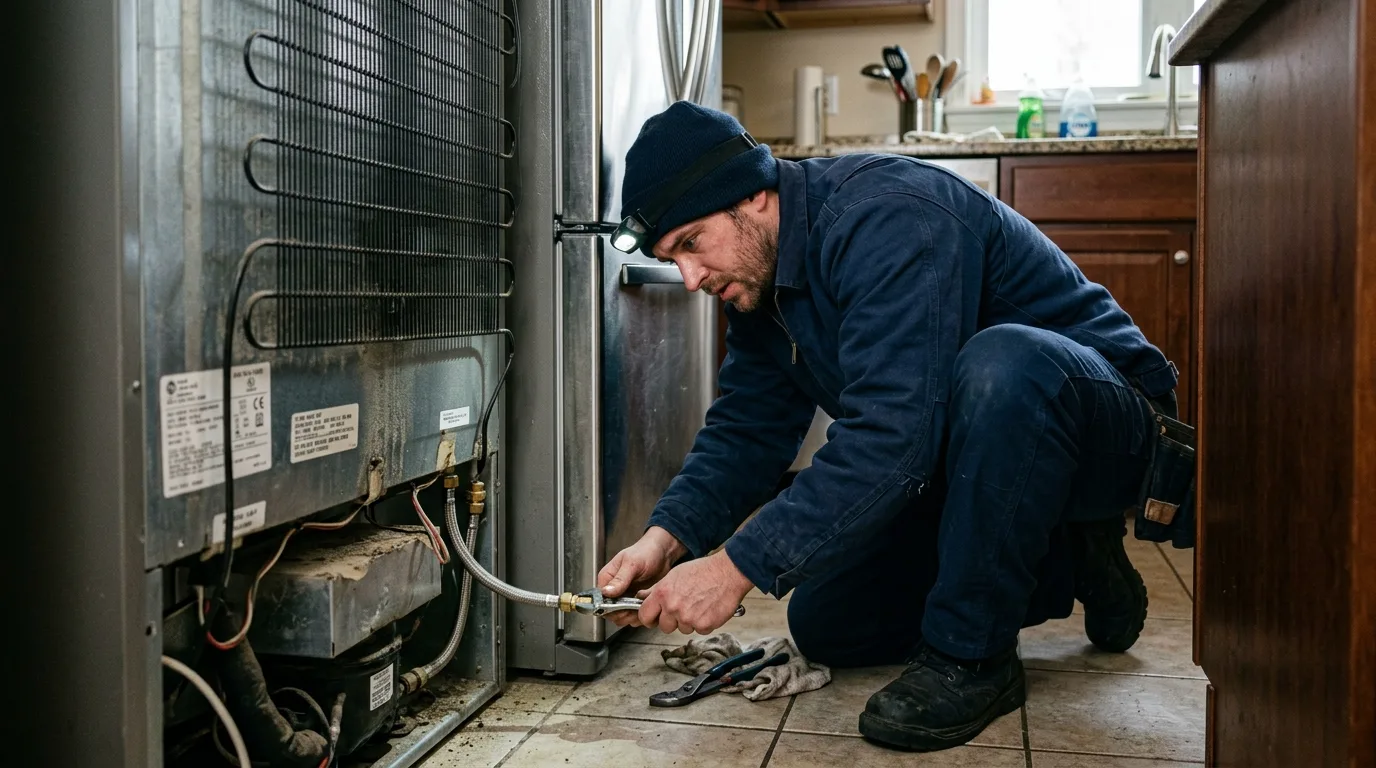
Weighted heavily toward the oldest housing, where supply and drain systems are aging simultaneously.
These blocks sit close to the middle of the service area, so response times are among the shortest we run. Emergency calls go to the nearest available pro rather than the next name on a list, which usually means an overnight burst pipe is a shorter wait than a weekday-afternoon appointment.
On anything built before 1950 here, have the supply material identified before spending money on fixtures. A new faucet on a rotten galvanized stub is a repair you will pay for twice.
Shut off the main, then call. A pro who knows these older blocks can be out today.
The full list runs to Fulton Wells. These six are what galvanized supply and clay laterals keep producing.
Answered around the clock for active leaks, backups and no-water situations.
Located under concrete, then rerouted or opened, with the reasoning explained.
Kitchen, laundry, tub and main-line stoppages cleared and diagnosed.
Cracked clay and rusted cast-iron laterals repaired or replaced.
Tank and tankless replacement to California strapping and venting rules.
Copper or PEX through a single-story ranch, sequenced to keep water on.
Fulton Wells is the name that pre-dates Norwalk's incorporation, and the housing in these blocks is the oldest in the city. That means original galvanized steel on the supply side (well past its service life, scaled to a fraction of its bore) and cast iron or vitrified clay on the drains. Nothing about that is alarming on its own. It does mean the system has been repaired in layers for decades, and the layers interact.
The most common thing we find is mixed metal. A galvanized house that was partially repiped in copper has joints where the two meet, and unless a dielectric union was used, that joint corrodes from the inside. It will hold for years and then fail suddenly, usually at the least convenient point in a wall. When we are asked to trace poor pressure in an old house here, those transitions are the first thing we look for.
Clay laterals in the oldest blocks have had the longest time for roots to work into the joints, and cast iron stacks have had the longest time to scale. Both are workable (root cutting and jetting buy real time, lining works on the right pipe) but the decision needs a camera, not a guess. We would rather show you the footage than tell you what to spend.
Original, in a lot of cases. Anything pre-1950 here was plumbed in galvanized steel with cast-iron drains, and both are past their design life. Kitchens and bathrooms have often been remodelled since; what is inside the walls usually has not.
If it is still on original galvanized, yes, the question is timing rather than whether. A pro can show you which runs are worst and whether staging the work makes sense for your budget, instead of quoting the whole house as an all-or-nothing.
With a camera, not a snake. Slow drainage across multiple fixtures points at the stack or the lateral rather than any one fixture, and the footage tells you whether it is scale, roots, or a slope problem, three very different repairs.
Sometimes, if the failure is isolated and the rest of the pipe still has wall thickness. But repeated pinholes in different rooms are the pipe telling you the whole run is finished, and at that point each patch is money spent against a repipe you are going to do anyway. We will say which situation you are in.
It restricts it at the transition and at every scaled galvanized section that remains. People repipe half a house, see little improvement and assume the pressure problem is the street. Usually it is the surviving old pipe, and a pressure test at two points in the house will show it.
One call covers all of them. Fulton Wells has no signposted boundary, so tell us the nearest cross street and we will handle the rest.
Tell us the cross-streets and what the house is doing. Upfront pricing before any work begins.