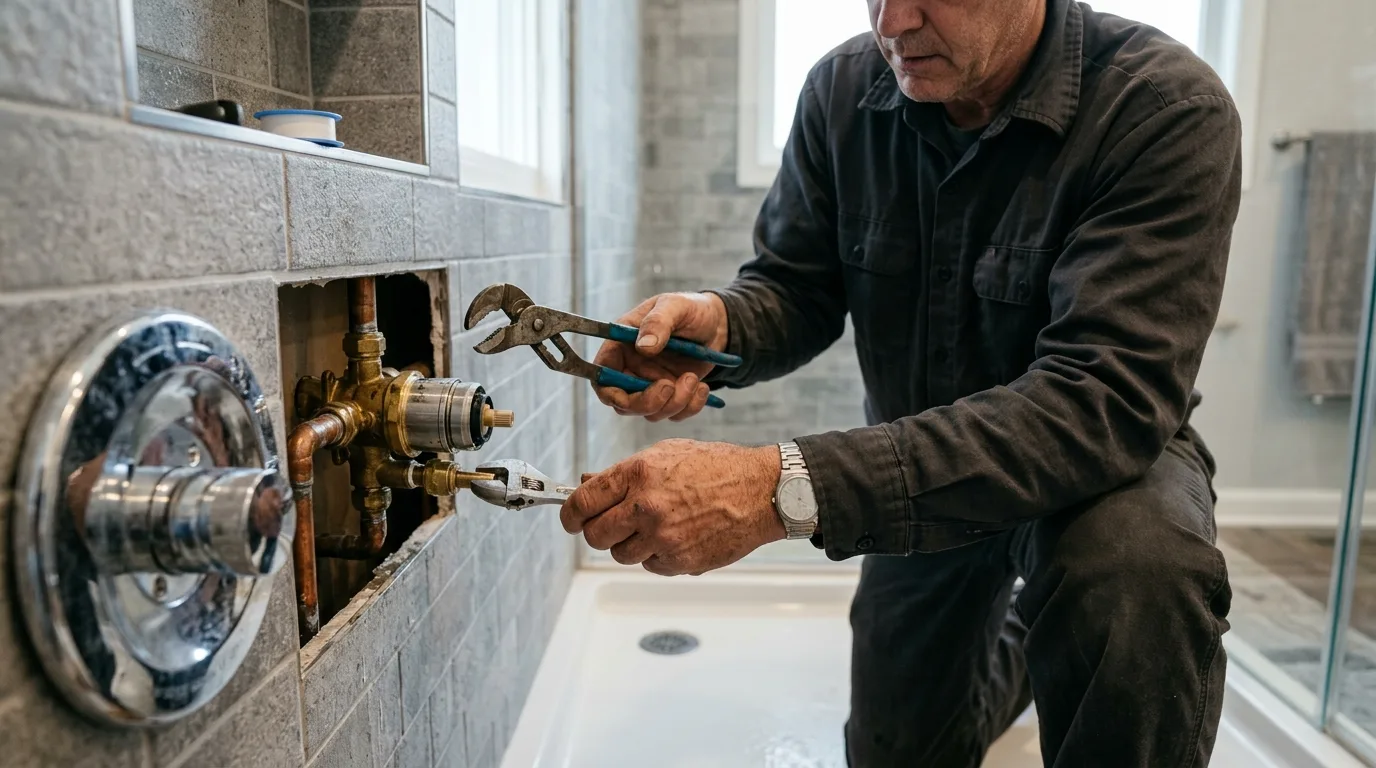
Emergency Plumbing
Answered around the clock for active leaks, backups and no-water situations.
Around City Hall and the Metro station the density rises: apartments, duplexes and converted singles, often several units sharing one lateral and one water heater's worth of capacity.
Line answered 24/7 · same-day and emergency response
A large share of the buildings here started as houses. Conversions added kitchens, bathrooms and laundry without upsizing the drain or the supply, and the plumbing has been carrying that arithmetic ever since.
The practical result is capacity failure rather than material failure: drains that back up into the lowest fixture, pressure that disappears at peak times, and hot water that runs out for whoever showers last.
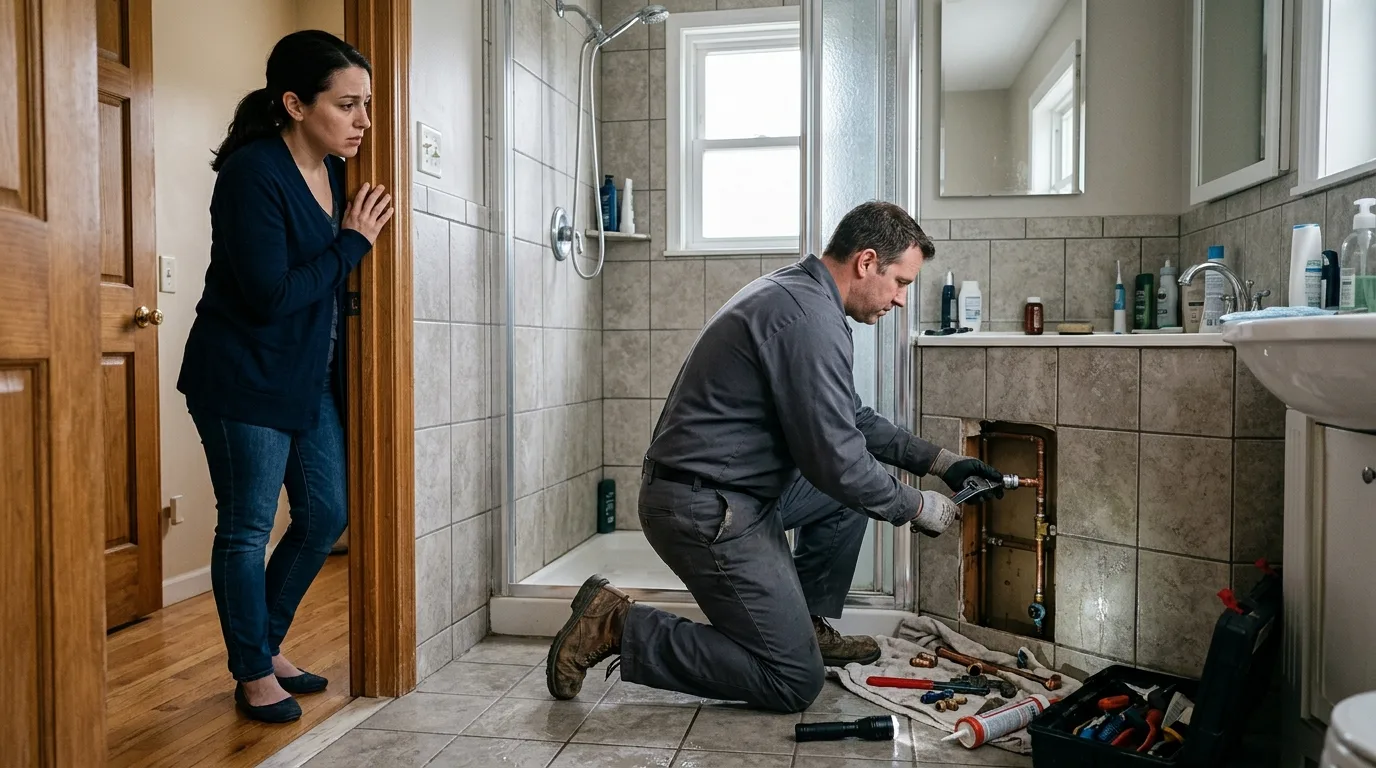
Multi-unit work, with the urgency that comes from several households affected at once.
Dispatch is fast here; it is the middle of the city. What slows multi-unit visits is access: knowing who can open which unit, and where the cleanout and main shutoff actually are. Sorting that on the phone is often the difference between one visit and two.
Ask about mapping shutoffs and cleanouts on a non-emergency visit. It is a small scheduled cost that makes every future emergency on the building faster and cheaper.
That is an emergency call. The line is answered every hour of every day.
Everything on the list dispatches here. These six are what shared laterals and multi-unit demand generate most often.
Answered around the clock for active leaks, backups and no-water situations.
Located under concrete, then rerouted or opened, with the reasoning explained.
Kitchen, laundry, tub and main-line stoppages cleared and diagnosed.
Cracked clay and rusted cast-iron laterals repaired or replaced.
Tank and tankless replacement to California strapping and venting rules.
Copper or PEX through a single-story ranch, sequenced to keep water on.
The blocks around City Hall and the Metro station carry more apartments and duplexes than anywhere else in Norwalk, and multi-unit plumbing behaves differently. Several kitchens and bathrooms discharge into one lateral, so the line sees far more grease, far more paper and far more simultaneous load than a single-family run of the same diameter. When it blocks, it blocks for everybody, usually at the lowest fixture in the building.
That changes the right fix. Clearing the blockage restores service, but on a shared line the useful question is why this line loads up, a belly holding waste, a long shallow-fall section, or grease that has been accumulating since the building was new. A camera run after the clear, before everyone forgets about it, is what turns an annual emergency into a scheduled job.
Older buildings here often have one shutoff for several units and a water heater serving more than one dwelling. Knowing where the isolation valve is (and whether it still turns) decides how much water ends up in someone's living room during a repair. We check that first and tell you what we find, whether you are the owner, the manager or a tenant who was told to call.
Yes. Shared laterals, multiple heaters, unit-level shutoffs and coordinating access across tenants are routine. Say how many units are affected when you call so the right equipment and time are booked.
That is a lease and tenancy question rather than a plumbing one. What we provide is documented cause (camera footage showing roots, grease or a structural defect) which is usually what the argument actually turns on.
If there are individual shutoffs, yes. Where there are not, water goes off building-wide for the duration, which is the strongest argument for having them fitted during scheduled work rather than discovering it mid-emergency.
Usually the property owner rather than an individual tenant, since the line serves the whole building, but it depends on the lease and on where the fault sits. We will find and document the cause either way, and the report is what the owner or manager needs to sort out who pays.
Yes, with authorisation from whoever is responsible for the property. We will describe the work and the price to the person authorising it before anything starts, so nobody is agreeing to a repair they have not heard about.
The same line covers all of these. Around the civic centre the district lines are blurry, so describe the block rather than the boundary.
Tell us the cross-streets and what the house is doing. Upfront pricing before any work begins.